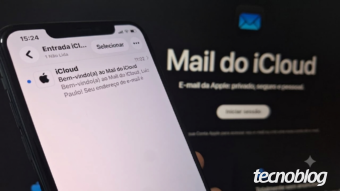
Apple abandons plan to change Hide My Email domain due to negative criticism
Read more
Tecnoblog
tecnoblog.net

Apple abandons plan to change Hide My Email domain due to negative criticism

Apple has decided to reverse the planned change to the email domain associated with the Hide My Email feature. With this withdrawal, the addresses generated by this privacy function will retain the @icloud.com suffix, which is the same used in the company's standard email accounts.

This change was reversed after receiving a series of criticisms in June. Initially, the manufacturer intended to standardize the addresses generated by both Hide My Email and the 'Sign in with Apple' button under the new @private.icloud.com domain. This unification raised concerns that it might facilitate the identification and blocking of these accounts by various services.

Hide My Email is a privacy feature available on iCloud+ plans that allows users to create temporary email addresses for use in website registrations, online purchases, or form filling.

The main concern for users was that by establishing an exclusive suffix for masked emails, the company could open the door for developers and website administrators to implement automatic filters designed to reject accounts with the new termination. Such a scenario could force the user to disclose their personal data.

Keeping the @icloud.com domain avoids such practices, as a platform would have to ban the entire company email ecosystem, which would prevent legitimate users with common iCloud accounts from registering.

In an official statement, Apple confirmed the cancellation of the modification after conducting 'additional consideration and review of community feedback.'

Despite the retreat regarding Hide My Email, the transition will continue to be implemented for automated registrations made through the 'Sign in with Apple' button. Starting at the end of this year, protected accounts created during the login process will be issued under the @private.icloud.com domain.

The company emphasizes that addresses created before the change will continue to operate normally, forwarding messages without any service interruption. To prevent any compatibility issues in receiving mail, Apple recommends that developers update their systems and websites to accept both versions of the addresses.
Similar stories

Apple sends notifications about possible spyware to users in various countries
Read more
olhardigital.com.br

Apple sends notifications about possible spyware to users in various countries

Apple has distributed a new batch of alerts to users in 110 nations, indicating that they may have been targeted by spyware attacks, according to TechCrunch. The company states that it has issued this type of warning to customers in over 150 countries since the beginning of the program.

These notifications are directed at individuals whom Apple suspects have been targeted by spyware software capable of compromising devices such as iPhones, iPads, and Macs. This type of spyware is frequently linked to focused surveillance activities, including tools employed by governments.

The company implemented sending these warnings directly on the locked screen of the iPhone, which makes it easier for users to access information about the potential attack and suggested protection measures for the device. The message displayed on the system warns: 'Apple has detected a mercenary spyware attack targeting your iPhone. There are steps you can take now to protect your data and your device.' Furthermore, Apple supplements these warnings with communications via email and during user account access.

More information about the attacks

Although spyware attacks are considered uncommon events, surveillance technology has become increasingly widespread in recent years. Tools of this nature can be used to monitor specific people without their knowledge, and they have already been associated with actions against journalists, activists, civil society members, and critics of government regimes.

John Scott-Railton, a senior researcher at the Citizen Lab group, was one of the first to point out this new wave of Apple notifications. In conversation with TechCrunch, he assessed this change as a 'major improvement' in how the company notifies potential victims. According to Scott-Railton, the new alerts help potentially affected people seek support and implement safeguards on their devices.

Apple's alerts have existed since 2021, but the company has continuously improved the method of communicating with potential targets. This recent round of notifications also highlights the global scale of targeted spyware attacks. Apple confirms having sent alerts to users in over 150 countries since the start of the program, with individuals in 110 nations reached only this Thursday (13).

The attacks generally use advanced espionage tools capable of exploiting vulnerabilities in operating systems and devices. Most often, the focus is on targeting specific individuals rather than executing broad campaigns against millions of devices. One example that drew attention to this threat involved the use of spyware against political opponents in Poland, an incident also monitored by Citizen Lab researchers.

For those who receive an Apple warning, the primary guidance is not to disregard the notification. Even if it is not possible to confirm an effective invasion of the device, the detection of an attempted attack signals that the user may be facing a threat more complex than a common digital scam. In addition to enabling Lock Mode, Apple advises users to follow the instructions provided in the notification itself and to seek specialized assistance when necessary.

Popular