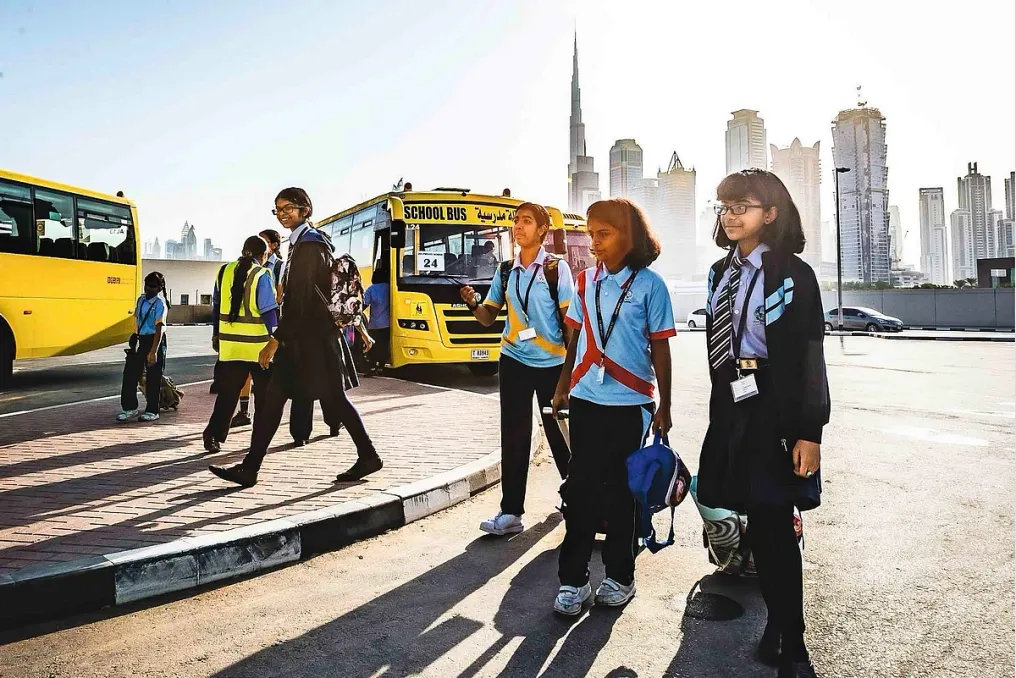
During the 2026–2027 academic year, Dubai intends to open 26 new private educational institutions. Among these are seven schools that will provide nearly 17,000 additional places for learning, aligning with the ongoing expansion of educational opportunities for families in the emirate.
The new openings also include 17 Early Childhood Centres (ECCs), which will add over 1,700 places for preschool education, as well as two international higher education institutions.
This growth comes as Dubai's private education sector has shown an annual increase of 4.6 percent over the last three academic years, covering early childhood education, schools, and higher education. This progress is observed despite exceptional circumstances in the 2025–26 academic year, thanks to continuous investment from education providers and the emergence of internationally recognized institutions.
For parents seeking school placements, the seven new private schools will offer diverse curricula: four will follow the British curriculum, and three will follow the International Baccalaureate (IB). Among these new schools are campuses in Dubai of renowned British institutions such as Harrow International School Dubai, Queen Elizabeth’s School Dubai Sports City, and Rugby School Dubai.
Over the past three years, Dubai's private school sector has added 21 new schools, and student enrollment has increased by 3.1 percent.
KHDA Director General Aisha Miran noted that the continued expansion reflects the trust placed in Dubai by families and education service providers. She emphasized that the steady growth of Dubai's private education sector demonstrates the belief of students, families, educators, and investors in Dubai as a place for high-quality education. According to her, every new early childhood centre, school, and higher education institution expands opportunities for students at every stage of their educational journey and contributes to the overall goal of building one of the world's best education systems.
The early learning sector is also rapidly developing: 17 new ECCs offer programs including UK’s Early Years Foundation Stage, Montessori, Ontario, French, and Indian programs. This growth complements the 87 new ECCs opened in Dubai over the last three years, alongside a 2.6 percent increase in student enrollment.
The overall expansion is also stimulating demand for teachers. Over the last three academic years, the number of workers in Dubai's private education sector has increased by 17.5 percent, strengthening the emirate's appeal for education specialists.
Dubai's expansion also affects higher education: two globally recognized institutions are set to strengthen the university choices for students in the emirate. Peking University HSBC Business School will launch its MBA and EMBA programs in January 2027, and the campus of the American University of Beirut in Dubai is planned to open in September 2026.
Peking University HSBC Business School ranks 47th in the global QS ranking, and the arrival of these two institutions supplements the higher education sector, which has seen the opening of 11 new institutions and a 29 percent increase in student enrollment over the last three years.
M Miran added that this growth is driven by the broader goal of creating an education system that provides students with more opportunities while supporting Dubai's wider economic objectives. Within the Education 33 Strategy, an educational ecosystem is being created that offers greater choice, develops talent, attracts world-class institutions, and equips students with the knowledge, skills, and values necessary for future success, in line with Dubai's Economic Agenda, D33, and the emirate's socio-economic priorities.