In Uzbekistan, the development of the drug 'Sedjaro,' a Russian analogue of the global bestseller 'Mundjaro' for treating diabetes and obesity, was recently officially registered. Simultaneously, three key products of the manufacturer—'Semavik,' 'Semavik Next,' and 'Sedjaro'—received 'Halal' certification. These events are of great significance for Uzbekistan, as data from the WHO and the country's Sanitary and Epidemiological Committee indicate that 64% of adults suffer from overweight, and one in five has full-blown obesity; this figure has increased by 36% over the last 36 years, demonstrating a high growth rate in the region.
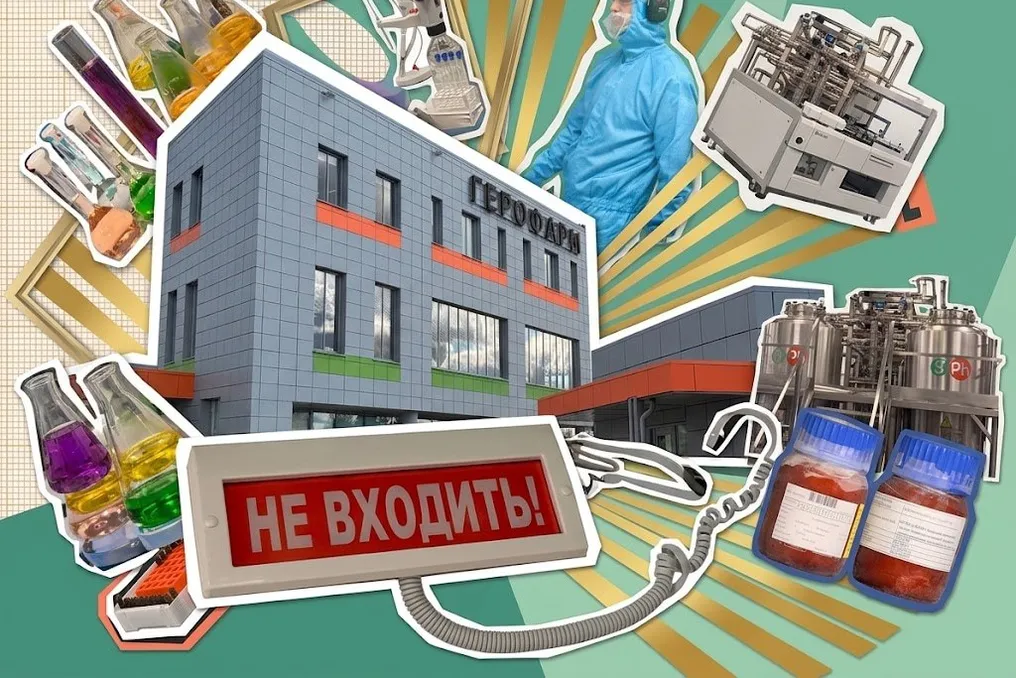
To demonstrate the process of creating medications capable of changing this statistic, a correspondent from Podrobno.uz visited the 'Geropharm' plant in Pushkin, St. Petersburg, along a special route designated for high-level state delegations.
Strict Requirements for Sterility of Production Areas
Visiting pharmaceutical production requires thorough preparation. The tour begins with a detailed briefing on safety measures and maintaining sterility, conducted by Quality Engineer Polina Shashina. Participants must leave personal belongings, strictly follow handwashing protocols, and wear special protective suits, including coats and shoe covers. When moving between zones of different cleanliness classes, this procedure is repeated multiple times over the course of an hour.
The strictest point is crossing the boundary between the 'dirty' and 'clean' part of the facility, marked by a demarcation line on the floor. Crossing this line is only permitted in sterile footwear. The procedure involves removing shoes on the 'street' side and receiving permission to step across the line only while wearing shoe covers or specialized footwear. Any violation, such as an unprotected foot contacting the 'clean' zone, results in the annulment of the process and the need to start all over. These rules exist not so much to protect people from the medicine, but to prevent the contamination of the medicine itself by humans.
Irina Spirkina, Head of Operational Efficiency Projects at the company, notes that people are the primary source of microbes, dust, and minute particles in sterile biotechnological production environments. Since the protein environment is ideal for rapid bacterial multiplication, the air in the premises is constantly filtered through Class 14 HEPA barriers. These filters comply with the highest European standard (EN 1822) and are capable of capturing at least 99.995% of microparticles ranging from 0.1 to 0.3 microns, covering most bacteria and viruses.
Three Production Blocks: Automation and Digital Control
The site in Pushkin includes three production workshops. The first, operational since 2017, is dedicated to producing the company's original drugs. The second workshop, launched in 2019, specializes in insulin substance production. The third workshop, commissioned in 2024, handles the production of tablets and capsules and has already reached commercial volumes.
According to Irina Spirkina, this entire scale is ensured by complete automation and digitalization. Instead of verbal instructions like 'heat, mix,' a software engineer enters a 'matrix recipe' into the system—a detailed algorithm consisting of hundreds of micro-steps. This algorithm is validated and securely stored on servers, eliminating human influence and guaranteeing the identity of every production batch.
The digital approach extends to the quality control system, covering the process from raw material procurement to laboratory testing. Data from instruments is transmitted in real-time via the LIMS system, making it impossible to secretly alter or delete it. Consequently, nearly a third of the 400 employees at the site work in the quality department. The company maintains a constant inspection regime: in addition to Russian supervisory bodies such as Minpromtorg, Roszdravnadzor, Rospotrebnadzor, and Rosselkhoznadzor, foreign partners regularly conduct audits because the plant's products are exported to 14 countries worldwide. Journalists were shown the second workshop—a high-tech area where insulin substance is produced.
Insulin Production Using E. coli
Dmitry Babentsev, Head of the Purification Department, warned before entering the area about a specific phenomenon: a cascade of excess pressure is maintained inside, causing a feeling of ear blockage similar to what is experienced on an airplane during ascent. Six types of insulin are produced here: from fast-acting 'ultra-short' to long-acting 'prolonged.' The difference lies in the mechanism of action: the first type begins to be absorbed 10–15 minutes after a meal, whereas the second type provides a stable background level throughout the day.
In global pharmaceuticals, there are two methods for obtaining insulin: chemical synthesis and biotechnology. The chemical method, which requires assembling insulin atom by atom in a flask, is extremely complex and yields a small amount of product. The plant chose the more elegant biotechnological route, entrusting the work to microorganisms. Genetically modified Escherichia coli (E. coli) acts as the pharmaceutical factory.
The process begins in the cellular technology laboratory, where scientists insert a small segment of the human gene coding for insulin into the DNA of a common bacterium. Then, from a tiny milliliter sample, the microorganisms are transferred to large production fermenters. The bacteria actively multiply and synthesize insulin inside themselves over 16 hours, following a biochemical signal. After the process is complete, the pressure in the homogenizer drops sharply, leading to the rupture of the bacterial cells and the release of the valuable molecule. The resulting paste from the so-called 'inclusion bodies' is frozen at minus 18°C. This stage in the biosynthesis department takes 3–4 days.
Next, the paste is sent to the purification department under Dmitry Babentsev's supervision for 8–9 days, where complex protein processing begins. E. coli produces protein, but it folds it into an incorrect, 'inactive' structure. The engineers' task is to restore its correct shape. First, the molecule is completely unfolded during denaturation, followed by an 18–20 hour renaturation period, during which the protein folds back with high precision, restoring the necessary disulfide SS bonds.
Once the molecule acquires its natural shape, the solution is purified from fine impurities and concentrated tenfold using tangential filtration units. At the ion-exchange chromatography stage, enzymes selectively remove excess components, leaving the perfect molecule composed of alpha and beta chains. Subsequently, High-Performance Liquid Chromatography (HPLC) eliminates structurally similar impurities, achieving an active substance purity of 99%. After this, microscopic crystals of insulin, measuring 5 microns, are precipitated and dried in vacuum ovens. Thanks to the equipment's capacity, a new batch of the substance can be released every 24 hours, with each batch undergoing strict control across dozens of parameters, and documentation taking about 10 days.
The final point of the route is the finished goods warehouse. However, packaged boxes are not stored here; the finished product of the biophactory looks different. A warehouse employee guides guests to freezer chambers where the temperature does not exceed minus 18°C (the display shows -22°C) and briefly opens the door. Inside are not only insulin stocks but also the substance for semaglutide ('Semavik'). Wearing special thermal gloves, the worker retrieves a glass jar with yellow labeling containing a thick aspart insulin substance. Irina Spirkina explained that one such container can produce over 50 thousand vials of finished medicine.
The jars bear the status 'Quarantine.' The valuable cargo will only be sent to the main plant for packaging after the quality department completes all tests and changes the label to green ('Released'), while ensuring full cold chain control.
From Raw Material to Final Pen
After the substance successfully passes all purity laboratory tests and the quality department removes the 'Quarantine' status, the next stage begins. The active pharmaceutical ingredient is created in Pushkin, which forms the basis of the drug. However, packaging, solution filling, and assembly of final consumer forms, such as vials, cartridges, and pen injectors for 'Semavik' and 'Sedjaro,' are carried out at another company base—in Obolensk, Moscow region.
Irina mentioned that 'Geropharm' has been in operation for 25 years. Initially, operations were conducted at a small plant and scientific center in Obolensk. The decision to build a large plant for large-scale substance synthesis was made to locate it in St. Petersburg, closer to the center of molecular development, which transfers its technologies to them.
Transporting the finished substance from Pushkin to Obolensk is a separate logistical process. A frequent question is how to safely transport such a temperature-sensitive protein. Specialized vehicles equipped with continuous monitoring systems are used, strictly adhering to the temperature regime during transport between sites.