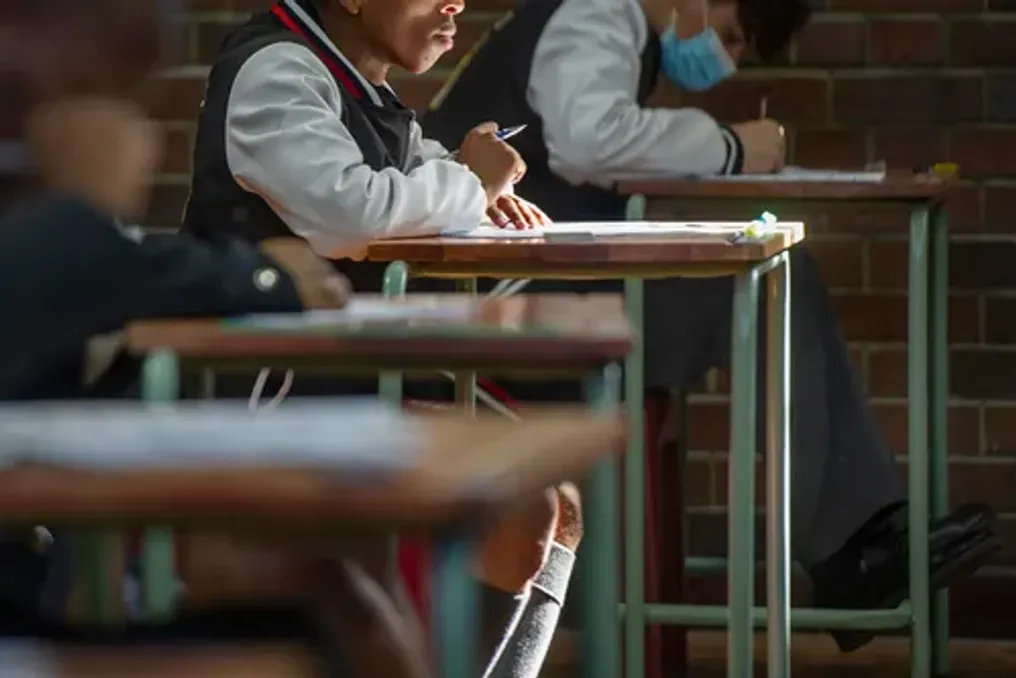
In Grade 9, South African students transition from general subjects to selecting seven core subjects for the National Senior Certificate (NSC), which occurs in the third term. Currently, fourteen- and fifteen-year-old students across South Africa hold a document from the Department of Basic Education that requires them to make a vital career decision.
When the third term of Grade 9 arrives, teenagers nationwide must shift from studying nine general subjects to finalizing seven key disciplines for their National Certificate. The standard advice given to students is to 'keep all doors open,' which often leads to choosing Pure Mathematics, Physics, or Accounting, as these subjects are considered 'smart' or responsible choices.
However, as families across the country well know, forcing a fifteen-year-old child into three subjects they dislike or do not understand can trigger years of burnout, while areas where they could truly excel remain overlooked.
The Cost of Academic Pressure
Teenage anxiety does not arise in a vacuum. According to public health data from the South African Medical Research Council, there is a high level of anxiety and depression among youth, and pressuring students into incompatible or misleading academic trajectories exacerbates this trauma.
When systemic shortcomings and weak institutional career counseling meet the vulnerability of adolescence, the result is burnout, disillusionment, and lost potential. Brad Latilla-Campbell, Country Manager at Crimson Education, notes: 'Most students don't know what they want to do in Grade 9, and that is perfectly normal.' He adds that the goal is not to plan the entire future, but to choose subjects that do not limit future opportunities, highlighting the lack of a universal approach.
Dr. Carrie Brook-Samner, a specialist scientist at the South African Medical Research Council (SAMRC), points out that young people go through a critical developmental phase marked by increased vulnerability to external factors, which in South Africa include systemic pressure, poverty, and intense educational demands. Similarly, Dr. Terry Henderson, a psychiatrist specializing in children and adolescents, explains that youth distress always carries a deeper meaning. Dr. Henderson views adolescence as a transition to self-awareness; when adults impose lifelong career paths during this transition without emotional security, the pressure becomes unbearable for young students.
Public commentary often panics over administrative technicalities, warning families that mismatched subject combinations, such as pairing Natural Sciences with Mathematical Literacy, can ruin a future. However, this feverish obsession with pre-programming children raises a more complex question: why are we pressuring fourteen-year-olds into rigid technical frameworks before they understand who they are?
When schools offer or permit misleading subject combinations that subtly close off access to higher education for students, they create an illusion of opportunity. Hastily pushing teenagers into demanding technical disciplines merely to satisfy social status or arbitrary school metrics leads to burnout. Prestigious universities require genuine mastery, which cannot be faked in a subject a student was forced to dislike under pressure.
Shifting the Narrative Through Guardian Involvement
Admissions committees evaluate the complete picture, including academic performance, extracurricular activities, leadership qualities, and community involvement, looking for alignment between the student's choice and their actual direction. When a student's subjects reflect their true aspiration, everything else naturally supports that narrative.
Latilla-Campbell explains: 'This alignment doesn't happen by chance. It starts with having a proper conversation about what you are choosing and why. It is never too late to have this conversation; there is always a way to circumvent already made decisions. It is crucial to ensure that students do not feel like they wasted time being stuck on the wrong path.'
Rethinking Grade 9 subject selection requires more than just comforting words; it demands structural reform. Schools, governing bodies, and district officials must take responsibility for providing career paths that do not restrict potential. By approaching subject choice as an honest, supported journey rather than a bureaucratic trap, one can protect the well-being of the next generation and ensure their ambitions align with structural reality.