Economy shows resilience amid global difficulties, according to Reserve Bank of India bulletin
Read more
Business Standard
business-standard.com

Economy shows resilience amid global difficulties, according to Reserve Bank of India bulletin

According to the latest bulletin from the Reserve Bank, the economy has demonstrated significant resilience in the face of current global obstacles. This resilience is driven by active domestic demand, as well as growth in manufacturing and service activities.

The August issue also noted that the recovery of the southwest monsoon in July helped bring the sowing area for Kharif crops closer to normal levels, which partially reduced risks for the agricultural sector.

Nevertheless, the article on the 'State of the Economy' emphasized that the global economic forecast continues to be shaped by geopolitical tensions in West Asia and new tariffs introduced by the US.

The bulletin reported that the momentum from the first quarter of 2026–2027 was maintained in July, as most high-frequency indicators reflected stable activity in production and services, as well as double-digit growth in exports and imports of goods.

Furthermore, it was noted that although the overall Consumer Price Index (CPI) exceeded the target, this was mainly due to supply-side pressures. The stability of core inflation confirmed less transmission of price pressure.

Additionally, it was pointed out that improved liquidity conditions supported credit growth and continued investment activity. The inflow of foreign capital resumed, strengthening the external sector.

Financial conditions are characterized by high credit growth, comfortable liquidity levels, and easing government bond yields, aided by capital inflows.

The central bank clarified that the views expressed in the Bulletin article are those of the authors and do not represent the view of the Reserve Bank of India.

Similar stories

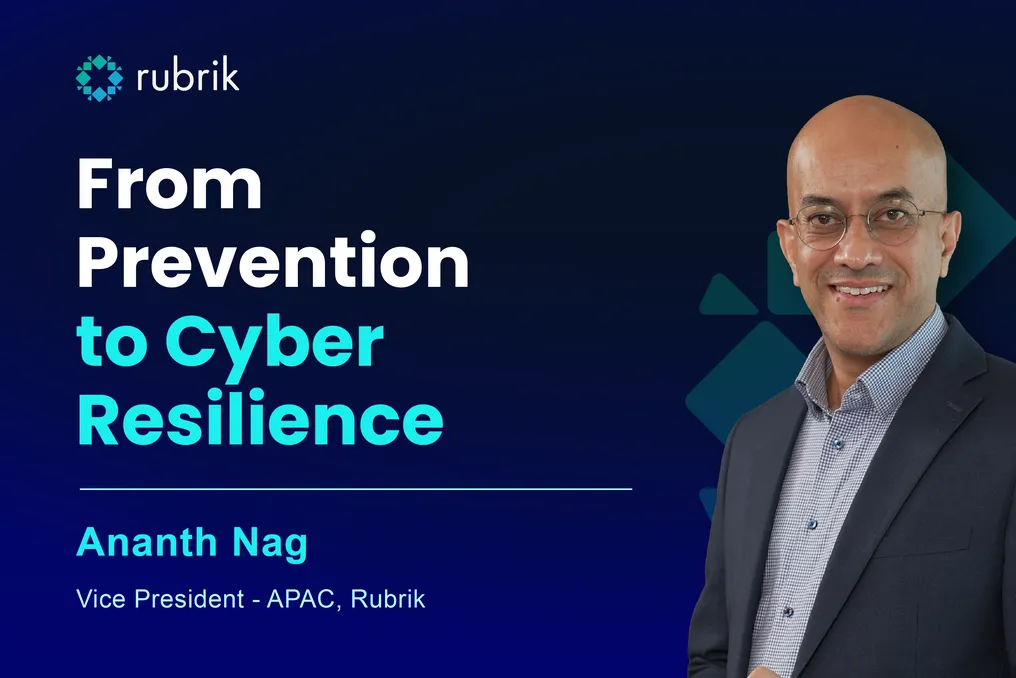
Rubrik believes cyber resilience, not prevention, is the next direction for cybersecurity development
Read more
yourstory.com

Rubrik believes cyber resilience, not prevention, is the next direction for cybersecurity development

Artificial intelligence is transforming the field of cybersecurity for both companies and attackers. While enterprises use AI to strengthen their defenses and automate processes, hackers are applying the same technology to find vulnerabilities, conduct more sophisticated attacks, and achieve significantly greater speed.

According to Anant Naga, Vice President of Rubrik for the Asia-Pacific region, this shift forces companies to rethink their long-standing cybersecurity strategy. The question is no longer whether an attack can be stopped, but how to prepare for the consequences of its successful execution.

In an interview with YourStory, Naga explains why boards of directors are shifting focus from prevention to resilience, why recovery has become a business priority, and how AI will change corporate cybersecurity in the coming years.

The speed at which a cyberattack occurs is shrinking from weeks to seconds, leaving organizations with very little time to react. Naga notes: 'I have never seen technology develop so fast. AI has only been in our lives for a couple of years, but the pace of innovation and adoption has been astonishing.'

This speed is changing the threat landscape. Enterprises have long relied on a traditional cybersecurity model based on prevention, detection, and remediation. Security teams assessed weaknesses, identified the most critical risks, and responded before attackers could inflict serious damage.

However, Naga argues that this approach was designed for an era when attacks happened at human speed. AI has changed this paradigm. Attackers can now automate reconnaissance, find weaknesses, and exploit them in mere seconds. As attacks become increasingly autonomous, organizations can no longer assume they can stop every intrusion before damage is done.

As a result, conversations in boardrooms are changing. Instead of asking about the possibility of preventing a breach, executives are increasingly asking how quickly critical business operations can be restored after one occurs. Naga cites recent incidents involving global brands such as Jaguar Land Rover and Marks & Spencer, where outages lasted for weeks, demonstrating that business continuity has become as important as prevention.

The security standard that was used for a long time—detecting an intrusion within a minute, localizing it within 10 minutes, and remediating within 60 minutes—may prove insufficient when attacks happen almost instantaneously. Naga emphasizes: 'It took us 20 years to refine our philosophy of prevention, detection, and remediation. Resilience is the next stage we are in.'

This does not mean that prevention becomes less important. Rather, enterprises must find a balance between investing in stopping attacks and the ability to recover quickly when systems are compromised. For many organizations, backup strategies are still focused on protecting individual systems or applications, but Naga believes this approach is no longer enough.

Modern enterprises operate through deeply interconnected cloud platforms, on-premises infrastructure, applications, identities, endpoints, and data environments. Restoring one database or application has little value if the rest of the business remains unavailable. Instead, organizations need to understand what is required for a full restoration of business operations.

This includes restoring identity services, business applications, cloud workloads, infrastructure, and corporate data—in the correct sequence. A comprehensive understanding of where trusted data resides and how systems depend on each other is also required so that recovery does not create additional risks.

Naga advises companies to stop viewing backups solely as a storage function and instead treat recovery as a core capability for ensuring business continuity. For him, cyber resilience begins long before an attack. Organizations must continuously identify clean recovery points, test recovery processes, and ensure that critical systems can be restored without reintroducing compromised data or malware.

He concludes: 'You will be breached. The ability to prevent is important, but the ability to recover is becoming even more critical for any business.' This requires preparation in peacetime, not attempts to develop recovery plans in the middle of an incident.

As corporate environments become more distributed across cloud infrastructure, on-premises systems, applications, and endpoints, the attack surface continues to grow. These environments also contain the organization's most valuable assets, making them attractive targets for ransomware and other sophisticated attacks. For Naga, the goal is no longer just preventing attacks; it is recovering from them at machine speed.

AI can accelerate and complicate cyberattacks, but Naga believes it will be equally important for defenders. Security teams are already using AI to automate routine tasks, analyze large volumes of security data, and improve response times. Over time, he expects AI to take on a much larger role, helping organizations detect anomalies, prioritize threats, and automate recovery workflows.

However, this transition will take time. Most enterprises operate complex IT environments built over decades, encompassing legacy infrastructure, cloud platforms, business applications, and numerous security tools. Integrating AI into all these environments requires both investment and operational maturity.

Nevertheless, Naga believes the direction is clear. As AI models become more capable and accessible, enterprises will increasingly rely on intelligent automation to strengthen resilience while reducing the burden on security teams. Naga sees the next stage of cybersecurity as an autonomous resilience agent—an AI-based system capable of orchestrating recovery across the entire organization with minimal human intervention.

The goal is simple: if an incident occurs, business leaders must be able to trigger an intelligent recovery mechanism that restores applications, infrastructure, identities, and data in the correct sequence. Instead of manually coordinating multiple teams during a crisis, enterprises will rely on AI to launch recovery workflows almost instantly. Rubrik is already moving in this direction, helping customers automate cloud recovery and orchestrate the recovery of critical business systems, reducing downtime and increasing organizational confidence in their recovery processes.

The speed of AI innovation forces organizations to rethink not only cybersecurity. As AI agents integrate into software development, customer operations, and enterprise applications, enterprise environments are becoming increasingly autonomous—and significantly more complex. This complexity expands the attack surface and raises the stakes for business continuity.

Naga believes that resilience is transforming from a purely IT issue into a business issue. He cites recent incidents resolved before becoming public knowledge as proof that rapid, coordinated recovery can protect not only operations but also revenue, reputation, and customer trust. In sectors like financial services, the consequences extend beyond individual enterprises. The ability to recover quickly can have broader implications for the stability of financial systems and the economy as a whole. This is why he believes that boards of directors should prepare for the assumption that breaches will occur.

As AI continues to change both attacks and defense, Naga expects resilience to become the defining metric of corporate cybersecurity. Organizations that invest in recovery, automate critical processes, and regularly test their resilience will be better prepared to manage next-generation, AI-driven threats.
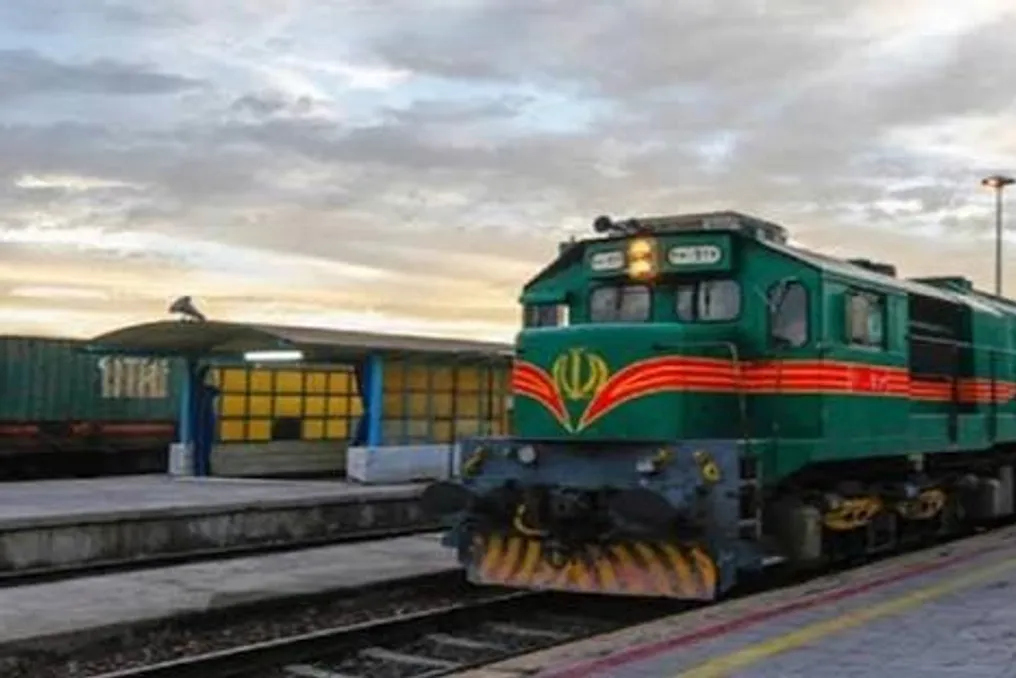
Expert states that Iran's transport network has high resilience to crises
Read more
www.tehrantimes.com

Expert states that Iran's transport network has high resilience to crises

The Chairman of the Board of the Association of Railway Transport and Related Services emphasized the high resilience of the country's transport system. He noted that by implementing managerial, political, and programmatic measures, the cargo capacity and passenger flow of the existing railway and road network can be increased by up to fifty percent without the need for large-scale infrastructure development.

According to IRNA, Sobhan Nazari stated during a press conference on Monday the importance of this resilience. He pointed out that there is currently a kind of competition for stability, as the Persian Gulf is a major international waterway, and any restrictions on it affect not only Iran but also the economies of other countries dependent on raw material and goods supplies.

Nazari added that the potential of the country's railway and road transport network should be assessed beyond current conditions. Any volume of goods entering the country through ports must subsequently be transported via the land transport network, including railways and roads.

Referring to trends in freight transportation over the last decade, he reported that the total volume of freight transported by road and rail in Iran has grown from approximately 211 billion ton-kilometers to 329 billion ton-kilometers. This growth occurred against the backdrop of sanctions and various economic difficulties faced by the country.

The Chairman of the Board of the Association of Railway Transport and Related Services continued, noting that Iran's economy, calculated by purchasing power parity, is among the largest global economies, and the size and efficiency of the transport network are proportional to this position. Analysis of indicators such as the length of railway and road networks, the number of vehicles, wagons, and trucks, shows that Iran ranks among 15–20 countries in the world across many of these parameters, and the size of the country's transport network has been expanding over the last two to three decades.

Nazari specified that although productivity in some sectors, including road transport, may temporarily decrease during crises, the long-term trend of freight transportation in the country remains upward, indicating the significant resilience of Iran's transport system. He also noted that the diversity of road and rail border connections and access to various ports make Iran one of the countries with a high diversity of transport routes, while its road and rail networks are among the longest in the world.

The Association Chairman stressed that the diversity of routes and the vastness of the network have increased the country's resilience to disruptions. In some cases, the stability of the transport network exceeded initial forecasts, preventing the realization of pressure goals exerted on the country. However, he emphasized that from a transport perspective, Iran is capable of succeeding in the competition for resilience, but the railway and road networks are used inefficiently, and a significant portion of the available capacity remains unused.

Nazari reiterated that through a set of programmatic, managerial, and political measures, without the need for capital construction of new infrastructure, cargo and passenger transport on the existing network can be increased by up to 50 percent. Consequently, there are no serious concerns about the physical capacity of the network; the main problem lies in improving productivity and reforming the management approach.

The Association Chairman also pointed out that low productivity and quality in the transport sector are fundamental problems of the country's economy. The productivity of trucks and wagons in Iran is estimated at about one-third to one-fourth of optimal global standards, and the productivity of the railway network is about one-tenth to one-fifteenth of global norms. Sobhan Nazari, commenting on the gap between the transport industry and the media, added that managers and experts in the transport industry are not closely connected enough with the media, so the problems of this sector have not become a sufficiently public concern.

Regarding wagon imports, he reported that under current conditions, the import of cargo and passenger wagons is prohibited, while the import of locomotives is possible under certain conditions. Nevertheless, transport activists believe that owning wagons is more important now than their production. Nazari also noted that the share of rail transport in the country's freight transport currently accounts for about 8 percent, whereas the five-year plan aimed to reach 30 percent in freight transport and 20 percent in passenger transport, which was not achieved. The reason cited for not reaching these goals is the shortage of rolling stock, and liberalizing wagon imports could partially solve this problem, but this does not mean ignoring the capabilities of domestic producers. He stressed that local wagon manufacturers have sufficient capacity to meet the country's needs, and it is incorrect to say there is no production potential. The main problem in recent years has been the lack of orders and reduced investment attractiveness in the railway industry. Nazari referred to Article 12 of the Law on Removing Barriers to Competitive Production and Improving the Country's Financial System, according to which the government committed to paying for the purchase price of wagons for several years after they began operation. Implementing this commitment could increase the internal rate of return on investment and reduce the payback period. He called on the government to increase the industry's investment attractiveness by utilizing the potential of the Energy Optimization and Strategic Management Organization. The Association Chairman concluded that the decision on the necessity of importing wagons can be made after creating economic attractiveness and attracting investors, as imports must be carried out within the framework of real market demand and after utilizing existing capacities.

Concerning the activities of funds and so-called 'quasi-state' structures, Nazari noted that some of them, despite lacking state shares, are managed in a state-like manner, and their results are subject to strong fluctuations. Last year, subsidiaries of the Railway Workers' Savings Fund were able to achieve a profit 130 percent higher compared to the previous year. Part of this growth is related to inflation, and another part to the better performance of the subsidiaries, but a sharp increase in profit in one year may indicate the instability of these structures and does not guarantee the continuation of such a trend. He also noted that large-scale enterprise management always involves managerial risks, and even in the private sector, a change in CEO can seriously affect the company's financial performance. Nevertheless, experience has shown that the private economy is usually managed more flexibly, productively, and honestly, so it is proposed that funds and similar structures distance themselves from direct enterprise management. Instead of owning 90 or 100 percent of enterprises, they could manage their capital as a diversified portfolio of about 200 types of short-term and liquid investments, including stocks, securities, gold funds, and other financial instruments.

The Association Chairman, commenting on the impact of fuel prices on competition between rail and road transport, stated that the very low price of gasoline and diesel fuel in Iran artificially keeps the costs of road and passenger transport low, allowing cargo owners and passengers to easily choose the road option. He compared this to the situation in the 20 largest global economies, where about half of the cargo is transported by mass transit, and in some countries, the combined share of railways and inland waterways reaches 80 percent, whereas Iran lacks effective inland waterways, and the share of railways is only about 8 percent. Nazari suggested that a reasonable, gradual fuel reform, accompanied by complementary transport policies, could lead to an increase in public transport capacity, especially rail. However, before implementing such a policy, real development of public transport must be ensured to make more passenger carriages and buses accessible to the population.

He also noted that the long-term effect of price reform will be more rational decision-making in other sectors of the economy. For example, some steel mills were built in locations far from water resources or ports and do not have a good export position; however, due to the small share of fuel and transport costs in initial calculations, their poor location proved to be economically justifiable. The consequences of such location decisions can persist in the country's economy for decades or even centuries, as limited water resources must be allocated to these industries, and a large amount of fuel is consumed for transporting raw materials and products. Nazari stressed that the real cost and opportunity cost of diesel fuel are not taken into account in industrial placement calculations, as transport costs constitute a very small share of production costs. For instance, in the financial statements of some Iranian steel companies, transport costs may account for only 2–2.5 percent of revenue, whereas this figure is significantly higher in comparable foreign companies. He concluded that hidden subsidies on energy, water, and transport accumulate in the financial statements of some industries, increasing their profit margins, while in most large global companies, annual profitability is more constrained. As a result, some links in the value chain become highly profitable due to energy rents and hidden subsidies, while others incur costs, meaning logistics, water resources, and the power grid support the profitability of poorly located industries.

Popular