IAS official Himanshu Nagpal, serving as the chief development specialist for Varanasi, identified a significant issue: the district issued only 30 groundwater extraction permits annually, while nearly 700 illegal wells were being drilled.
Legislation mandates that anyone extracting groundwater must build a rainwater harvesting system on a rooftop within a year to compensate for the extracted volume. However, this rule was rarely followed or monitored in Varanasi.
A survey revealed 1,435 illegal wells on commercial properties. Consequently, officials sealed 150 wells and cut off their power supply. Soon after, 800 companies applied for permits, citing a lack of space on their own premises to install rainwater harvesting systems.
While discussing campus flooding issues with a college director, Himanshu realized that public rooftops could provide the necessary space lacking for companies. Rainwater harvesting on these roofs could solve both problems simultaneously, benefiting both schools and businesses.
Companies began funding rainwater harvesting systems on public buildings instead of their own. Today, over 1,000 government buildings, including hospitals, schools, and colleges, collect rainwater, with 70 percent of these systems funded by private means.
Concurrently, work was underway to restore the River Nad, which had been polluted by industrial waste. Cleanup efforts, construction of retaining dams and ponds spanning over 30 kilometers, have reduced waterborne diseases in 39 neighboring gram panchayats.
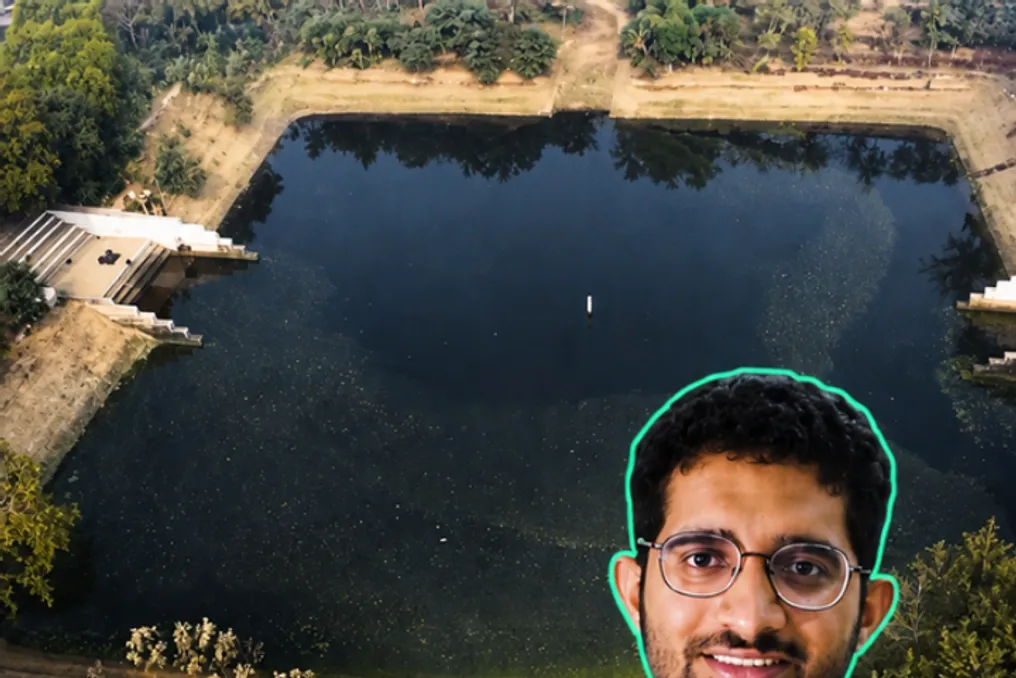
Furthermore, 393 artificial Amrit Sarovar ponds were constructed on acre-sized plots to conserve water resources. Drainage pits were installed around approximately 6,000 hand pumps, allowing excess water to filter into the soil and significantly reducing surface runoff.
Officials collaborated with IIT-BHU and the World Wildlife Fund to scientifically study local wetlands. With proper development, these wetlands could remain water-filled year-round, replenishing groundwater in nearby rural blocks and panchayats.
This multi-faceted approach has shown remarkable results: the groundwater level in Varanasi rose from 0.8 to 1 meter over two years, and the Pindra block, previously in critical water shortage, exited the official 'dry zone.' Only in Pindra, following the restoration of the River Nad, was a water level rise of 1.7 meters observed, with a total expenditure of 80 crore rupees. As groundwater levels continue to rise, the question arises whether this simple model can transform other regions of India.