The CEO of the Iranian Gas Transmission Company announced an increase in the country's gas transmission capacity. This was made possible by commissioning new sections of national main pipelines and launching pressure boosting stations.
Increase in Iran's gas transmission capacity
In an interview with SHANA, Peyman Hezarei, presenting the priorities of the Iranian Gas Transmission Company ahead of the cold months, emphasized that the most important task is maintaining the stability of the entire transport network and ensuring the full readiness of facilities for the peak winter consumption period.
He noted that the company is at the center of the chain from gas production to consumption. According to him, the company's duty is to transport the maximum possible volume of gas produced in the country from production sites to consumption centers, avoiding downtime due to network limitations.
The CEO also stressed that modernization, upgrading, and maintenance programs for facilities are planned, and the necessary repair and maintenance work has already been completed. Furthermore, various scenarios have been developed for organizing the gas transmission network considering production and consumption conditions during the cold period.
Enhanced readiness of the transport network for the upcoming winter
Hezarei, commenting on the special conditions of the coming winter, stated that due to the reduction in natural gas production capacity in parts of the country following damage to the South Pars refineries, new network management scenarios need to be developed. This is necessary to guarantee stable gas supply to various consumer sectors, especially households.
He specified that the Iranian Gas Transmission Company does not handle increasing production, but is obliged to transport all produced gas from the south of the country to various regions, including the north, northeast, and center. The country's high-pressure gas pipeline network is designed as an extensive and capillary system, which allows for changing the network configuration, ensuring maximum stability and continuity of supply.
Referring to last winter's experience, the CEO reported that despite a significant increase in public consumption, network management and gas supply to consumers were ensured through 55 operational reconfigurations in different parts of the country and round-the-clock deployment of operational forces in remote areas, achieved through the efforts of employees of the National Iranian Gas Company.
Hezarei added that this winter's conditions are expected to be more challenging, so there is a possibility of increasing the number of operational points and network reconfigurations to maintain the stability of gas transmission.
He also announced a plan to achieve independence for Gas Transmission Region 11. This region, covering the Sistan and Baluchestan province, will soon begin operating independently after the creation of 10 operational regions in the country. The CEO noted that given the geographical size of the region, the large distance between facilities, and the ongoing development of industry and consumers in Sistan and Baluchestan province, the independence of Region 11 could become the basis for more effective network management and accelerating development programs.
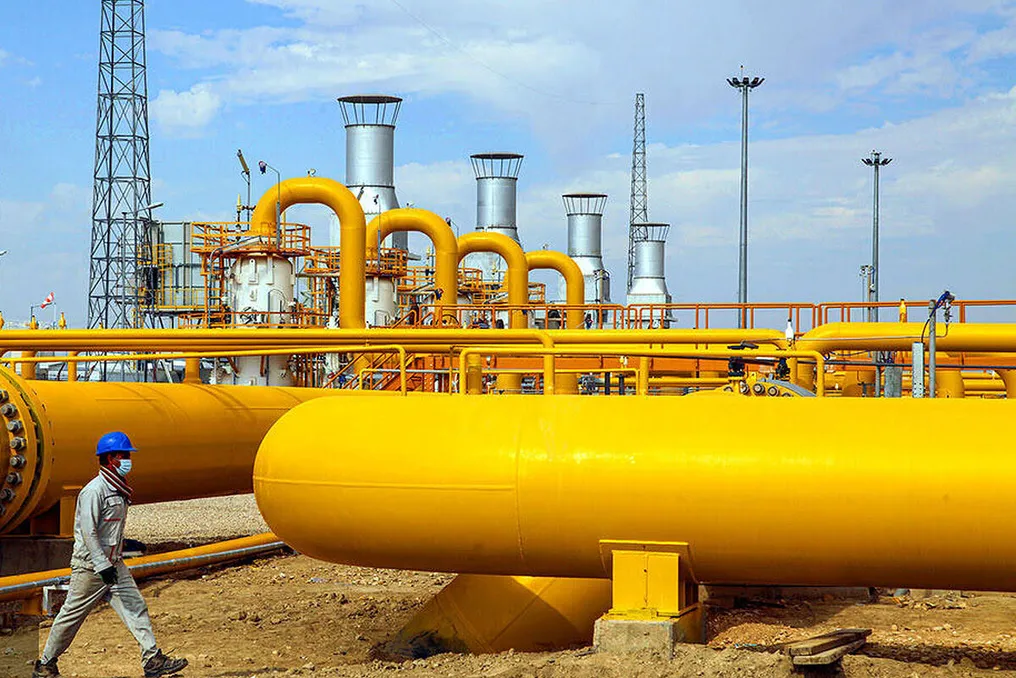
Regarding the readiness of the gas transmission network for the cold season, Hezarei stated that in addition to repair and maintenance measures, other programs have been implemented in the National Iranian Gas Company to increase the throughput and stability of the network. He mentioned that a section of the ninth national pipeline has been commissioned, and the second phase of one of the country's major trunk lines will also come into operation this year, strengthening gas transmission to the eastern regions of the country. A number of new pressure boosting stations have also been put into service, increasing the country's gas transmission capacity compared to last year.
Use of solar power plants for energy management
The CEO of the Iranian Gas Transmission Company reported that these new capacities, along with training drills and network reconfigurations, can contribute to improving gas transmission conditions during peak consumption periods.
Highlighting the valuable measures taken by the repair and maintenance sector employees, Hezarei continued that some types of repairs that previously required gas shutdowns, pipeline cutting, and venting some gas into the atmosphere are now being carried out using new technologies and methods without interrupting the gas flow and without environmental emissions. Such work not only prevents gas supply interruptions but also leads to significant savings and prevention of gas losses.
Concerning energy consumption management programs at gas transmission facilities, he said that unified energy management indicators have been developed and implemented across the country to compensate for part of the energy consumption at pressure boosting stations. Currently, about 2.5 megawatts of solar generation capacity is distributedly used at these facilities, and the use of solar power plants is planned.
The CEO of the Iranian Gas Transmission Company concluded that the application of renewable energy sources, especially solar, in addition to reducing traditional energy consumption, contributes to increasing the efficiency and sustainability of the country's gas transmission facilities.
The Iranian Gas Transmission Company manages the country's vast high-pressure pipeline network, connecting natural gas production in the south with consumption centers in the northern, northeastern, and central regions. The company is responsible for maintaining stability during peak winter demand, managing pressure boosting stations, carrying out maintenance without stopping service, and increasingly implementing solar energy to power its facilities. Thanks to new pipeline sections and independent regional operations in Sistan and Baluchestan, the company is constantly expanding capacity to ensure reliable and efficient gas delivery to households and industrial consumers across the country.