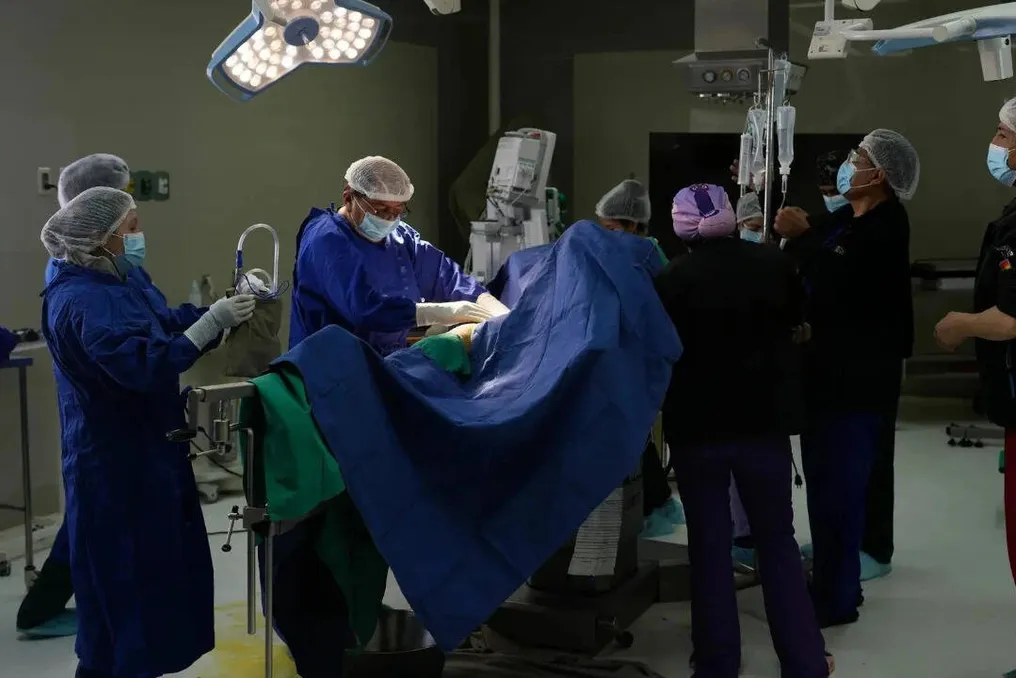
The organ transplant system in India is showing rapid growth, increasing from 4,990 procedures in 2013 to 20,138 in 2025. However, for the patient, transplantation goes far beyond a surgical procedure; it is a complex journey involving medical testing, obtaining permissions, paperwork, waiting, uncertainty, organ matching, and subsequent lifelong monitoring.
Hospitals and transplant coordinators are central to this system, operating within a broader network that includes the National Organ and Tissue Transplant Organisation (NOTTO), Regional Organ and Tissue Transplant Organisations (ROTTOs), and State Organ and Tissue Transplant Organisations (SOTTOs).
Nevertheless, statistical data and institutional structure may obscure what the actual experience is like for a person awaiting an organ. For recipients like Hemant Kumar Thakur and Shrishti Sinha, the reality involves a state of anxiety, exhaustion, and fear, followed by the possibility of a second chance at life.
The Journey Begins Before Surgery
A patient with severe organ failure first undergoes an assessment at a registered transplant center. This assessment may include blood tests, imaging, organ-specific tests, and consultation with a multidisciplinary team. Upon being deemed medically suitable, the patient is registered in the relevant transplant system.
However, being on the waiting list does not mean simply waiting chronologically. Allocation depends on the type of organ and applicable rules, including factors such as urgency of condition, compatibility, and, for some organs, time spent on the list. NOTTO frameworks also provide categories for urgent and super-urgent cases. For example, for kidney disease patients, one of the considered factors is dialysis time.
NOTTO coordinates the system nationally, while ROTTOs and SOTTOs link regional and state transplant activities. The State Oversight Body separately monitors compliance with regulations, including the registration of transplant centers and adherence to legal and ethical norms.
For recipients, however, this complex network can seem much simpler: long waits, a flood of tests and bureaucracy, and the constant question of what will happen next.
Hemant Kumar Thakur from Jamshedpur, Jharkhand, underwent a kidney transplant at Apollo Hospital in Kolkata, with his wife, Kanchan Mala, donating the kidney. For him, the most difficult part was not the surgery itself, but navigating the process beforehand.
Since he lived in Jharkhand and the transplant took place in West Bengal, Hemant had to deal with inter-state permissions and documentation. He noted: 'Because the procedure involved two different states—Jharkhand and West Bengal—I had to obtain No Objection Certificates (NOCs) from both states before the transplant could begin.'
The transplant journey begins long before the operating room, with a long path of tests, paperwork, and waiting. Despite the difficulties, Hemant was happy to have a compatible donor in his family. He emphasized: 'The process is not smooth; it is quite complicated. I was lucky that the match was found in my own family, with my wife.'
His experience also made him realize the uncertainty faced by patients without a compatible family donor. He recalled instances where patients found donors and completed most of the paperwork, only for the donor to back out. 'After going through the entire process, they returned to where they started—to the beginning.'
Consent Can Change the Course of Events
India's transplant system is regulated by the Transplantation of Human Organs Act of 1994 (THOTA) and related rules. Organ donation must be voluntary and free from commercial transactions, and transplantation is permitted only through authorized institutions.
Dr. Ankur Garg, a gastroenterologist and liver transplant specialist at Paras Health in Gurugram, states that legitimate organizations and transplant coordinators play a vital role in educating patients, facilitating inclusion in lists, and supporting families upon brain death declaration.
However, he warns that patients can also become targets of unscrupulous intermediaries. 'There will always be problematic elements, fraudsters, agents in society who lure needy patients and families, giving false hope and promises of early organ allocation, shorter waiting times, and much more.'
Consent can also change during the donation process. Dr. Garg explains that after brain death is declared and family consent for donation is given, the search for suitable recipients begins. But consent can still be withdrawn before organ retrieval. 'Before moving to the operating room where the organ is removed, anyone can withdraw consent, and the entire process stops.'
For recipients, this possibility can mean losing the organ they were preparing to receive and returning to the uncertainty of the waiting list.
Once the organ is allocated, the recipient prepares for surgery and is then closely monitored for complications and organ function.
Living Donation: Another Path, But Not Easy
Not every patient must rely on a deceased donor. Some organs, particularly kidneys and parts of the liver, can be donated by living donors after medical, legal, and ethical evaluation. Donor compatibility and health status are assessed, and the legal process partially depends on the relationship between the donor and recipient. Close relatives follow applicable frameworks, while other living donor relationships may require verification by the Authorization Committee.
Dr. Garg notes that a patient cannot simply register at multiple centers and wait for any of them to offer an organ. 'According to the rules, any patient can register only in one place. According to NOTTO guidelines and Indian transplant rules, a patient cannot simultaneously register at multiple hospitals or donor waiting lists.'
He added that the registration process requires a medical summary, blood group, relevant reports, and a valid Aadhaar or national ID. After surgery, transplant centers continue to track the recipient's information and clinical status.
Surgery Is Only the Beginning
After organ retrieval, the recipient prepares for surgery and is then under close observation for complications and organ function. However, discharge from the hospital does not mean the end of the transplant journey. Recipients must regularly take prescribed immunosuppressive drugs, attend follow-up visits, and undergo regular check-ups. Transplant centers also continue to monitor the recipient's information and clinical status.
Hemant reported that his own transplant went relatively smoothly after completing permissions and paperwork, but financial and medical obligations continued. He spent about 15–20 lakh rupees on the transplant and related treatment in 2020. 'I have no additional complications. I just have routine check-ups every six months and have to take medication for life.'
Currently, he spends about 7,000–8,000 rupees per month on medication, although he noted that post-operative care and medication costs vary among patients. Hemant also compared the long-term experience of the recipient with that of his living donor, his wife. 'The donor has to take medication for about three months after the transplant and can lead a normal life.'
The Emotional Burden of Transplantation
Shrishti Sinha, an engineer now working as a freelancer in Delhi, describes her transplant journey through a different lens: uncertainty, gratitude, fear, and the possibility of building a future. 'There are many moments of uncertainty. There are medical tests, permissions, waiting for updates, and constantly wondering what will happen next,' she says.
Even hope was fragile. 'Not completely. It was as if one moment hope would rise, and the next it would disappear. There were cases more serious than mine, or someone with a higher survival rate,' she recalls.
Shrishti was treated at R&R Hospital in Delhi and remembers her doctors as a source of encouragement. 'It was R&R Hospital in Delhi, and the doctors were positive and tried to encourage me.'
When she finally realized she would receive an organ, her reaction was deeply personal. 'I cried and felt grateful to be alive, to be able to spend more time with my husband and build a future,' she recalls.
Recovery Brings a New Set of Challenges
Transplantation did not restore a normal life instantly. Shrishti found that recovery was difficult, ranging from eating and drinking to physiotherapy. 'Recovery was not easy. There were problems with eating, drinking, and physiotherapy. Seeing the scar for the first time was frightening,' she says.
There were also unexpected experiences. 'The strangest thing was the appearance of strange cravings that I never had before,' she recalls.
However, five years later, she says the biggest change is her ability to think about the future outside the confines of illness. 'The biggest change is that I can think about the future again. Before the transplant, most of my life revolved around my health and whether my condition would worsen.'
Now she regards the day of her operation as more than just a medical milestone. 'Five years later, I started treating the day of my operation as a second birthday, a chance to live.'
Beyond the Numbers
The Indian transplant system can be measured by the number of hospitals, registries, waiting lists, and annual statistics. But for the person within it, transplantation is much more intimate: months of paperwork, uncertainty, and waiting, followed by surgery and lifelong responsibility for protecting the new organ.
Behind every transplant statistic is a patient who waited, a donor who made an extraordinary decision, and a family navigating a system where every permission, consent, and organ offer can change the course of life. For recipients like Hemant and Shrishti, transplantation is ultimately not just about survival, but about the possibility of envisioning tomorrow again.