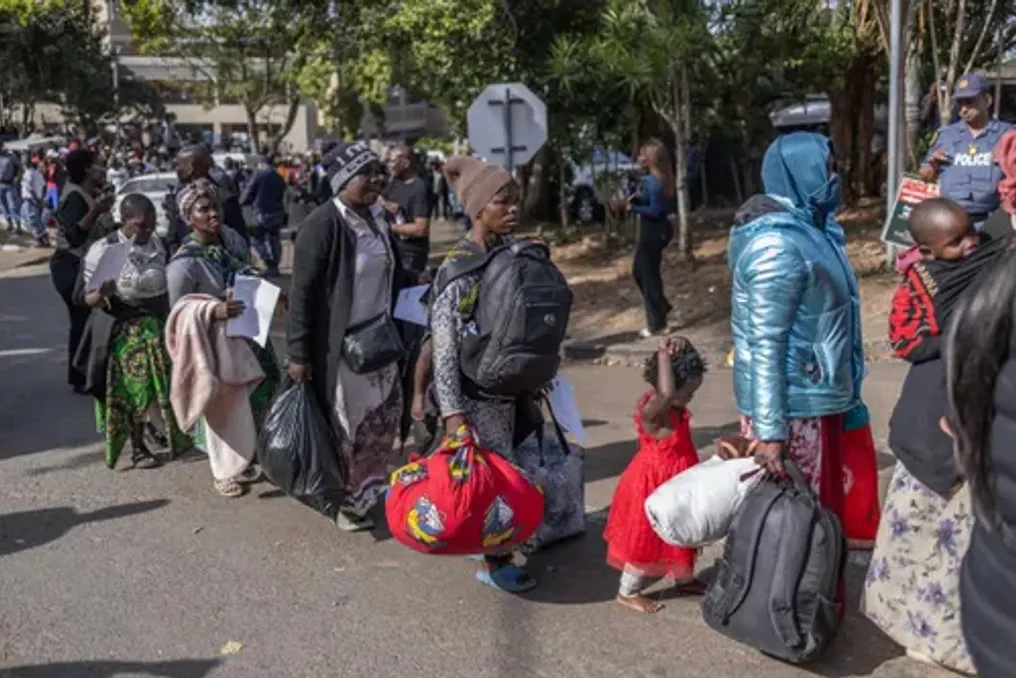
The Interdepartmental Committee on Migration Issues (IMC) announced on Tuesday the closure of the temporary repatriation center in Musina, South Africa. The decision was made against the backdrop of a sharp decrease in the number of undocumented migrants requiring processing. A total of 48,948 foreign nationals passed through this facility.
According to IMC data, out of the total number of individuals processed, 46,744 people, which accounts for 95.5%, were classified as 'border jumpers,' while 2,204 people, or 4.5%, reported arriving through an official entry point.
The center was officially established on June 26 as a temporary measure to manage increased migration pressure and ensure the legal, orderly, and dignified processing of undocumented migrants requiring assistance with repatriation. It brought together the Department of Home Affairs, Border Control Management, the South African Police Service, national and local health and social development departments, as well as humanitarian organizations in one processing location.
In the latest operational report concerning this center, the IMC recorded the processing of 48,948 foreign nationals. The Committee emphasized that this figure, specific to this center, should not be confused with overall national statistics. By July 24, 2026, the government had processed 68,138 migrants nationwide in response to the increased migration pressure that began in June, with the majority being repatriated after passing through the Musina center.
Furthermore, Border Control Management reported 72,906 repatriations across all entry points between June 7 and July 14, 2026, including those processed in Musina.
The IMC clarified that the vast majority of migrants who passed through the Musina center were citizens of Malawi, followed by citizens of Zimbabwe and Mozambique. The Committee reiterated that the center was originally conceived as a temporary facility and was never intended to be permanent.
The decision to close was made following a sustained decrease in the number of people needing assistance for processing and repatriation. The government had previously reduced the center's operational capacity from 20,000 to approximately 1,500 starting August 1, 2026, as migration data showed a continued decline in arrivals over several weeks. In the period before decommissioning, there were days when no one came for processing, rendering the temporary facility unnecessary at its current scale.
An additional factor influencing the decision was that the Government of Malawi no longer planned to assist in the repatriation of its citizens through this temporary center. Continuing the center's operation also required expenses for rented equipment, fuel for generators, staff accommodation, and additional security services. Thus, maintaining the facility with significantly reduced demand would not represent the most efficient use of public resources.
The IMC assured that the closure of the Musina Temporary Repatriation Center does not mean the cessation of deportation or repatriation operations. Immigration control, deportation, and repatriation assistance remain the exclusive responsibility of the state and will continue in accordance with South African immigration law, constitutional obligations, and international agreements. When undocumented migrants are identified, the Department of Home Affairs and relevant law enforcement agencies will follow applicable legal and administrative procedures. The phased closure of the Musina center does not jeopardize the state's ability to conduct deportations or provide support for assisted repatriations.
The Committee also noted that undocumented migrants will not automatically be transferred to the Lindela Repatriation Center solely because the temporary facility in Musina has closed. The appropriate facility for processing or detention will be determined by the Department of Home Affairs and relevant authorities, taking into account the individual circumstances of each case, legal requirements, available capacity, location, and operational considerations. The Lindela Preliminary Repatriation Center in Gauteng remains one of the authorized facilities that can be used provided legal and operational conditions are met.
The government will continue to cooperate with neighboring countries, diplomatic missions, the International Organization for Migration, and humanitarian partners to ensure safe, coordinated, and dignified returns when repatriation assistance is required. The IMC stressed the government's commitment to lawful and humane migration management, noting that the temporary center demonstrated the government's capacity to respond quickly and in a coordinated manner to exceptional migration pressure.
As part of the formal decommissioning, which began on August 21, tents and other temporary infrastructure were dismantled. Government communications officials documented the removal of the infrastructure and the entire closure process, which was officially registered on August 21, 2026. The IMC reminded the public that only authorized government officials can conduct immigration control, and communities must not carry out illegal identity checks, intimidation, expulsions, or other acts of vigilantism against any individuals.