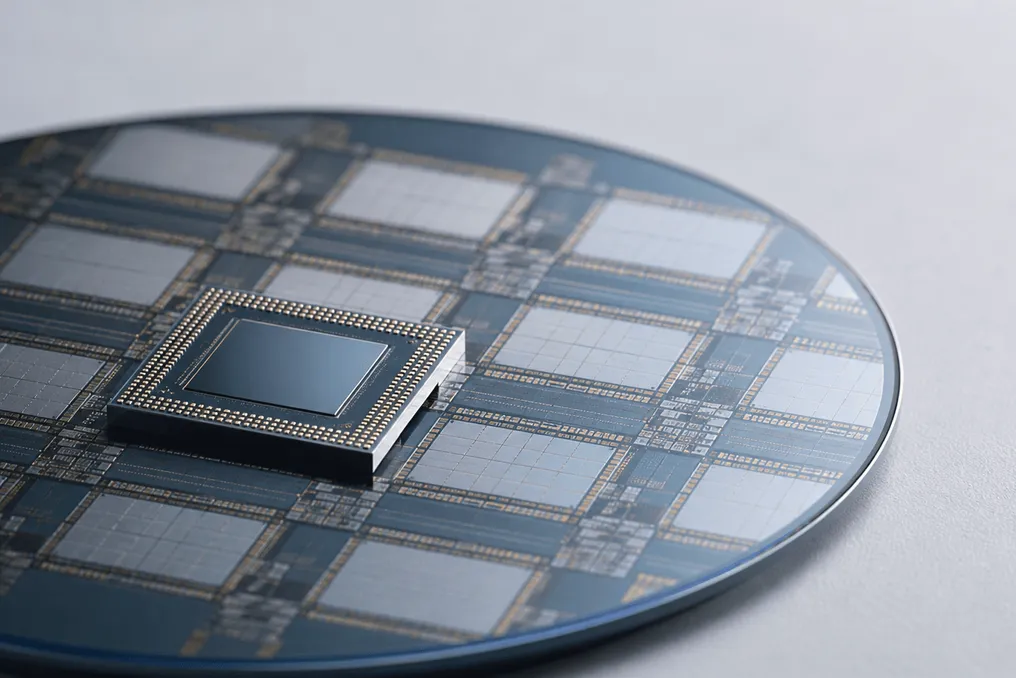
Xiaomi announced on Monday, August 24th, the Xring O3, its latest internally developed processor for mobile devices. This high-performance chip will be introduced later this year in the anticipated Xiaomi 18 Fold and, according to the manufacturer's data, aims to compete at the top of the smartphone segment.
Manufactured by the Taiwanese company TSMC using the 3-nanometer process, the component achieved a score of 5.22 million points in the AnTuTu V11 test. This feat makes it the first mobile SoC to surpass the five-million-point barrier.
The development cycle for this project consumed 459 days of engineering team work. To maintain this and other endeavors, the Chinese company's semiconductor division has an ambitious investment plan of 50 billion yuan (equivalent to approximately R$ 36 billion in direct conversion), to be distributed over ten years.
The Xring O3 directly succeeds the Xring O1, which was launched in 2025. Its CPU architecture deviates from the standard by implementing a deca-core design, composed exclusively of high-performance cores, eliminating the need for energy-efficient cores.
The processor set includes two C1-Ultra cores operating at a maximum frequency of 4.35 GHz, four C1-Premium cores running at 3.68 GHz, and four C1-Pro cores at 3.15 GHz. In evaluations conducted on Geekbench 6.5, the Xring achieved 3,945 points in single-core and 15,221 in multi-core, surpassing even solutions used in personal computers.
In terms of graphics, the 16-core Mali-G2 Ultra NX GPU promises an 85% increase in raw processing and a 64% decrease in power consumption compared to the previous generation. Additionally, the Xring O3 sets a historical milestone as the first global mobile chip to support the new generation of LPDDR6 RAM memory, offering a bandwidth of 113.8 GB/s.
To manage local artificial intelligence tasks, the manufacturer enhanced the Neural Processing Unit (NPU) to achieve a performance of 200 TOPS (trillions of operations per second). The company also integrated a dedicated security core to handle advanced cryptography directly in hardware.
The Xring O3 will serve as the main engine for the Xiaomi 18 Fold, the brand's next premium foldable. Its commercial launch is scheduled for September in the Chinese market, and pre-orders have already been made available to the local public.
Sources connected to the supply chain indicate that Xiaomi has set a cautious production target, ranging between 200,000 and 300,000 units of this new chip for the first batch.
Xiaomi's initiative extends beyond smartphones. Taking the opportunity, the manufacturer expanded its product range to other areas of its ecosystem, presenting two more innovative semiconductors.
The Xring O100 is a 6-nanometer neural chip focused on integrated AI, with a bandwidth capacity of up to 1.22 Tb/s. It is designed to natively run the proprietary MiMo language model on devices such as robots, virtual assistants, and smart appliances.
Finally, the Xring D100 takes the position of the company's first 3-nanometer processor, intended for data management for autonomous and intelligent driving. This hardware incorporates a 20-core CPU, a 16-core NPU, and supports up to 160 GB of unified memory. Both chips are expected to be released to the market by the end of 2027.