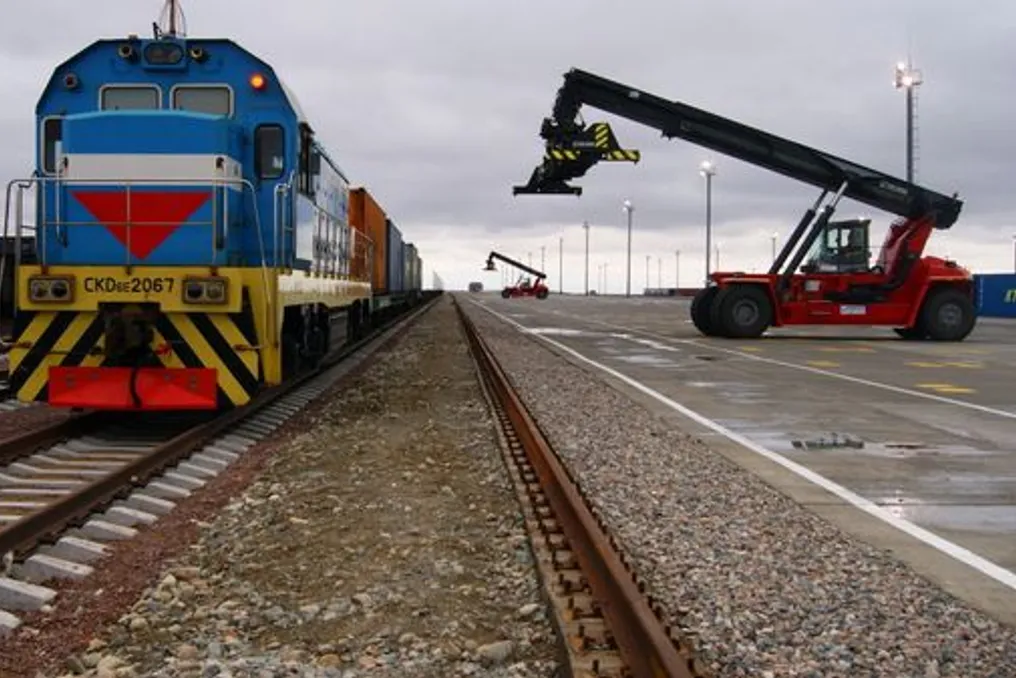
In 2025, the volume of international cargo transport between Uzbekistan and SCO countries reached 33.5 million tons. Forecasts suggest this figure could grow to 47 million tons by 2030, and the development of new railway lines will expand transit potential.
According to data presented by the head of the Department for Studying Transport and Logistics Issues at the Ministry of Transport, over the past five years, the volume of international transport between Uzbekistan and SCO countries has increased by almost 9 million tons, representing a 40% growth.
Dr. Dildora Ibragimova reported that in 2025, cargo transport with SCO countries accounted for nearly 80% of Uzbekistan's total international transport volume. Among these, Russia's share is 33%, Kazakhstan's is 32%, China's is 16%, and Kyrgyzstan's is 10%.
A crucial role is played by the construction of the China—Kyrgyzstan—Uzbekistan railway, spanning 532.3 km, which began in 2024. Preliminary estimates indicate that this line could handle 8 million tons of cargo by 2030 and 13.5 million tons by 2050.
Another strategic project is the Uzbekistan—Afghanistan—Pakistan railway. In July 2025, an intergovernmental agreement on the development of the TIA was signed in Kabul by the three states. According to E&Y company estimates, the potential for cargo transport along this route could reach 22 million tons annually by 2030 and 34 million tons by 2040, with up to 80% of the cargo base expected to be formed through transit.
In the future, there are plans to interconnect these two railway projects, some of which will provide access to Indian Ocean ports. Furthermore, in 2024, Uzbek railway workers initiated the creation of a council for the integration of SCO countries' railway spaces.
This new structure aims to eliminate differences in track gauge, technical standards, and movement parameters, simplify border procedures, and standardize transport documents.
The Shanghai Cooperation Organisation (SCO) was founded in 2001 and includes countries such as Belarus, India, Iran, Kazakhstan, China, Kyrgyzstan, Russia, Tajikistan, Pakistan, and Uzbekistan. Neighboring states also participate in the dialogue: Azerbaijan, Armenia, Bahrain, Egypt, Cambodia, Qatar, Kuwait, Laos, Maldives, Myanmar, Nepal, Bangladesh, Saudi Arabia, Turkey, and Sri Lanka.