The South African National Energy Regulator (NERSA) reported a significant strengthening of the energy system: 124 renewable energy generation facilities were registered in the first quarter of the 2026/27 financial year. These facilities attracted investments totaling 20.18 billion rand and added 804 MW of capacity to the grid.
Over seventy percent of this new electricity came from just two large wind projects, demonstrating that large-scale wind farms are becoming a key solution for meeting the country's energy needs.
Solutions in Practice
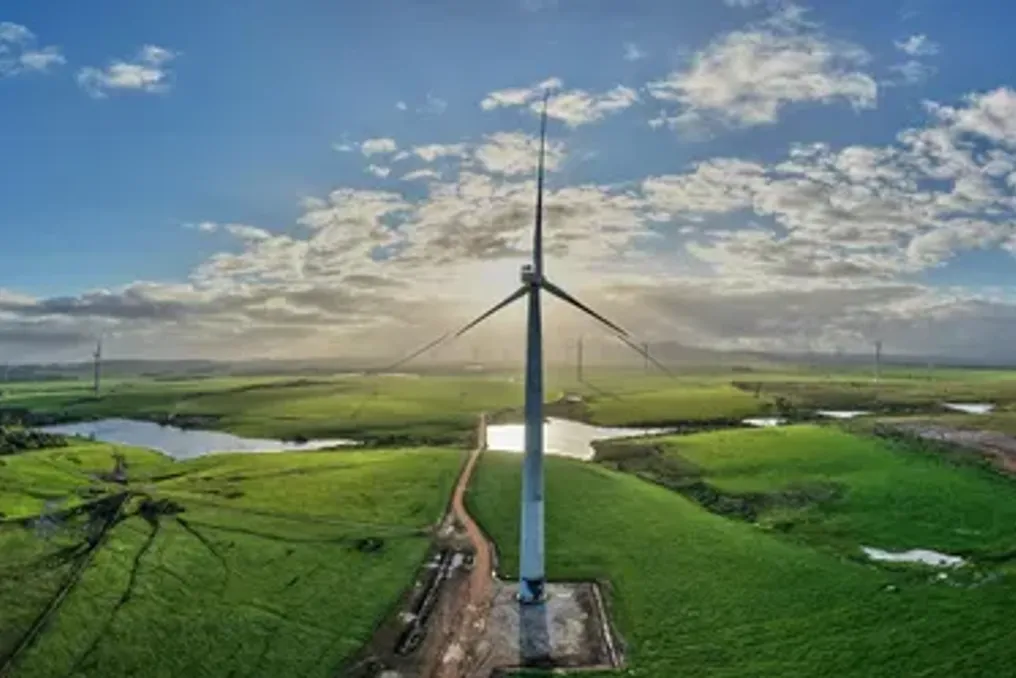
A prime example of this approach is the 330 MW Impofu Wind cluster located in the Cugo region of the Eastern Cape. This project was completed in June 2026 after ten years of planning by Red Cap Energy. It is currently owned and operated by Enel Green Power South Africa.
The project utilizes a newly constructed 116-kilometer transmission line, which bypasses local grid limitations and directs energy directly to the Sasol facility in Sekunde via Gqeberha. This line runs approximately 90 km east of Humanstad and the Impofu Wind Farm cluster.
Mark Taunton, CEO of Red Cap Energy, noted: 'Ten years ago, we quickly realized that the existing grid infrastructure would not be sufficient to deliver this energy where it was needed.' He added that instead of abandoning one of the country's key wind corridors, the company decided to obtain permission to build the transmission line itself.
Community-Based Solutions
The construction of the 116-kilometer transmission line was not just about erecting poles; it was a process of direct engagement with residents. The Impofu project required securing land rights across 87 different parcels, as well as continuous communication and agreement-making with private farm owners, state forestry managers, correctional facilities, and local municipal councils.
The developers did not impose their path but carefully listened to community concerns regarding electricity and adjusted their plans when objections arose. During the work, they collaborated with local groups to restore existing damaged public infrastructure.
When a key municipal transmission line in Nelson Mandela Bay, which supplied the industrial center of an informal settlement, began failing due to aging poles, Red Cap stepped in. To help overcome the local municipality's funding shortage, Red Cap joined forces with local business leaders to repair and strengthen the regional power network and secure the line.
Denise van Huyssteen, CEO of the Nelson Mandela Bay Chamber of Commerce, emphasized the importance of repairing this line: 'This line powers a key industrial zone, and we were pleased to collaborate with Red Cap to make this critical project a reality, ensuring stable power supply and economic growth in Nelson Mandela Bay.'
Thanks to assistance in repairing local public infrastructure, businesses in the vicinity were able to continue operating, contributing to job preservation and supporting economic growth. Today, the power generated by Impofu safely feeds into the national grid, powering major industrial enterprises such as Sasol and Air Liquide in Sekunde, according to long-term agreements.
A Powerful Future
The lessons learned from close interaction with local landowners and municipalities are now being applied in an even larger project—the 720 MW Nuweveld wind farm in the Northern Cape. To illustrate the scale of this expansion, the Nuweveld project is more than twice the size of Impofu and will require the construction of an additional 100 km of transmission lines.
This collaborative approach fully aligns with the Independent Transmission Infrastructure Public Procurement Program, which incentivizes private companies to build transmission lines and transfer them to government management. Taunton, reflecting on the necessity of solving real problems when connecting communities to the grid, stresses that practical cooperation makes such projects possible. He notes: 'For a project like Impofu, the learning happens on the ground, during negotiations and subsequent problem-solving when route changes are necessary.'