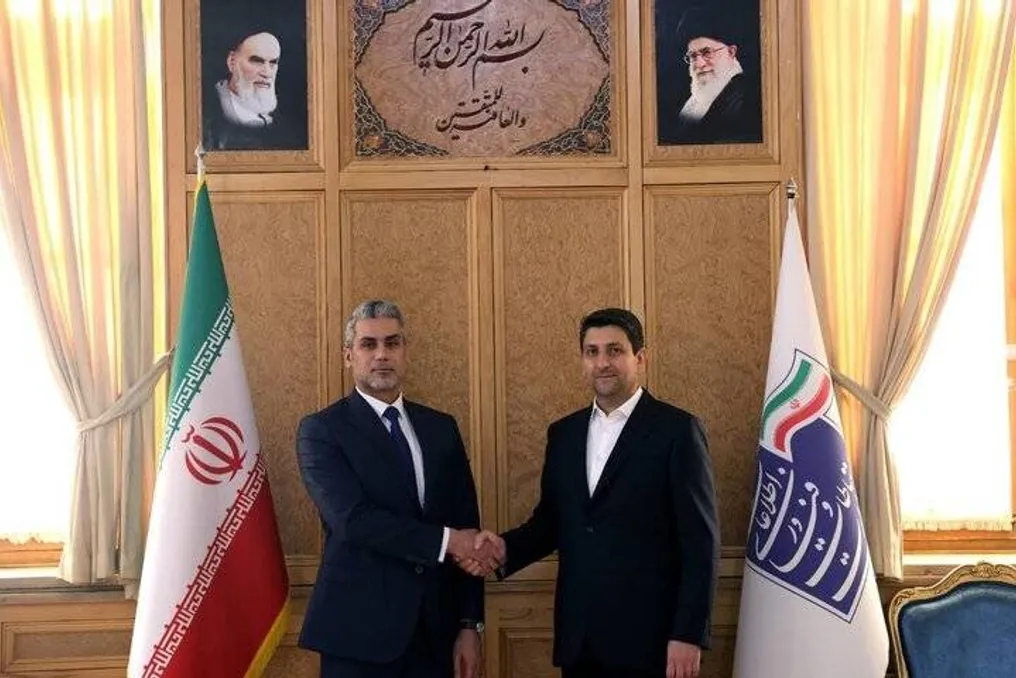
Sattar Hashemi, the Minister of Information and Communications Technology (ICT) of Tehran, and Yasser Abdulzahra Al-Hajjaj, the Iraqi Ambassador to Iran, emphasized the need to enhance interaction between the two countries in the ICT sector, with a particular focus on emerging technologies and the digital economy.
The meeting took place in Tehran on Monday to explore opportunities for developing technological partnership ahead of the visit of the Iraqi Minister of Communications, Mustafa Jabbar Sanad, to Iran next week, according to Mehr news agency. Hashemi noted that the potential of both countries in modern technologies and the digital economy could form the basis for implementing joint research projects and expanding cooperation.
He stated Iran's readiness to share its experience and achievements in areas such as communication infrastructure development, digital services, the digital economy, cybersecurity, and new technologies. Furthermore, it was announced that the Iraqi Minister of Communications has been invited to attend the International Exhibition of Electronics, Computers, and E-commerce (ELECOMP) in 2026, which will take place from August 31 to September 3. 'This visit will provide an excellent opportunity for Iraqi officials to familiarize themselves with the capabilities and capacities of Iranian companies operating in the ICT sector; it can also contribute to developing a roadmap for future cooperation between the two ministries.'
The official also expressed the ICT ministry's willingness to facilitate a greater presence of Iranian companies in the Iraqi market and promote technological interaction between the private sectors of the two countries.
For his part, Abdulzahra Al-Hajjaj stated that Baghdad welcomes improved cooperation with Iran, especially in the technological field. He expressed hope that the visit next week will foster new interaction between experts and companies from both countries.
In July, Mohammad-Mohsen Sadr, head of the Iranian Information Technology Organization, held a meeting with Mustafa Jabbar Sanad. This meeting took place on the sidelines of the first session of the UN Global Dialogue on AI Governance, convened by the UN General Assembly in Geneva on July 6 and 7. The parties discussed the role of information technologies and artificial intelligence in solving energy imbalances, creating smart infrastructure, increasing productivity in the energy sector, as well as in developing e-government and data transmission. They also spoke about expanding cooperation in digital transformation, exchanging technical expertise, and implementing joint projects.
Strengthening Technological Ties
In 2025, Hashemi and Nasir Abdul Mohsen Abdullah, former Iraqi Ambassador to Tehran, discussed ways to expand technological cooperation between the two countries. During this meeting, Hashemi detailed the ICT Ministry's strategic plan aimed at promoting technological diplomacy. The official emphasized the necessity of utilizing the potential of both countries as a link in the international transit route using Iranian infrastructure, according to Mehr news agency.
Referring to the capabilities of knowledge-based companies and the growth of the digital economy in the country, Hashemi noted that the private sectors of Iran and Iraq could cooperate in the mentioned fields. Abdullah, in turn, called for the development of partnerships, stressing that any efforts to strengthen relations would be constructive. The Iraqi official stated that the countries could expand cooperation in cybersecurity and the digital economy.
Both officials also stressed the importance of ensuring a reliable communication network to provide the best services to pilgrims during the Arbaeen pilgrimage. Additionally, they explored ways to activate cooperation in the ICT sector, particularly in the fields of Artificial Intelligence (AI) and e-government.
During the meeting held on January 30, 2025, in Tehran, Abdullah mentioned the large number of Iranian and Iraqi pilgrims, emphasizing that such extensive contacts require enhanced interaction. He then expressed Iraq's interest in advancing relations with Iran in areas such as AI, cybersecurity, and communication infrastructure, according to IRIB.
Highlighting the strengthening of cooperation between the two countries, the official stated: 'Trade between Iraq and Iran should reach $20 billion annually, part of which must be allocated to information and communications technology.'
For his part, Hashemi noted previous cooperation in cybersecurity and e-government, stating that 'knowledge transfer to Iraq is one of the main axes of cooperation between the two nations. Iran also plans to utilize the possibilities of artificial intelligence and would welcome cooperation in this area.'
The official proposed joint investments in international transit, fiber optics, and the creation of a large data center in Iran as other possible areas for cooperation. Hashemi also stated that ensuring a high-speed communication network for the Arbaeen pilgrimage should be included in the agenda.