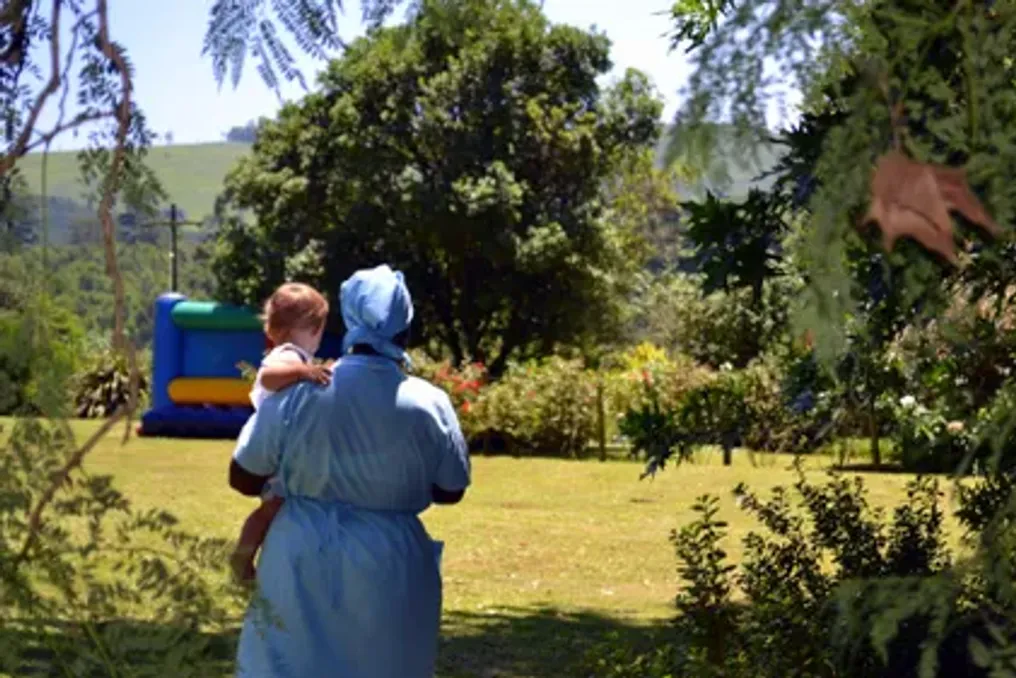
According to the latest study by Statistics South Africa (Stats SA), the care economy in South Africa, whether paid or unpaid work, predominantly falls on the shoulders of women. This situation continues to affect women's opportunities to participate in the labor market.
In its report Gender Series XIII: Gender Disparities in Care Work in South Africa, 2015–2026, Stats SA found that women remain heavily concentrated in both paid care professions and unpaid domestic duties.
The care sector covers a wide range of activities, including healthcare, education, social support services, care for the elderly, children, people with disabilities and the sick, as well as housework. This sector includes both employed workers and family members providing care.
The agency noted that 'the care economy is an integral part of the South African economy and society, encompassing a wide range of activities that provide care, support, and services to people throughout their lives.' However, much of this work is often underestimated or ignored. Stats SA emphasized that 'care work often goes unnoticed and undervalued, and it is frequently performed by women, highlighting persistent gender inequality both in households and in the labor market.'
Out of the Labor Force
Figures demonstrate how care responsibilities intersect with women's economic activity. Stats SA found that in the first quarter of 2026, the female labor force participation rate was 53.8%, compared to 64.2% for men. Furthermore, women showed a significantly higher rate of inactivity—46.2% versus 35.8% for men.
The publication indicated that 'men remained more inclined to participate in employment and securing jobs, while women continued to face higher levels of economic inactivity, reflecting ongoing barriers to labor market participation.' This gap is particularly noticeable among married or cohabiting individuals. In 2026, the labor force participation rate among married or cohabiting women was 62%, compared to 84.8% for men. Stats SA believes this gap indicates that unpaid care responsibilities continue to limit women's participation in paid employment.
Having children also influences the situation: as the number of children in a family increased, the share of labor force participation decreased, and this decline was more pronounced among women than among men.
Predominantly Unpaid
The gender gap is not limited to the employment sector. Among those outside the labor force, the role of homemaker remained overwhelmingly female. In 2026, 20.7% of women outside the labor market reported being homemakers, compared to only 4.6% of men.
This trend appears from an early age. In 2025, 8.4% of girls aged seven to eighteen who were not attending school cited family obligations as the main reason, whereas no such data was available for boys.
Financial consequences are also evident. Stats SA found that grants and cash transfers were more often sources of income in female-headed households, and such families were more likely to have unemployed members.
Predominantly Female
Women also dominate professions that constitute the majority of the formal care economy, although paid care work accounted for 14.2% of total employment in 2016 and decreased to 12.5% in 2026. Stats SA reported that the sector employed 2.1 million people in 2026, less than 2.2 million in 2016. The proportion of female employment dropped from 1.9 million to 1.7 million over this period, while the number of men employed in care increased from 330,000 to 349,000.
Stats SA concluded that 'the data show that women continued to dominate most paid care professions over the ten-year period, underscoring the gendered nature of paid care work.'
Housework remains one of the most female professions: in 2026, women constituted 93.6% of household workers, compared to 94.6% in 2016.
In Schools
Women made up over nine out of ten preschool teachers, nearly nine out of ten nurses and midwives, and 83.5% of personal care workers and 91.9% of social workers. The representation of women among specialist doctors increased from just under half in 2016 to 56.5% in 2026.
When this work disproportionately falls on women, the cost is measured not only in hours spent caring. It is also measured in the work women cannot obtain, the income they cannot earn, and the economic opportunities they cannot realize.