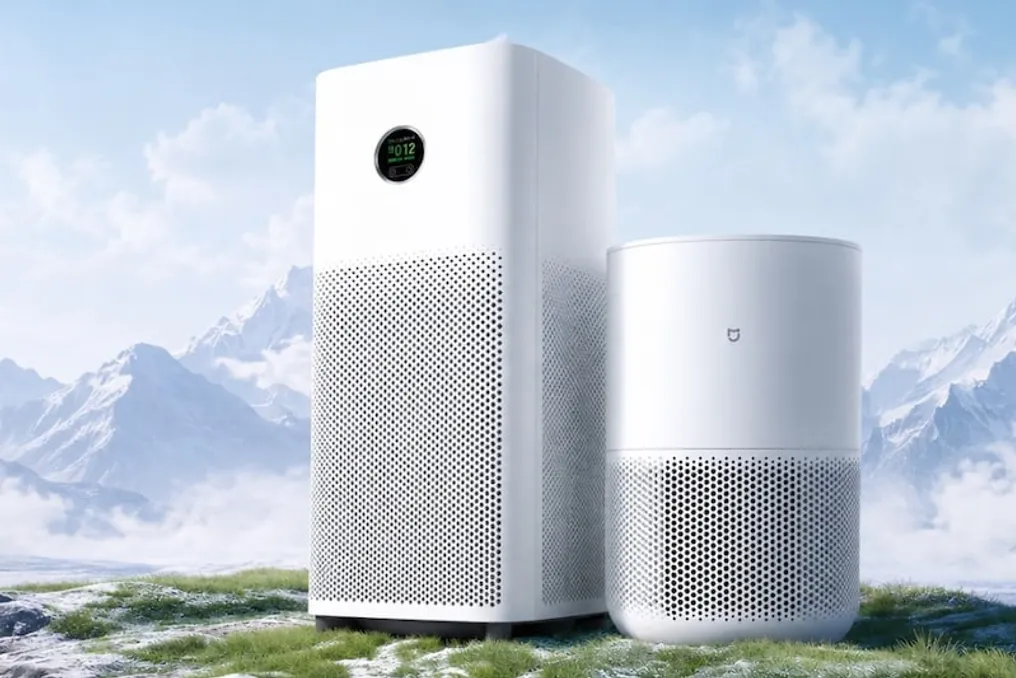
Xiaomi has entered the Indian market through its Mijia sub-brand. This sub-brand launches various types of home appliances in China, and its debut in India is with two new air purifiers. Among these are the Mijia Smart Air Purifier 4 Compact, designed for small rooms, while the Mijia Smart Air Purifier 6 is presented keeping in mind large homes and spacious rooms. The starting price for these devices is ₹7,999.
Although Xiaomi has been selling air purifiers in the Indian market for a long time, the company's after-sales service experience with a senior journalist was not satisfactory recently. The company had informed him and consumer forums that the filter for that specific air purifier model had been discontinued, but later the same Xiaomi purifier's air filter became available, and he purchased it.
When we asked Xiaomi about this issue, the company did not reply to the email, but assured the customer over the phone that they would improve service in the future. However, merely saying so does not solve any problem. Since the company is now launching air purifiers under Mijia, it will be important to see what steps it takes for after-sales service.
Both Mijia models launched by the company cater to the needs of different users. One model is small, light, and affordable, suitable for bedrooms or small rooms. The other model is more powerful and larger, designed to clean the air in large rooms.
The Mijia Smart Air Purifier 4 Compact is the most affordable model, priced at ₹7,999. It weighs approximately 2.2 kg, allowing it to be placed on a table, floor, or various locations in the room as needed.
Its Particle CADR rate is 230m³/h, indicating how quickly the air purifier is capable of providing clean air. According to the company, this model is for small and medium-sized rooms and is designed keeping in mind an area of up to 400 square feet.
It includes a 3-in-1 filtration system, which claims to trap 99.97 percent of particles down to 0.3 microns. These particles can include dust, PM2.5, pollen, smoke, and other fine airborne particles. However, when purchasing, it is essential to evaluate such claims based on the room size and external pollution levels, and one should not expect a small purifier to clean the air of an entire large house.
It also features real-time air quality monitoring, based on which the purifier can adjust its speed. It offers various modes such as Auto, Sleep, and Manual. In sleep mode for nighttime use, the noise level is claimed to be around 20dB, and the display light can also be turned off. It can be controlled via the Xiaomi Home app on the phone, and it also supports Google Assistant and Alexa.
On the other hand, the Mijia Smart Air Purifier 6 is a more powerful model, priced at ₹19,999. This is suitable for users who require an air purifier for large bedrooms, living rooms, or larger indoor spaces.
This model has a Particle Clean Air Delivery Rate (CADR) of 443m³/h and a Formaldehyde CADR of 218m³/h. The company states that this model can be used for an area of approximately 940 square feet, based on two air changes per hour, although actual performance depends on factors such as room size, whether doors and windows are open, and external pollution levels.
The main feature of this purifier is its 5-stage Penta Clean Purification System, which uses activated carbon, UV-C light, and negative ion technology with filtration at various levels. This purifier can display information about airborne particles as well as temperature and humidity.