Development of India's logistics infrastructure to support the next stage of economic growth
Read more
YourStory [india, en]
yourstory.com

Development of India's logistics infrastructure to support the next stage of economic growth

For a long time, logistics was viewed merely as a supporting function responsible for moving goods. However, today it has gained the status of a strategic business priority. Reliable logistics networks are critically important for maintaining continuous company operations amid disruptions in trade routes, changes in tariffs, or uncertainty in production centers, as they affect delivery times, customer experience, and firms' participation in global trade.

As manufacturers diversify production beyond traditional centers, India is becoming a key player in the next phase of global supply chains. But attracting factories is only part of the potential; it is equally important to create the entire logistics ecosystem capable of connecting production hubs with domestic and international markets through modern infrastructure, digital coordination, and integrated supply chains. The question is no longer whether India will play a larger role, but how central that role can become.

This shift is driven by a number of global and domestic trends. Geopolitical tensions, changing trade alliances, and an increased focus on supply chain resilience are prompting companies to reduce dependence on concentrated production hubs. Simultaneously, the 'China plus one' strategy is developing, where many firms are expanding across several countries instead of establishing a single manufacturing base outside China to better distribute risks.

India is already feeling the effects of these changes. Global manufacturers are increasing their presence in sectors such as electronics, engineering products, and pharmaceuticals. Production Linked Incentive (PLI) schemes continue to support manufacturing growth, and electronics exports are steadily increasing. Trade agreements with major markets, including the European Union and the United States, are expected to lead to the creation of new freight corridors, expansion of cross-border trade, and further integration of India into the global logistics system.

Nevertheless, production growth places higher demands on logistics. Every new factory, export order, and shipment depends on a network capable of efficiently moving goods within and outside the country. The transformation of Indian logistics has been underway for several years, supported by continuous investment in roads, railways, ports, freight corridors, and multimodal infrastructure, which improves connectivity. Government initiatives, such as PM Gati Shakti and the National Logistics Policy, ensure more integrated planning and support unimpeded movement across roads, railways, ports, and inland waterways. These measures help reduce logistics costs, enhance connectivity, and make Indian manufacturing more competitive.

The country's warehouse network is also expanding. Modern warehouses, automated distribution centers, and cold chain facilities facilitate e-commerce, exports, and high-tech manufacturing.

As supply chains become increasingly complex, businesses require logistics providers who can integrate freight forwarding, customs, warehousing, order fulfillment, and transportation into a single coordinated system. Companies like Hexalog meet this need by providing these services under one contract, giving enterprises a more holistic approach to managing India's growing logistics ecosystem.

As India's logistics network expands, the next challenge is not just moving more goods, but effectively coordinating increasingly complex supply chains. Warehousing is demonstrating sector evolution: what was once primarily a storage function has turned into a value-added service. Manufacturers increasingly expect logistics partners to handle quality checks, packaging, kitting, assembly, inventory management, and order fulfillment closer to production centers and end consumers. Instead of collaborating with multiple suppliers across the chain, companies are seeking integrated partners capable of combining these services.

As specialized freight corridors, Bharatmala highways, Sagarmala ports, and multimodal logistics parks become more interconnected, companies gain greater flexibility in choosing modes of transport. Rail transport can be used for long-haul movements, while road networks handle last-mile delivery, helping to reduce costs while simultaneously increasing speed and reliability. Companies like Hexalog use artificial intelligence to recommend transport modes and routes based on cost, transit time, and potential disruptions, allowing businesses to optimize shipments without complicating operational activities.

As exports continue to grow, customs clearance becomes a competitive advantage rather than just a compliance requirement. Faster documentation, digital workflows, and close interaction can significantly reduce delays, especially in sectors like electronics, engineering products, pharmaceuticals, and textiles, where speed is critical. Hexalog integrates customs into the overall logistics process—from documentation and compliance to cargo movement—helping companies expedite, make more predictable, and simplify cross-border shipments.

As supply chains become more complex, businesses demand a unified view of them, rather than coordinating five different providers handling freight forwarding, customs, warehousing, order fulfillment, last-mile delivery, and reverse logistics. Dibyanshu Tripathi, CEO and co-founder of Hexalog, notes: 'A supply chain that only works when everything goes right is not a supply chain. It's a gamble.'

Companies like Hexalog combine these capabilities into an AI-powered ecosystem, providing businesses with a single overview of shipments, inventory, documentation, and logistics operations instead of needing to manage multiple systems. Resilience has become equally important. Recent disruptions—from Red Sea delays to changes in trade rules and geopolitical uncertainty—have shown that supply chains must be designed to adapt to changing conditions.

Artificial intelligence plays an increasingly significant role in this change. By combining real-time visibility with intelligent route planning and proactive disruption response, issues are identified early, alternatives are quickly proposed, and shipments continue to move even if the plan changes during transit. For businesses, this means a supply chain that is not only more efficient but also better prepared to respond to unforeseen difficulties.

Technology is becoming central to modern logistics. Artificial intelligence, predictive analytics, and digital orchestration help logistics providers optimize routes, automate documentation, improve inventory planning, and make faster operational decisions in increasingly complex supply chains. As a result, companies are looking for logistics partners who do more than just move goods; they want partners who can help them orchestrate their supply chains from start to finish.

Hexalog is built precisely around this approach. It integrates freight forwarding, customs clearance, warehousing, order fulfillment, value-added centers, last-mile delivery, reverse logistics, and AI-driven optimization into one connected ecosystem. Instead of managing disparate logistics processes through multiple providers, companies gain a unified view of their operations, helping them increase transparency, operate faster, and make more informed decisions.

India's logistics potential extends far beyond simply increasing the volume of goods. As manufacturing expands and global supply chains evolve, the focus is shifting towards creating an ecosystem that is connected, resilient, and ready for the demands of international trade. The foundations are already laid: infrastructure investments are improving connectivity, manufacturing capacity continues to grow, and new trade agreements are opening fresh opportunities for exports and cross-border trade. The next phase will depend on how effectively companies can move goods across these networks. Companies that integrate infrastructure, technology, and supply chain services will play an increasingly vital role in helping businesses navigate this growing complexity and strengthening India's position in global trade.

Similar stories

LG Electronics sees India as a key manufacturing and export hub
Read more
business-standard.com

LG Electronics sees India as a key manufacturing and export hub

LG Electronics India informed shareholders that India is becoming an increasingly significant center for manufacturing and exports. The company already exports products made in India to over 50 countries.

During the first annual general meeting after listing on Indian stock exchanges, Sanjay Chitkara, Co-Chief Sales and Marketing Officer of LG Electronics India, stated that the company has invested 50 billion rupees in its Sri City plant, which will also function as an export hub.

This Sri City plant is set to begin operations by December 2026. Chitkara specified that the company's strategy involves exporting premium products to developed markets and expanding the Essential product line to emerging markets.

He emphasized that the 'Make in India' or 'world strategy' is an increasingly important growth driver for LG India. Company management also noted that it closely monitors global changes and responds promptly, continuing to add new geographical areas to reduce dependence on any single market.

Daehyun Song, Chairman of LG Electronics India, stated at the general meeting that the company's focus will remain on innovation, operational excellence, sustainable growth, and creating long-term value. He also mentioned that the company's listing over the past year was a significant milestone, and the company commits to maintaining the highest standards of corporate governance, transparency, and accountability expected of a public company.

The company's CEO, Hong Joo Jung, told shareholders that LG Electronics India maintains a leading position in most product categories. He added that the company's strength is based on three key areas: innovation, customer experience, and partnership with channel partners.

Jung pointed out that the penetration of home appliances in India remains relatively low, which presents significant prospects for future growth. He cited examples: refrigerator penetration is 30 percent, washing machine penetration is 20 percent, and room air conditioner penetration is 10 percent. Furthermore, further demand growth is expected after the reduction of the GST rate on air conditioners and large televisions, which, according to him, demonstrates strong growth potential for LG Electronics in India.

Management also reported that it uses artificial intelligence (AI) to optimize the operation of home appliances and reduce energy consumption.

Chidambaram points to India's economic problems, noting the absence of an economic expert on the level of Manmohan Singh
Read more
www.aajtak.in

Chidambaram points to India's economic problems, noting the absence of an economic expert on the level of Manmohan Singh

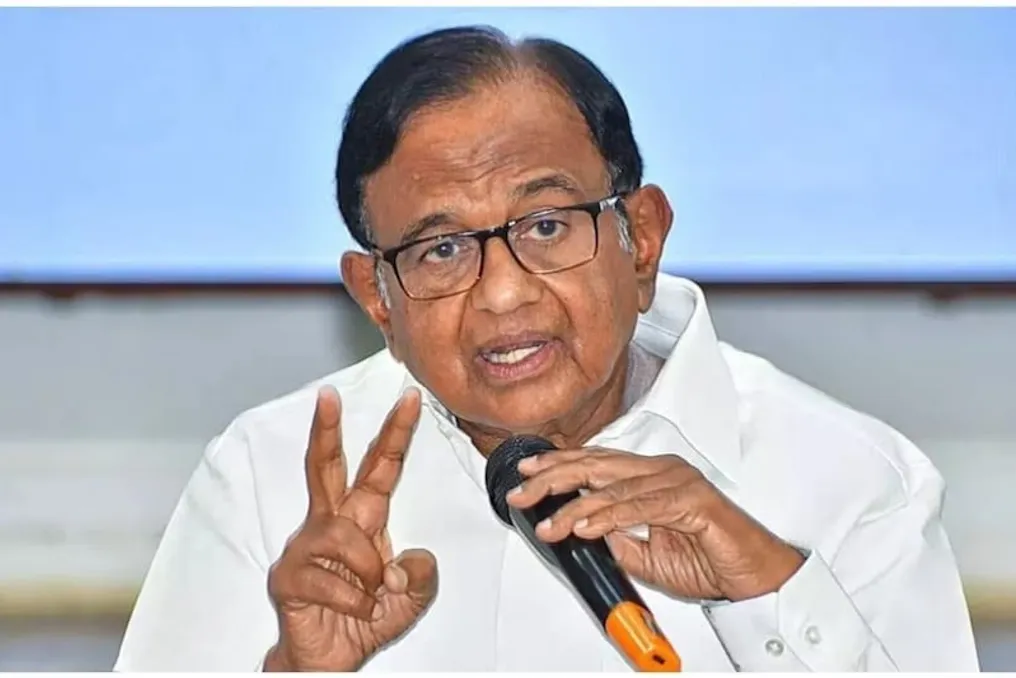
Congress leader and former Finance Minister P. Chidambaram criticized the government, raising questions about India's economic policies, including manufacturing, private investment, regulation, foreign trade, and competition. He emphasized that alongside strong political leadership, specialists with a deep understanding of both the Indian and global economies are necessary.

At the Business Today event 'India @ 100', Chidambaram noted that regardless of the strength of political leadership, the government requires leadership possessing profound knowledge in economic matters. Citing the economic reforms of 1991, he pointed out that at that time, Prime Minister P. V. Narasimha Rao provided political guidance, while Dr. Manmohan Singh played a key role as the economic expert and 'economic brain.'

In Chidambaram's view, there is no other person in the current government who possesses the level of economic expertise of Dr. Manmohan Singh. He stated that an economic specialist capable of understanding the global and Indian economy both theoretically and practically is extremely important, as exiting economic difficulties will be challenging without such competence.

Chidambaram expressed pride in India being among the fastest-growing major economies in the world, but he argued that GDP growth alone is insufficient. He questioned how many jobs this growth creates, what kind of infrastructure complex is being formed, and what benefit ordinary citizens are deriving from it. According to him, the true assessment of economic development should be based not only on growth rates but also on the impact on employment, investment, infrastructure, and people's lives.

Chidambaram acknowledged that the government prioritizes manufacturing through initiatives like Make in India, Atmanirbhar Bharat, and semiconductor production. He noted that the government is taking steps in this direction, but the main question lies in the results of these measures. He stressed that merely launching plans is not enough; it is necessary to assess how much India's production capacity has increased due to these policies and whether the country has managed to create a truly strong manufacturing ecosystem.

He also questioned the incentives provided by the government for semiconductor manufacturing plants. Chidambaram pointed out that a significant amount of public funds is used in these projects, so one must ask what level of industrial and economic benefit the country receives in return. Furthermore, he raised the issue of infrastructure quality, noting that although the government lists achievements in road and other infrastructure development, questions often arise about its quality on the ground.

According to Chidambaram, private investment in India remains cautious, and capital investments face various obstacles. He believes that the task is not just announcing new policies but also implementing them effectively and strengthening the trust of both domestic and foreign investors. The government must ensure that every economic initiative is backed by a clear vision, practical design, and improved execution.

Chidambaram called the growing regulatory burden in the Indian economy a serious problem. In his opinion, the economy and capital investments are caught between regulation and checks/coercion. He also pointed to nepotism and bureaucratic hurdles as major impediments to investment. He noted that many modern rules have become more complex than in 1991. He raised this issue before the then RBI Governor, pointing to regulations whose explicit economic objective was not clear.

Citing the energy sector as an example, he explained that different regulatory systems in different states create difficulties for projects and investments. He observed that a similar problem exists in all sectors: 'there is no economic thought, no economic plan, and no economic design.'

When asked if the 'licensing regime' or 'control regime' of before 1991 had returned, Chidambaram replied that it would be incorrect to directly call the current situation the 'licensing and control regime.' In his view, although names and forms have changed, what is currently observed is a 'rules and regulation regime.' He stated that the excessive number of rules and procedures related to business and investment negatively affects economic activity. For India to become a competitive economy, unnecessary regulation and bureaucratic hurdles must be reduced.

Chidambaram also raised questions regarding Free Trade Agreements (FTAs), noting that the government presents many trade agreements as an achievement, yet many of India's key trading partners...

Minister Yogi Adityanath states that Uttar Pradesh is moving towards a trillion-dollar economy thanks to infrastructure
Read more
timesofindia.indiatimes.com

Minister Yogi Adityanath states that Uttar Pradesh is moving towards a trillion-dollar economy thanks to infrastructure

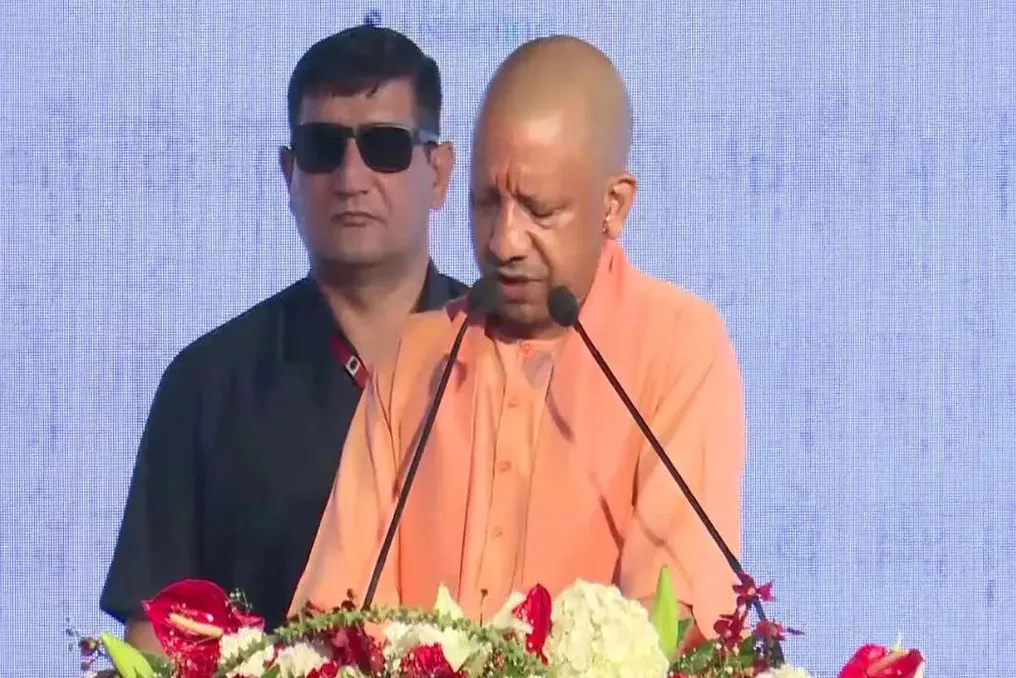
Chief Minister Yogi Adityanath stated on Wednesday that the state of Uttar Pradesh is steadily approaching the status of a one-trillion-dollar economy. He emphasized that the key factors driving this economic growth are the state's strong positions in infrastructure, logistics, industrial development, and effective governance.

Speaking at an investment meeting between Uttar Pradesh and Japan in 2026, Minister Adityanath noted that the state is continuously improving and ranks among the top three economies in the country. He specifically highlighted Uttar Pradesh's advantages in infrastructure, logistics, industrial growth, and good governance.

Adityanath added that over the last nine years, the budget, gross domestic product (GDP), and per capita income in Uttar Pradesh have tripled, as has the participation of women in the workforce by more than threefold.

He also focused on the expanding infrastructure of the state, including the continuous development of multimodal logistics and industrial corridors, electronics and semiconductor ecosystems, and data center infrastructure. Uttar Pradesh possesses 60 percent of all national highways, has 17 airports, the largest railway network in India, metro networks, the country's first high-speed railway, the first inland waterway, two dedicated freight corridors, and logistics hubs ensuring global connectivity.

The Minister of Agriculture and Farmer Welfare of the Union, Shivraj Singh Chouhan, called upon the same meeting to utilize Japanese technology and experience to support Indian farmers. He proposed viewing the partnership between India and Japan more broadly than just investments, extending benefits to farmers, youth, and the rural economy.

Chouhan noted that India's vast market, large young population, and significant agricultural potential can open new opportunities in the agrarian sector when combined with Japan's technological and industrial expertise. He strongly urged Japanese enterprises and institutions to develop technologies and equipment that would be useful and easily accessible to small and marginal farmers.

The Minister stressed that the state is capable of combining Japan's technical expertise with the talents and market opportunities of Uttar Pradesh to create new avenues for employment, innovation, and sustainable growth. However, Chouhan also pointed out the need to implement technologies that can increase crop yields, reduce water consumption and production costs, and boost farmers' incomes, calling for greater involvement of rural youth in the agri-tech ecosystem.

The Uttar Pradesh-Japan Investment Meeting in 2026 will take place from August 18 to 23 in Uttar Pradesh and Delhi, gathering over 200 Japanese industrialists, CEOs, business representatives, and politicians. It is worth noting that bilateral trade between India and Japan in 2025-26 amounted to approximately $27.5 billion. Exports from Japan to India reached $21.43 billion during this period, while imports were $6.04 billion, with India ranking 14th in Japan's total trade volume at 1.75 percent, according to government data.

Popular