Post Office aims to leave the business rescue program despite the absence of any private partner willing to join, guarantees of state funding, and an unresolved claim from a legal creditor that is being disputed by two funds.
This situation was presented to parliament during a meeting of the Committee on Communications and Digital Technologies, where representatives of Post Office, business rescue specialists, and the newly appointed board of directors reported on the transition 'from business rescue to a sustainable state enterprise.'
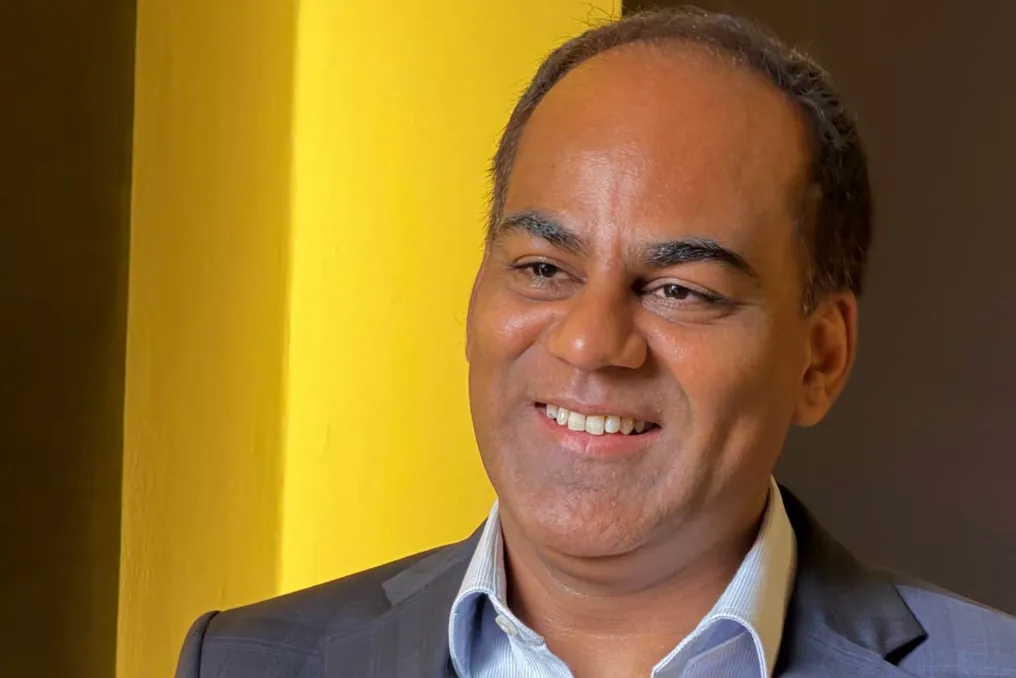
Joint business rescue specialist Anush Ruplal informed the committee that partnerships were a 'vital part of the plan' and attracted serious attention 'from day one,' but there was 'no partner ready to invest money in the business' while the organization was in rescue mode. He characterized this as a 'chicken and egg' situation, arguing that exiting rescue itself would eliminate the uncertainty that was holding investors back.
Post Office Executive General Manager Fatima Ghani previously made a similar argument to TechCentral in July. Earlier, in December, TechCentral reported that the government had opened Post Office to attract private partners for business recovery.
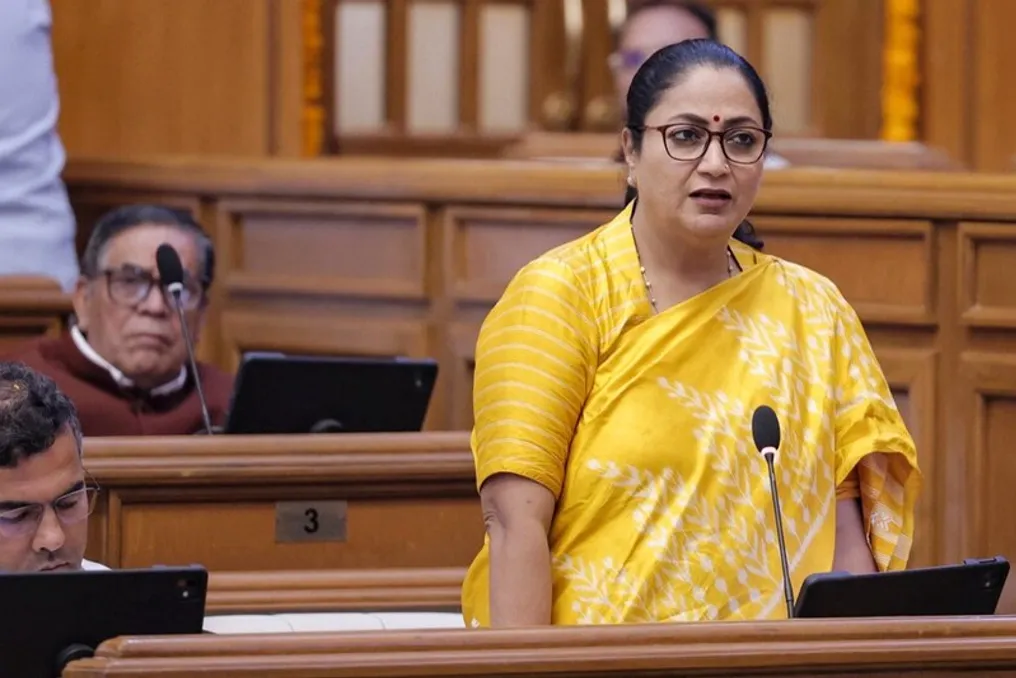
Committee Chairperson Khusela Diko noted at the beginning of Tuesday's session that the invitation to the private sector was sent 'around last December,' and that 'we have gone nine months,' yet 'there are still no signs... of progress.' Communications Minister Solly Malatsi acknowledged that the process was moving 'significantly slower than we all expected,' and that no agreement had been signed.
Sustainable development? 'The answer is no'
Fatima Ghani frankly told the committee about the current status of the institution, stating: 'Business rescue has preserved and stabilized Post Office. It has not completed the restoration of the institution. These are two different things.' She emphasized: 'If the question is whether Post Office is sustainable today, the answer is no.'
Ghani argued that there is no 'single intervention' capable of moving the company from a state of recoverability to sustainability, and that partnerships are a 'strategic pillar of sustainability... not a substitute for a sustainability strategy.' She added that the strategy must also provide for adequate funding of the state mandate, revenue generation, modernization, and commercialization of Post Office assets and infrastructure.
Regarding the achieved results, business rescue specialists pointed to an information request process that gathered 95 responses on 129 opportunities across six clusters. The South African Development Bank participated as a deal consultant, and the relevant request for proposals was issued on July 17 and closed on August 7. Among the real-time income-generating initiatives are email services, rental of towers, masts, and roofs, as well as an agreement on national lottery distribution. However, none of this corresponds to the core investments provided for in the rescue plan.
Specialists filed for the termination of business rescue in the Pretoria High Court on June 12, but the date of the court hearing has not yet been set, partly due to opposition to this exit. More than 99% of the R12 cents compromise owed to creditors under the adopted rescue plan has been paid. An unpaid R18 cents contingent legal compromise remains, concerning the South African Revenue Service, the Post Office Pension Fund, and the Medipos medical scheme. The Pension Fund and Medipos filed objections to the specialists' application, and Post Office is negotiating with both parties to reach a commercial settlement.
Ghani informed the committee that Post Office 'can clear its historical debt after resolving the R18 cents issue.' The state tranche of R3.8 billion, conditional on an R18 cents dividend increase, was never allocated, and this matter has been postponed to the company's presentation within the medium-term expenditure framework before the treasury. Deputy Minister of Communications Mondli Gungubele warned that if the opposition succeeds, it 'risks returning us to where we don't want to be,' the negative position of March 2023.
The handover to the new board of directors is not smooth. The board, led by Regina Sizakele Madlala, was appointed on June 5 and sworn in on June 22, but until the official end of the rescue process, the specialists remain the accounting body, and the board of directors reports to them.
Madlala frankly told the committee about the constraints being created. She noted that her board's committees 'are not functioning yet due to dependence on the services of the business rescue specialist secretary,' and that the board 'has been unable to exercise oversight.' In some cases, she said, only the specialists invite people to board meetings.
Books fixed, business not
Malatsi confirmed that the business rescue specialists 'are still managing' Post Office. Almost all management positions were filled temporarily when the specialists took over management, and the board of directors was instructed to prioritize filling permanent positions for CEO, CFO, COO, and Chief Auditor.
The report began with the presentation of Post Office's first unqualified audit opinion in six years, but the figures presented remain fragile. Acting CFO Lenny Govender confirmed that the chief auditor noted significant uncertainty related to ongoing operations due to a monthly cash deficit, where expenses still exceed revenues.
The presentation showed the company's net asset value at a positive R751 million, while the current liquidity ratio is only 0.66, meaning current liabilities exceed current assets. This is lower than the positive figure of R840 million that specialists reported in June for the year ending March 31, 2026—a difference the presentation did not explain.
These figures contrast with the low point in 2023, when a temporary liquidation order was issued, liabilities exceeded assets by R7.5 billion, and the net loss was approximately R2.2 billion. About 4,342 employees were laid off, and the branch network was reduced from over a thousand to 657.
Deputies were not convinced that the worst was behind Post Office. Tsholofelo Bodlani of the DA party called it 'worrying' that the specialists are leaving 'without solid private partnerships,' leaving the company vulnerable to creditors after the moratorium on litigation is lifted. Business rescue protects the company from lawsuits, and this protection disappears when the rescue ends.
Adil Nchabeleng of the MK party asked who is responsible for the initial failure and what self-sufficient revenue management is expected without further capital injections. Sbungiseni Vilakazi of the DA welcomed Ghani's refusal to 'embellish' the situation but stated that it is hard to imagine how an outsider could be more optimistic than Post Office's own management.
Diko asked Post Office to return with a 'roadmap to sustainability' containing clear timelines and a defined partnership path, reiterating that the committee is not calling for privatization. The general sentiment, according to her, is that Post Office 'has not yet left the woods,' but 'under equal conditions, we have moved further than before.'