How experience training against men's teams can help Pakistan win the Asian Cup
Read more
Khaleej Times
www.khaleejtimes.com

How experience training against men's teams can help Pakistan win the Asian Cup

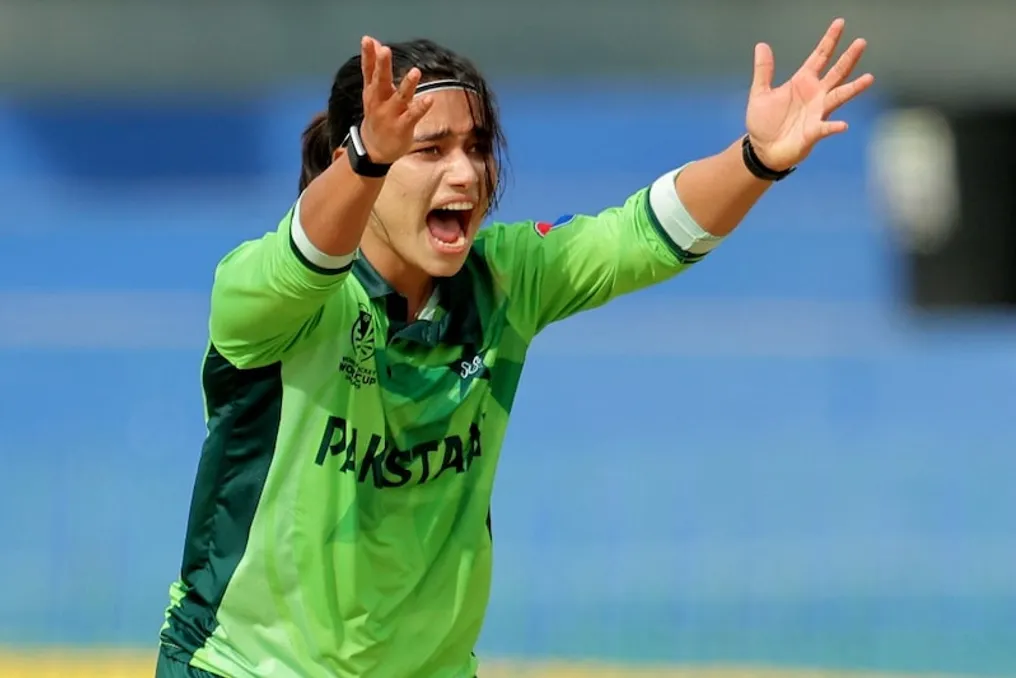
Ahead of the Women's T20 Asia Cup 2026, which will be held in Dubai from August 28 to September 13, Pakistan's captain Fatima Sana stated that her team is preparing for the major tournament by playing against a local men's team in Lahore.

Pakistan, a two-time finalist, is making every effort to win the long-awaited trophy. The question arises: do training sessions against juniors truly contribute to improving the women's cricket team's results?

Chaya Mughal, who arrived in Dubai in 2010 as a teacher and later headed the UAE national women's cricket team, believes that competing with stronger and faster juniors can significantly raise the level of play.

Mughal noted that one of the main reasons for the impressive growth of women's cricket in the UAE was the decision by the country's cricket council to allow the women's team to hold practice matches against men. Mughal, who previously played local cricket in India before moving to the UAE, told Khaleej Times in 2021 that playing against juniors helped the women's team prepare for more complex international challenges.

"Despite Covid, thanks to the ECB (Emirates Cricket Board), we had many matches to play, especially playing with boys, under-16 juniors; this gave us huge confidence and match scenarios and practice that we were waiting for," Mughal said in Khaleej Times ahead of the 2021 Asia Cup qualifiers.

Thanks to this, the UAE qualified for the Asia Cup in 2022 for the first time, which was a huge achievement for a country that did not have a women's cricket ecosystem until 2010. Two years later, in 2024, they qualified for the Asia Cup again. Now, having qualified for the 2026 Asia Cup, the UAE will host the main tournament, with the Dubai International Stadium selected as the venue for the continental event.

Players such as Esha Oza, current UAE captain, Tirta Satish, Induja Nandakumar, Samaira Dharndharkar, Siya Gokhale, and Vaishnave Mahesh have gained invaluable experience playing against men's teams with good fast bowlers. Mughal, who is now a women's cricket development officer in the UAE, explained: "We wanted to practice, and we lacked girls for training among us. So we decided to play with under-16 juniors. We played many matches and defeated them repeatedly."

She added: "We gained the confidence to play against these fast bowlers because the guys have power; everyone knows how hard they hit and how fast they bowl. So it was very good for us."

Nevertheless, there remains a significant gap between an associate team like the UAE and a traditional cricket nation like Pakistan. For the UAE, which struggled to form an 11-player squad about 15 years ago, every practice match is an opportunity to become more competitive and qualify for major events like the Asia Cup. For Pakistan, the task is to win tournaments like the Asia Cup.

After practice matches against the men's team from the Abdul Qadir Cricket Academy in Lahore, Pakistan's captain Fatima is confident that her team will play strongly and win the Asia Cup for the first time in its history. Fatima stated: "We are well prepared for the tournament. We played in competitive matches against juniors where we faced pressure. This knowledge will help us adapt to the challenges of competition."

In Fatima's opinion, the biggest advantage of playing against juniors is that it helps prepare for crucial moments in a match. She emphasized: "We needed to understand how best to handle pressure, and this is always highlighted during major tournaments. These matches helped us in that regard, and the difference will be visible."

Fatima also noted the importance of maintaining composure in tense situations instead of panicking: "We told the girls to stay calm in critical moments, remain in control, trust their hard work, and execute the plans."

Fans eagerly await whether Pakistan can handle the pressure, especially when facing arch-rival India, the Asian powerhouse, in a big showdown on September 5. Playing against juniors is one of the key factors in the UAE's qualification for three consecutive Asia Cups. Can the same strategy help Pakistan win its first continental title?
Similar stories

Analysis of UAE Regional Policy and Iran's Foreign Policy Positions
Read more
www.tehrantimes.com

Analysis of UAE Regional Policy and Iran's Foreign Policy Positions

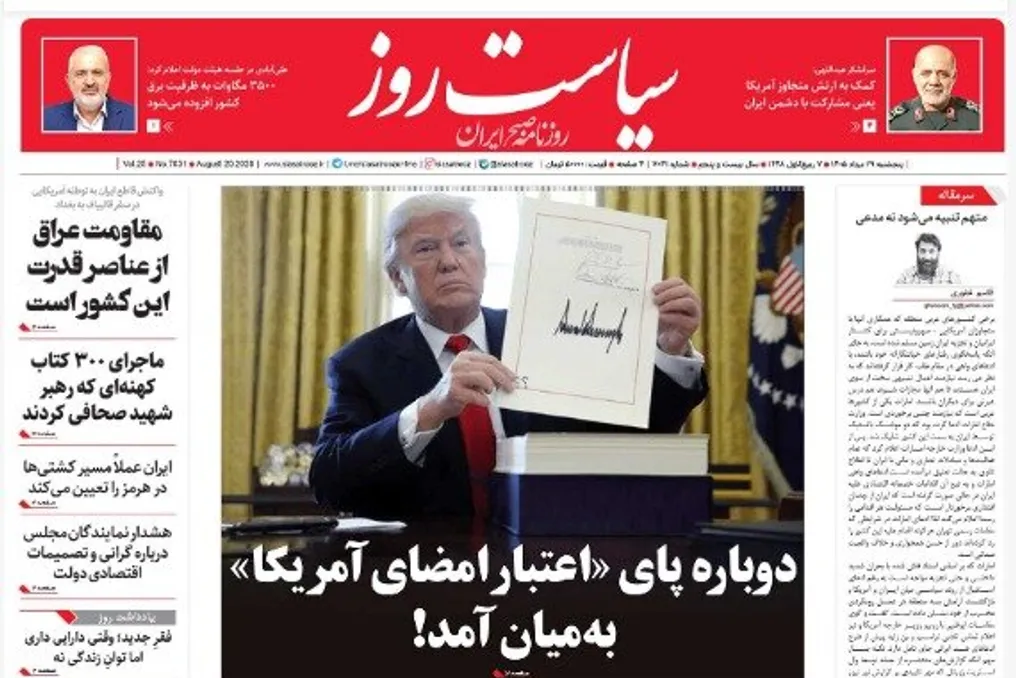
The newspaper Siasat-e-Rooz dedicated its editorial article to the regional behavior of the United Arab Emirates. According to this publication, Abu Dhabi's actions indicate that the country continues to rely on the illusion that support from America and Israel will ensure its political survival and guarantee its place in the region.

The recent security agreement between Saudi Arabia, Pakistan, and Turkey was a serious blow to the UAE. However, instead of adopting a joint regional approach, the UAE continues to operate within the American-Israeli sphere. Experts note that this requires a decisive response from regional countries to counter Abu Dhabi's destructive role in ensuring regional security.

The United States, unwilling to bear the high financial and human costs of war against Iran, seeks to open new avenues to weaken Iran's capabilities by utilizing its naval blockade regime.

Iran: A Document Based on Peace and Friendship

The Iranian newspaper highlighted the importance of ratifying the Caspian Sea Convention for Iran in an interview with Akbar Valizadeh, a professor of regional studies at Tehran University. Valizadeh explained that the Caspian Sea is legally and geographically distinct from the Persian Gulf and the Strait of Hormuz, and the legal regimes of these two water bodies cannot be equated.

Nevertheless, recent events send a common message to all states in the region: the security of waterways and maritime navigation cannot depend solely on the balance of power. The growing significance of clear rules, cooperation mechanisms, and the responsibility of coastal states makes the Caspian Sea Convention particularly important. It defines the Caspian as a zone of peace, good neighborliness, friendship, and cooperation, and it explicitly prohibits the presence of armed forces of non-littoral states. Furthermore, it emphasizes regional stability and the security of maritime navigation.

Sobh-e-No: Measurements of an Inspiring Power

The publication Sobh-e-No analyzed aspects of Galibaf's trip to Iraq, arguing that if the visit is viewed only through the prism of routine parliamentary meetings, official contacts, and friendly relations, the true meaning will be missed. Today, Baghdad is not just a diplomatic destination; it is a node in the geometry of regional power. In this geometry, Iran must transition from a phase of 'power accumulation' to a more complex phase of 'power transformation': turning deterrence into security, influence into benefit, geography into economy, and military achievements into strategic dividends.

Galibaf's trip is presented as a link in a longer chain: Iran's regional policy is shifting from the logic of merely maintaining influence to deriving benefits from that influence. The visit also reflects multi-level diplomacy. Baghdad is not only the capital of a neighboring state but also one of the platforms for testing Iran's new regional rationality. The significance of the trip should be sought not only in photos from Baghdad but also in this transition from 'strength for resistance to strength for resistance and benefit.'

Etemad: Sanctions—America's Lever to Force Iran to Back Down

In an interview with Etemad, Middle East expert Seyed Jalal Sadatian discussed Washington's return to 'maximum pressure' and Tehran's reaction to the US economic campaign. Sadatian argued that if the US claims the Strait of Hormuz is open and ships pass freely, why does it simultaneously threaten Iran with increased economic pressure? He noted that this contradiction shows that Washington itself is subject to the situation in the strait and movement restrictions there.

In the event of reduced energy supplies in Asia, Europe, or other oil-consuming nations of the Persian Gulf, the probability of a sharp price spike and a global market crisis increases. In such a scenario, the US will face pressure from Arab states, European governments, and Asian economies demanding a way to cope with the crisis. Consequently, Trump's escalation threats are an attempt to exert greater pressure on Iran and force Tehran to yield to Washington's demands.

Ettelaat: Tehran Does Not Want Kurdistan to Become a Hotspot of Tension

In a conversation with foreign policy expert Ali Asghar Zargar, the publication Ettelaat emphasized the need to maintain calm with Iran's neighbors. Zargar stated that Iran must demonstrate that its relations with the Kurdish region, despite existing sensitive points and disagreements, are not heading towards tension. From the perspective of the US reaction, it is crucial to show that Iran has no problems with Kurdistan or its regional government. This matters because any dispute between Iran and the Kurdish region could escalate from a local issue to a factor in broader regional dynamics.

While Iran and the US remain involved in a multi-level conflict, Tehran does not want friction with its neighbors to become a new source of external pressure. Trump has adopted new positions and prioritizes economic sanctions. Therefore, Iran must manage the US issue while preventing new crises with neighbors, as any new regional tension could further narrow the space for Iran's diplomatic maneuvers.

Pakistan Women's Squad Announced for Asian Cup and Asian Games; Fatima Sana Returns as Captain
Read more
www.aajtak.in

Pakistan Women's Squad Announced for Asian Cup and Asian Games; Fatima Sana Returns as Captain

The squad for the Pakistan women's cricket team to participate in the Women's Asian Cup 2026 and the Asian Games was announced on August 16 (Sunday). All-round athlete Fatima Sana has returned to the captaincy. Previously, Fatima did not participate in the T20 International series against Sri Lanka, instead playing for The Hundred.

Although most players are included in both squads, Pakistan has made some changes. India will be Pakistan's main rival in the Women's Asian Cup, as both teams have been placed in the same group. In the Pakistani team for both tournaments, besides Fatima Sana, there are Muniba Ali, Shawal Julfikar, Aisha Jaafar, Gul Feroza, Saira Jabeen, Iman Fatima, Iman Nasir, Umm-e-Hani, Tuba Hasan, Nashra Sandhu, and Momina Riazat.

The Women's Asian Cup will take place from August 28 to September 13 at the International Cricket Stadium in Dubai. Pakistan is included in Group A, where it will play against India, Thailand, and Hong Kong. Being in the same group will ensure another intense match between India and Pakistan.

The Pakistani team squad for the Women's Asian Cup includes: Fatima Sana (captain), Aisha Jaafar, Iman Nasir, Iman Fatima, Gul Feroza, Momina Riazat, Muniba Ali Siddiqui (wicketkeeper), Najika Alvi, Nashra Sandhu, Sadia Iqbal, Saira Jabeen, Shawal Julfikar, Tuba Hasan, Umm-e-Hani, and Wahida Akhtar.

Immediately after the conclusion of the Asian Cup, the Pakistani team will compete in the Asian Games. The women's cricket discipline at the Asian Games, which will be held in Japan, will begin on September 17, with matches for gold and bronze medals taking place on September 22. All games will be organized at the Koragi Ayachi Sports Park.

The Pakistani team squad for the Asian Games: Fatima Sana (captain), Alia Riaz, Aisha Jaafar, Iman Nasir, Iman Fatima, Gul Feroza, Humna Bilal, Momina Riazat, Muniba Ali (wicketkeeper), Nashra Sandhu, Saira Jabeen, Shawal Julfikar, Tasmia Rubab, Tuba Hasan, and Umm-e-Hani.

The Pakistani women's team had brilliant results at the Asian Games, winning two consecutive gold medals in 2010 and 2014. However, in the previous edition, the team failed to repeat its former success and finished in fourth place. Now, under Fatima Sana's leadership, Pakistan aims to return to the podium.

At the Asian Games, the Pakistani women's team will play a quarter-final match on September 17 against Thailand. Pakistan's match schedule for the Women's Asian Cup is as follows: September 1 - Pakistan vs Thailand; September 5 - Pakistan vs India; September 7 - Pakistan vs Hong Kong.

Pakistan attempts to mediate between Iran and the US amid rising tensions
Read more
www.aajtak.in

Pakistan attempts to mediate between Iran and the US amid rising tensions

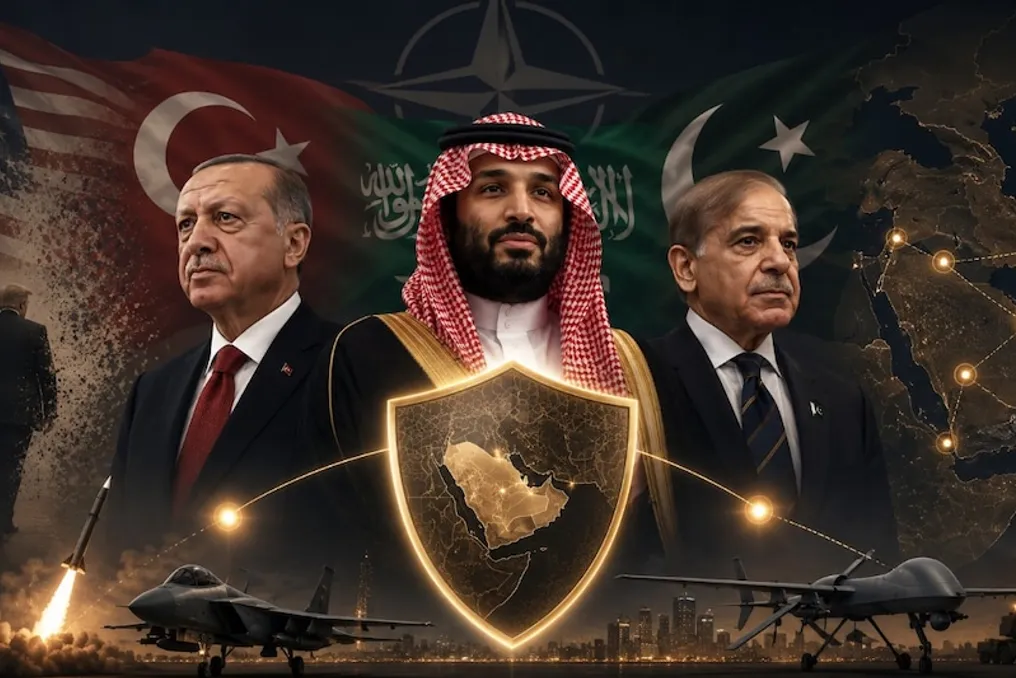
Some analysts refer to the recent Mecca protection agreement between Pakistan, Saudi Arabia, and Turkey as a 'Sunni NATO' because it is based on the principle of collective defense, whereby an attack on one member will be considered an attack on all three.

This raises the question of how this alliance of Sunni countries can gain the trust of Shia Iran. Doubts arise about how Iran can trust Pakistan, which is a key partner in this defense pact, given that Saudi Arabia and Turkey are staunchly Sunni Muslim states.

These questions arise against the backdrop of Pakistan's attempts to resume a second round of mediation between Iran and the US. Currently, Iran-backed Houthis continue to attack Saudi Arabian assets and bases, while Iran responds to American strikes with attacks on Saudi targets, repeatedly issuing threats.

Pakistan is now once again striving to become a mediator in the conflict between Iran and the US. Previously, Pakistan had acted as a mediator in this war between Iran and the US when an agreement was signed in Islamabad, but this agreement failed after a few weeks. As part of these efforts, Pakistan's Interior Minister and the only Shia minister in the cabinet, Shahbaz Sharif, arrived in Tehran.

Pakistan's situation is unique: the country borders Iran for nearly 900 kilometers and has the second-largest Shia population in the world. Therefore, Islamabad does not wish for open hostility with Tehran under any circumstances.

In recent years, Pakistan has played a role in mediating tensions between the US and Iran, maintaining dialogue channels between both sides and hosting negotiations in Islamabad. Mohsin Naqvi again wants to take on this role. A representative of the Pakistani Ministry of Foreign Affairs, Tahir Andrabi, stated at a press conference in Islamabad on Wednesday that Pakistan is trying to resolve the dispute between the US and Iran with the support of other regional countries.

Responding to questions about Naqvi's trip to Tehran, Andrabi noted that 'Pakistan is honestly trying to resolve this crisis together with its friendly countries.' He added that 'Pakistan will continue to counter obstacles through both direct and indirect methods and will promote constructive dialogue to resolve all outstanding issues.'

According to a diplomatic source, during his meeting with the Iranian President, Naqvi described relations between the neighboring countries as 'strong, long-term, and unbreakable' and expressed Islamabad's 'serious determination and will' to further develop relations with Tehran.

President Pezeshkian stated that relations between Iran and Pakistan would satisfy the national interests of both countries and contribute to regional stability and security.

Naqvi's initiative is of particular interest because Pakistan has always presented itself as an influential force in the Muslim world. Recently, Pakistan has sought to strengthen security cooperation with Saudi Arabia, Turkey, Qatar, and other Sunni countries.

The most important issue of Naqvi's trip to Tehran is the agreement reached between the US and Iran in June, which provided for an attempt to open a 60-day window for high-level talks. Pakistan played the role of guarantor in this process, but the procedure derailed following increased tensions in the Middle East and the resumption of military actions between the US and Iran.

Now Pakistan wants to activate its mediation channel to resume these talks, although it has not yet achieved significant success. One of the main reasons for this is the dispute over the Strait of Hormuz, a vital sea route for global energy supply located between Iran and Oman. Separate negotiations are currently underway regarding ensuring safe navigation along this route between Iran and Oman.

Pakistan's efforts face difficulties: an Iranian military official told Reuters that no negotiations on extending the ceasefire between Iran and the US were taking place.

This Iranian official explained: 'There are no extension negotiations because, from Iran's perspective, no period was initiated that could be extended. The US violated the temporary agreement 48 hours after its signing and withdrew from it after a few days.'

Pakistan's problems are compounded by the fact that an Iranian army representative warned the US not to engage in renewed aggression against Iran. The Iranian army representative stated that if the US were to show aggression against Iran again, power transmission lines, power plants, all American and non-American systems, as well as infrastructure related to the global internet, would be under threat.

Popular