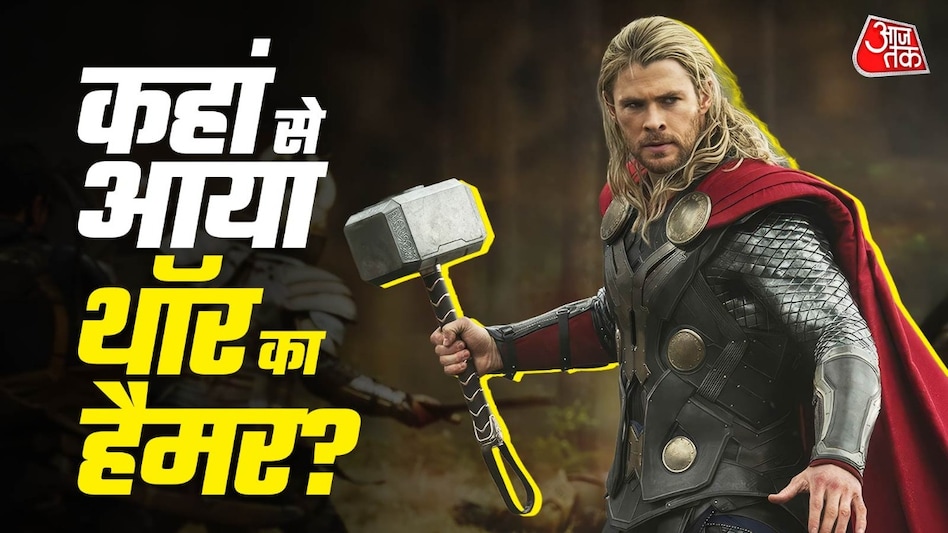
In the worlds of Marvel films and comics, Thor's hammer, Mjolnir, is presented as a magical object that can only be lifted by a worthy and sincere person. This concept attaches a requirement of ability to the hammer, which is evident in both Captain America and Thor himself. However, many details from Scandinavian mythology, from which this myth originates, indicate that such conditions did not exist in ancient legends. There, Mjolnir was considered a heavy, destructive tool, as well as a weapon of defense and ritual.
The history of Mjolnir is multifaceted. On one hand, it is Thor's main weapon, protecting Asgard and the Asgardians, which returns to his hand after being thrown. On the other hand, Marvel adapted it for the superhero world, introducing new rules, powers, and magic associated with Odin's nobility, starting in 1962.
According to Scandinavian sagas, Thor is the god of thunder, and thunder is associated with the strikes of his hammer. Although the name Mjolnir is usually linked to lightning, there is no complete agreement on its meaning. In these legends, it serves as Thor's crucial weapon against monsters, trolls, as well as enemies of gods and men.
Marvel comics gave this mythological weapon a new dimension. Stan Lee included it in the comics in 1962, and subsequent stories described how Mjolnir was created from fragments of Uru and the power of Jotunheim masters under Odin's command.
In the Marvel version, Odin initially used the hammer himself and then passed it to Thor. To teach his son humility, Odin placed a spell on it, allowing only the worthy to lift it. It is thanks to this rule that its lifting by Captain America became memorable. Mjolnir's powers in Marvel have also been significantly expanded: it can summon wind, rain, thunder, and lightning, open passages between worlds, and sometimes even intervene in time.
In old Marvel comics, Dr. Donald Blake could transform into Thor by striking a staff on the ground, and his mention is related to 'Journey Into Mystery #83'. Jane Foster also became Thor by lifting Mjolnir, but each time the transformation rendered her chemotherapy treatment useless. In early Marvel stories, a sixty-second rule applied: if Thor stayed away from the hammer for too long, he would revert to Donald Blake. The nobility rule also served as a limitation, as even a powerful character like the Hulk could not lift it.
Differences appear in both the comics and the Marvel Cinematic Universe. In the comics, gates to other worlds are opened through Mjolnir, whereas in the films, this function is more related to Stormbreaker. Weather control is shown on a grander scale in the comics, while in the films, the emphasis is predominantly on lightning. There are also differences in design: the hammer in the films looks simpler and more straightforward, whereas in the comics, it features fine engravings and glowing runes.
Overall, there are two main interpretations of Mjolnir. In Scandinavian mythology, it is a mighty hammer for fighting demons, granting blessings, and ensuring protection, requiring not so much worthiness as strength and special means to lift it. At the same time, Marvel has linked it to concepts of worthiness, responsibility, magical powers, and superhero identity. It is this difference that shapes the various images of Thor's hammer from mythology to comics and cinema.