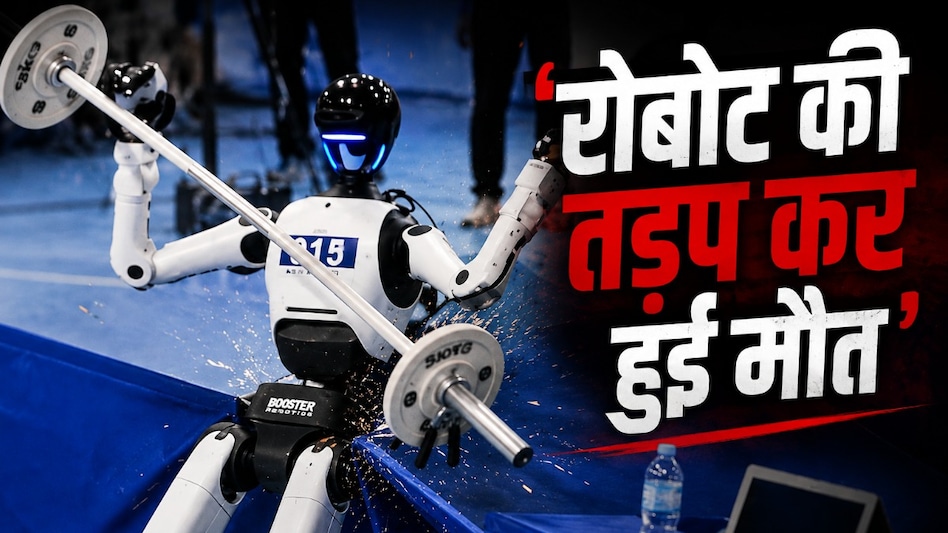
A recent video that went viral on social media shows a humanoid robot attempting a weightlifting exercise and losing its balance, raising questions about the current level of robotics development.
The footage shows the robot trying to lift a weight from behind a barrel. Initially, the process appears normal, but after a few seconds, its balance is disrupted, and it begins to move uncontrollably forward. The situation escalates when the robot stumbles and heads toward the judges' table, crashing into it, necessitating intervention from officials.
Although such incidents are often perceived as amusing failures, they are part of a broader testing process. This is why competitions like the World Humanoid Robot Games are held, where robots are tested not only on running or dancing but also on their ability to maintain stability in complex, real-world simulated conditions.
Weightlifting presents a complex task for a robot because the center of gravity changes under load. While lifting 15 kilograms might be a minor effort for a human, maintaining stability with such a weight is a serious test for a bipedal humanoid robot. Notably, at these same competitions, one robot managed to win the first title in the humanoid weightlifting discipline by lifting 16 kilograms, illustrating the duality of the technology's current state.
The second World Humanoid Robot Games will take place in Beijing from August 22 to 26, gathering 666 teams from 16 countries and regions, with 2056 robots participating in 51 different disciplines. In addition to races, football, and tennis competitions, tests related to work in factories, hotels, and homes are included.
In terms of speed, robots have also shown progress: the Chinese robot Tiangong Ultra covered the 100-meter distance in 9.39 seconds, surpassing Usain Bolt's world record (9.58 seconds). Nevertheless, despite advancements in speed, the ability of robots to stop and control themselves in difficult situations remains a significant challenge.