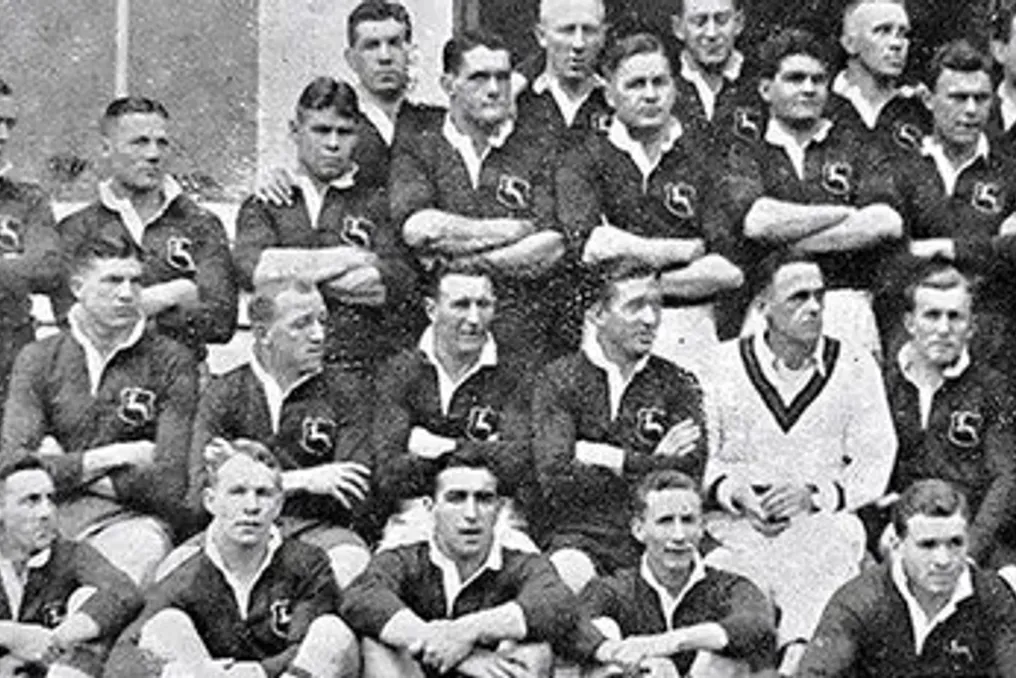
The history of the great rivalry between the Springboks and the All Blacks dates back to 1928, when a young local forward achieved a historic feat on African soil during the first tour.
Before the professional era, international rugby was a game played by men who returned to their daily work duties after matches. For Albertus Viljoen 'Oupa Alvi' van der Merwe, this meant transitioning from the football pitch to working on land in the Breded River valley.
The First Match of 1928 in Newlands
The rivalry officially began in 1928 when the New Zealand national team arrived for a three-month tour of South Africa. This team had a formidable, almost unbeatable reputation, and local teams knew they were facing a severe physical test.
On May 30, 1928, the tourists met the Western Province Country team in the first match of the tour at Newlands Stadium in Cape Town. Van der Merwe, a sturdy forward standing 5 feet 10 inches tall, born in Roussouwille, took to the field. Despite being only 19 years old, this young man was a resilient and hardworking player who built his physical strength working on his family's fruit farm.
Although the All Blacks won that day, stifling the local defense, the defining moment of the match belonged to the young South African: Van der Merwe broke through the visiting line and crossed the try line, becoming the first player in history to score a try against the touring New Zealand team on African territory.
Springbok No. 221
This single appearance attracted the attention of national selectors, proving that the young farmer possessed the necessary fortitude for international rugby. Three years later, during the tour of Britain and Ireland in 1931–1932, Van der Merwe received an official call-up to the national team. He debuted for the Springboks as a wing-forward against Wales in Swansea, officially becoming Springbok number 221.
Creation of Alvi's Drift
In 1930, shortly after his breakthrough seasons in rugby, Van der Merwe built a low-water bridge across the Breded River near Worcester to connect his family property with the surrounding valley. Locals jokingly named this crossing 'Alvi's Drift.'
Van der Merwe spent the rest of his life farming and passed away in 1986 at the age of 78. Today, this bridge is the name of the Alvi's Drift winery, which is run by his family. For the former forward, the transition from team sports to farming was natural. As Oupa Alvi often said: 'Good wine is not made alone. It is a joint effort.'
The '221' line of the winery is a direct tribute to his number in the Springboks, a reminder of the young farmer who scored a try against the invincible All Blacks one day in 1928. However, his grandson and current winemaker, Alvi van der Merwe, notes that the label is intended to go beyond rugby. Van der Merwe says: '221 was never just about rugby, sport, or one person's achievement. It is about the stories people share at the table, including family histories, old memories, and the ordinary evenings that stay with you.'
As fans watch the latest chapter of the Springbok-All Blacks rivalry today, the roots of this confrontation remain tied to the muddy fields and the enthusiasts of the last century.