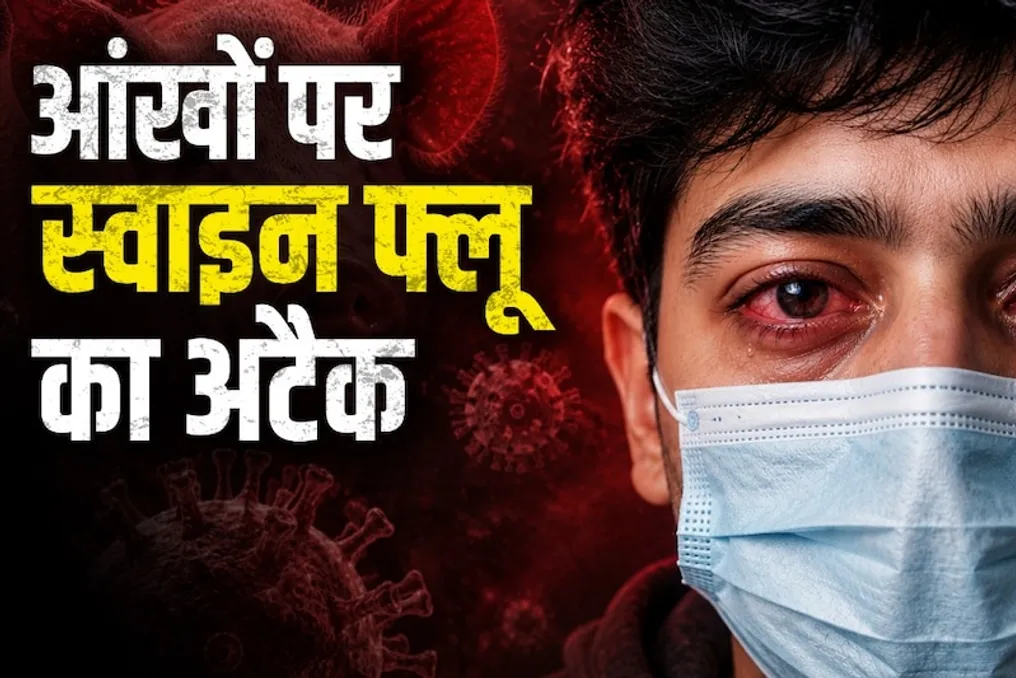
Experts discuss symptoms and prevention measures for Swine Flu that can affect the eyes
Read more
Aaj Tak
www.aajtak.in

Experts discuss symptoms and prevention measures for Swine Flu that can affect the eyes

Swine flu causes people to experience symptoms such as cough, runny nose, and fever. Although breathing difficulties are observed in some cases, this virus is capable of attacking the eyes. Doctors warn that eye problems should not be ignored if they arise alongside flu symptoms during the current season.

Swine flu, known as H1N1, is an influenza A virus that primarily affects the respiratory system, including the nose, throat, and lungs. Common signs include fever or chills, cough, sore throat, stuffiness or runny nose, body aches, headache, and fatigue. However, the flu can also cause red eyes, tearing, and eye pain. Some H1N1 patients may experience red eyes, tearing, and viral conjunctivitis.

Dr. Dipak Kumar from the Department of Medicine at Safdarjung Hospital in Delhi reported that medical studies have noted the development of conjunctivitis and other eye problems in some individuals suffering from H1N1. Nevertheless, redness in the eyes after a fever does not always mean it is directly caused by H1N1. Similar symptoms can be caused by common viral conjunctivitis, allergies, dry eyes, irritants, or bacterial infection. If severe redness, swelling, pain, blurred vision, or constant tearing occurs during the flu, it should not be ignored.

Dr. Arvind Agrawal from the Department of Internal Medicine at Balaji Medical Institute stated that cases of irreversible eye damage due to swine flu have not been recorded. However, some patients have experienced serious eye issues, such as retinal inflammation, optic nerve inflammation, or inflammation of the eye itself. It is crucial to consult a doctor if severe eye problems are accompanied by high fever or severe headache.

Dr. Arvind also advised that to prevent swine flu, one must frequently wash hands, cover the mouth and nose when coughing or sneezing, and avoid contact with infected individuals. Eye drops or medications should not be used without consulting a doctor. One should avoid frequently touching the eyes and not sharing towels, handkerchiefs, or other personal items. Most patients recover with timely diagnosis and proper treatment.


Similar stories

ICMR provides update on swine flu: who needs the vaccine and who is at risk
Read more
www.aajtak.in

ICMR provides update on swine flu: who needs the vaccine and who is at risk

Swine flu has spread in several states of the country, and the number of new cases is constantly rising. In this regard, the Ministry of Health has moved to a state of heightened alert and ordered all hospitals to prepare isolation beds.

Meanwhile, the Indian Council of Medical Research (ICMR) has provided clarifications regarding who needs the swine flu vaccine and which groups of people should be tested. Furthermore, ICMR has indicated who is most vulnerable to the risk.

ICMR Director, Dr. Rajiv Bahal, stated that the strain circulating in the country is not new. It is the same seasonal flu that affects people at different times every year. According to Dr. Bahal, both Influenza A and B viruses are present in the country, with H1N1 of Influenza A being the most common among them.

He noted that annual minor changes in the influenza virus lead to it continuing to infect people. In the current case, the same usual changes are observed, and there is no basis to suggest the emergence of any new disease due to this H1N1.

ICMR does not currently recommend influenza vaccination for all citizens. Dr. Bahal explained that ICMR conducted a study on the cost and benefits of the influenza vaccine in India. According to the results, people with special risks, especially those over 65 years old, as well as people with weakened immunity, should consider getting the vaccine after consulting a doctor.

In response to the question about vaccinating children, Dr. Bahal replied that the influenza vaccine is not currently part of the national immunization program, and ICMR does not see the need to include it in this program.

The ICMR Director also stated that testing every flu patient is not required. He cited approximately 940 million tests conducted in the country during the COVID pandemic and emphasized that checking every person is not mandatory under the current epidemiological situation.

Since influenza is a viral disease, antibiotics offer little benefit in ordinary cases. However, patients who are at risk of severe illness may be prescribed antiviral drugs, such as Oseltamivir (Tamiflu), upon a doctor's recommendation.

According to ICMR data, hospitalization is not required in more than 99% of cases. To prevent the spread of infection when ill, it is recommended to stay home and rest, cover the mouth and nose when coughing or sneezing, and maintain hand hygiene.

Despite the absence of a new strain, swine flu cases are rising: the role of immunity
Read more
www.aajtak.in

Despite the absence of a new strain, swine flu cases are rising: the role of immunity

There is an increase in swine flu (HINI) cases observed in the capital Delhi and several other states in the country. Karnataka state has registered over 4,000 cases, while Delhi reports more than 1,700. Given the continuous rise in infected individuals, concerns have arisen regarding the emergence of a new swine flu strain.

However, the Institute of Central Medical Research (ICMR) clarified that no new H1N1 (swine flu) strain has been detected in India; the infection is caused by the old strain. This raises the question of why the number of cases is increasing if there is no new strain, and when a decline in morbidity can be expected.

One factor contributing to the rise in cases is changing weather conditions, but another significant reason lies within the body's immune system. To understand this, one must look back at the events of 2009. In May 2009, the first case of swine flu was recorded in the country. Subsequently, during the winter period (from December 2009 to March 2010), the number of cases rose again, leading to widespread infection among the population. After this, cases gradually began to decrease. Later, between 2014 and 2015, there was an outbreak of swine flu affecting thousands of people, and in 2019, a sharp jump in morbidity was observed. Currently, in 2026, elevated figures are being recorded.

Professor Dr. Jugal Kishor, Director of Community Medicine at Safdarjung Hospital, explained this phenomenon. He noted that in India, swine flu cases increase at certain intervals. This pattern indicates that the H1N1 virus never completely disappeared but remained among the population, periodically causing outbreaks.

According to Dr. Kishor, when a large number of people become infected with any virus, immunity against it is formed, which lasts for many years. Because of this, subsequent outbreaks are not massive but only consist of minor episodes. However, over time, the level of immunity in the body gradually decreases, leading to a renewed rise in cases. This happens cyclically every few years.

He provided an analogy: if many people in a certain area were previously infected with swine flu, they developed immunity, and the infection remained low for several years. But as time passed, the body's ability to fight this virus weakened, which once again caused an increase in morbidity. Dr. Kishor emphasized that no virus disappears forever; when immunity weakens, the virus begins to infect people, causing a rise in cases.

During rains and changes in weather, flu cases may increase. Conditions such as heat, rain, and high humidity promote the spread of the virus. Furthermore, people often come into close contact with each other in offices, schools, metros, and other enclosed spaces. If someone has the flu, small particles released during coughing or sneezing can be transmitted to other people.

Dr. Kishor believes that as long as a sufficient level of herd immunity has not been established in society, cases will continue. This means that when a large portion of the population becomes infected and develops immunity to swine flu, the number of cases will naturally begin to decrease. Such a cycle of declining morbidity is characteristic of viral infections, and there is no need for panic. Most people experience only mild symptoms.

Swine flu will not lead to an epidemic. The public is advised to consult a doctor and get vaccinated against the flu for prevention.

Seek immediate medical attention if four symptoms of swine flu appear
Read more
www.aajtak.in

Seek immediate medical attention if four symptoms of swine flu appear

In the country's capital, Delhi, and many other areas, there is currently an increase in cases of swine flu, known as H1N1. Most of its symptoms can resemble a common viral fever, which often leads people to underestimate the seriousness of the illness. While the infection passes without significant complications for some patients, the impact of the disease varies from person to person, requiring increased vigilance among the elderly, young children, pregnant women, and individuals with severe chronic illnesses.

If a person is diagnosed with swine flu, it is not enough to only monitor their temperature; it is crucial to pay attention to the following four symptoms:

Breathing problems

Professor Dr. Subhash Giri from the Department of Medicine at RML Hospital in Delhi notes that cases of swine flu are rapidly increasing during this period. Although most symptoms are mild, certain signs must be monitored. If a patient experiences difficulty breathing or rapid breathing, this should not be ignored. In severe cases, the infection can affect the lungs and cause pneumonia. If shortness of breath accompanied by worsening chest pain occurs, a doctor should be consulted.

Sudden severe weakness or dizziness

Weakness is a common symptom of the illness, but if a patient becomes so weak that they have difficulty standing or sitting, constantly feel dizzy, or lose consciousness, delay should not occur. It should also be remembered that after improvement from fever or other symptoms, severe coughing, increased temperature, or breathing difficulties may suddenly worsen. In such a case, it is also necessary to visit the hospital urgently.

Bluish lips or face

It is necessary to carefully monitor if the patient's lips begin to take on a bluish tint. A change in lip color can indicate a lack of oxygen in the body. In such a situation, immediate assistance from emergency medical services is required.

Young children, the elderly, pregnant women, and patients with asthma and lung diseases should exercise extra caution during this period. If these individuals develop any serious symptoms, a hospital visit should not be postponed.

Popular