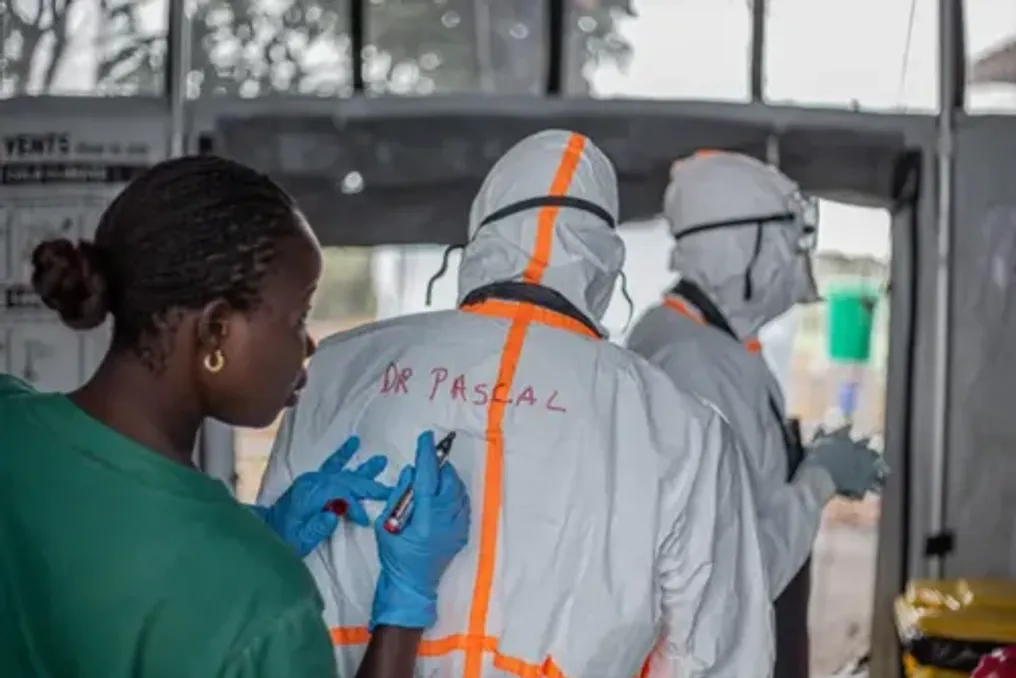
Doctors and hygiene workers are providing assistance to patients with the disease caused by the Ebola virus at the Rwampara treatment center in Bunia, Ituri, eastern Democratic Republic of Congo. However, the current outbreak is caused by the Bundibugyo virus, while the Ervebo vaccine is approved and recommended for outbreaks caused by the Zaire ebolavirus strain.
Consequently, the World Health Organization (WHO) and its partners have been forced to develop emergency guidelines for the use of this vaccine in the current outbreak, as there is no approved routine vaccine specifically for the Bundibugyo virus.
This nuance highlights the complexities faced by the DRC. Although the fight against Ebola globally has improved significantly, the virus can still exploit gaps in scientific research, healthcare systems, and emergency preparedness.
The arrival of vaccines is important, but it does not mean the outbreak is under control. The Bundibugyo outbreak has become the largest Ebola outbreak ever recorded in the DRC, surpassing the scale of the 2018–2020 outbreak. The WHO described the virus transmission as intense, noting its spread across several provinces and health zones. Furthermore, cases have been reported in Uganda, indicating that the problem is regional in nature.
The distinction between having a vaccine and being able to apply it effectively becomes critical. Medical personnel need protection, infected patient contacts must be identified promptly, and communities require accurate information. Laboratories must diagnose infections before patients unintentionally transmit the virus.
A container of vaccines in storage cannot stop an epidemic; therefore, the response depends on logistics, surveillance, and trust just as much as on science.
The crisis in the DRC cannot be viewed as a problem confined to its borders. The country borders nine nations, and a large, highly mobile population resides there. The current outbreak has already spread to Uganda, and isolated cases have been recorded in Europe. The WHO assesses the risk to the DRC as very high due to ongoing transmission and geographical expansion.
For the entire continent, this is a serious test of regional health security. The Africa Centres for Disease Control and Prevention (Africa CDC) has taken on an increasingly central role in coordinating continental response measures, while the WHO collaborates with African governments to strengthen laboratory capacities, surveillance, and emergency preparedness.
The current crisis serves as a practical test of whether these systems can operate fast enough when an outbreak develops faster than expected. It also underscores why complete border closures are not a mandatory solution. Africa CDC leadership has argued that broad travel restrictions are not justified for the current outbreak, placing greater emphasis on targeted public health measures and surveillance.
The most sobering takeaway from this outbreak is that Africa cannot afford to build its health defense system only after a crisis begins. The Bundibugyo virus is rare, and the small number of known outbreaks explains why vaccine development lagged behind research on the more familiar Zaire strain. However, rarity does not mean insignificance.
The COVID-19 pandemic showed how quickly an unfamiliar pathogen can turn into a global emergency. Ebola is a different disease, but the main lesson is similar: countries need research capabilities, manufacturing capacity, trained medical staff, and emergency equipment stockpiles before they are needed.
Therefore, Africa must invest not only in vaccines but also in the ability to develop and produce vaccines on its own continent. Relying on international stocks will always mean African countries competing for scarce resources during a global crisis. Building regional pharmaceutical and biotechnological capacity will give the continent greater control over its own health security.
Vaccine distribution is encouraging as it demonstrates the potential for international cooperation. However, it should also serve as a catalyst for a more ambitious discussion about African self-sufficiency. The DRC has faced Ebola multiple times; the current outbreak is the seventeenth for the country. The fact that a new strain could emerge, leaving health authorities without a specifically approved vaccine, shows why preparedness cannot cease after localizing one outbreak.
Africa needs enhanced disease surveillance, faster diagnostics, better-paid healthcare workers, and more investment in vaccine research. Countries also need to share information and resources before an outbreak crosses another country's border. The arrival of Ervebo gives the DRC another tool in a desperate fight, but it is not the end of the story; it is a reminder of what still needs to be built.
The continent should not wait until thousands of people fall ill before the world mobilizes vaccines, funding, and expertise. The real measure of success will be how much better Africa is prepared for the next outbreak compared to this one.