South African Police Statistics Reveal Alarming Trend in Gender-Based Violence Crisis
Read more
IOL
iol.co.za

South African Police Statistics Reveal Alarming Trend in Gender-Based Violence Crisis

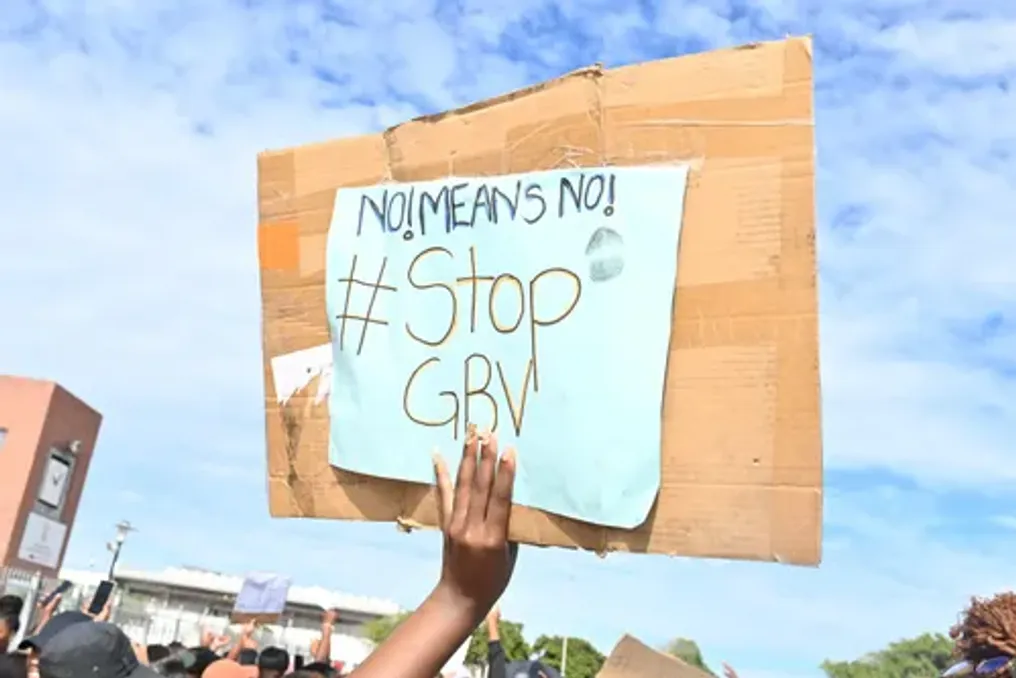
South Africa's fight against gender-based violence and femicide (GBVF) has once again come under intense scrutiny following the release of alarming police statistics for the 2025/26 financial year. The current Minister of Police, Professor Firoz Kachalia, reported that the South African Police Service (SAPS) registered 50,511 cases of GBVF, of which 30,736 resulted in arrests or referral to the National Prosecuting Authority.

Activists warn that these figures only superficially reflect the deepening crisis in the country. During a parliamentary response to a question from Gugulethu Mchunu of the MK party, Kachalia detailed the statistics for 2025/26, including data on arrests and court proceedings, and presented plans to improve investigation and conviction rates.

Kachalia stated: 'During the 2025/26 financial year, the South African Police Service was notified of 50,511 cases of gender-based violence and femicide.'

Activists insist that the 50,511 registered GBVF cases for 2025/26 underestimate the scale of the problem, calling on the government to focus on structural reforms and offender rehabilitation.

He further clarified: 'A total of 30,736 of the registered cases led to arrests or were referred to the National Prosecuting Authority for prosecution.' Additional measures are planned to enhance the effectiveness of investigations and achieve more convictions. These measures include monitoring quarterly performance reports to assess progress and determine necessary corrective actions, as well as providing support to investigators regarding forensic evidence and criminal record services to strengthen the quality and effectiveness of investigations.

At an event marking Women's Day, resilience advocate Sophie de Bruyn expressed regret over the persistent shadow of GBV, noting that today's violence and oppression of women sharply contrast with the freedom fought for by her and other demonstrators in 1956. Previously, President Cyril Ramaphosa declared GBVF a national crisis, stating that social partners agreed on the necessity of adopting exceptional and coordinated measures to end this phenomenon.

Similar stories

Activists sound the alarm over more than 50,000 cases of gender-based violence in South Africa in a year
Read more
iol.co.za

Activists sound the alarm over more than 50,000 cases of gender-based violence in South Africa in a year

Activists have expressed serious concern regarding the statistics of gender-based violence and femicide (GBVF) in South Africa for the 2025/26 financial year, noting that officially registered data underestimates the scale of the crisis. They are strongly urging the government to focus on structural reforms and offender rehabilitation.

A recent publication of police statistics for the 2025/26 financial year has once again drawn attention to South Africa's fight against GBVF. The current Minister of Police, Professor Phiroz Kachalia, reported that the South African Police Service (SAPS) registered 50,511 cases of GBVF, of which 30,736 led to arrests or the submission of materials to the National Prosecuting Authority.

Kachalia presented the GBVF statistics for 2025/26, including data on arrests and prosecution, and described planned measures to improve investigation and conviction rates. He stated: 'A total of 50,511 cases of gender-based violence and femicide were registered by the South African Police Service during the 2025/26 financial year.'

Additional measures are planned to improve the quality and effectiveness of investigations. These measures include monitoring quarterly performance reports to assess progress and determine necessary corrective actions, as well as providing support to investigators regarding forensic evidence and criminal record services.

At an event marking Women's Day, elder of the movement Sophie de Bruyn expressed regret over the ongoing threat of GBV, highlighting the sharp contrast between today's violence against women and the freedom fought for by her and other march participants in 1956. Previously, President Cyril Ramaphosa declared GBVF a national problem, noting that social partners agreed on the need for extraordinary and coordinated measures to end this phenomenon.

However, activists warn that official statistics only superficially reflect the deepening crisis. Mbuyiselo Botha, a member of the founding board of the South African Men's Forum, noted that the figures only cover registered cases, as many victims did not report to the authorities. He emphasized that despite the president's correct declaration of GBV as a national catastrophe, the grim statistics demonstrate the true extent of the problem.

Botha added that the 70th anniversary of the 1956 women's march serves as a stark reminder that the country has barely begun to solve this problem. He stated: 'As long as you don't have an offender-focused program, we will pour money into it, hold all the important celebrations (Women's Month and 16 Days of Activism)... But all these things will be empty because we do not have targeted, dedicated, strategic programs working with men as offenders.'

Cookie Edwards, Executive Director of KZN Network on Violence Against Women, pointed out that the statistics do not reflect the true impact of GBVF due to the high level of unreported incidents. She noted that while some progress has been made, convictions are necessary. Edwards insisted on the need for offender reform programs and called for efforts to combat GBVF to go beyond Women's Month and 16 Days of Activism, demanding continuous awareness campaigns year-round across all media.

She stressed: 'It is useless to sit at the top and talk about how wrong gender-based violence is. More needs to be done in the community, more partnerships, more programs, more projects, more funding for civil society organizations, because they are the ones who work.'

Jolanda Dyanti, a women's rights advocate and founder of NPO Archive Amabali Wethu, noted that the grim data points to significant work ahead, especially concerning the prevalence of unreported cases. She stated: 'Violence is not decreasing; it is actually worsening, and there are many reasons why we can explain this. Socio-economic conditions in the country are terrible; unemployment is widespread.'

Dyanti emphasized that the upcoming local government elections will provide citizens with a critical opportunity to hold leaders accountable and elect representatives willing to address the current GBVF crisis.

African Women: Vulnerability in the Face of Crises, Conflicts, and Systemic Poverty
Read more
iol.co.za

African Women: Vulnerability in the Face of Crises, Conflicts, and Systemic Poverty

According to the author, women and girls across Africa remain in a difficult situation caused by a combination of armed conflicts, forced displacement, food shortages, climate shocks, and deep systemic poverty.

The Dialogue in Bujumbura discussed the role of women and youth in conflict prevention, crisis management, peacebuilding, and resource allocation. This three-day gathering was held under the theme 'Water, Peace, and Inclusive Leadership in Africa.'

The author emphasizes that every major crisis on the continent has a gendered nature. Girls bear the greatest losses: when families flee due to conflicts, they are at high risk of sexual exploitation; during food scarcity, they are often pulled out of school or married off prematurely; and when water sources dry up, young girls are forced to travel long and dangerous distances to obtain it.

Violence does not cease after wars end. Poverty, displacement, patriarchy, and structural isolation continue to worsen the lives of millions of women and girls even long after hostilities have ceased. The female body has become a battlefield both during and in peacetime.

Dialogue in Bujumbura

More than three years of continuous conflict in Sudan have led to horrific consequences. The UN Human Rights Office confirmed 546 cases of conflict-related sexual violence between April 2023 and mid-April 2026. Two hundred eighty-four girls were affected by this violence, some as young as nine years old. Women and girls have been victims of rape, gang rape, sexual slavery, and forced marriage.

In the Democratic Republic of Congo, UNICEF recorded over 35,000 cases of sexual violence against children in the first nine months of 2025. Anna Mutavati from the UN Women states that such attacks on women and children are not merely residual effects of war but deliberate tools used for intimidation and control.

The African Union is holding its Fifth Continental Dialogue on Youth, Peace and Security, as well as Women, Peace and Security, which is key in this context. Water is viewed as an issue related to peace, security, and gender, as the burden of providing water in households across most of Africa falls predominantly on women and girls when water security confronts conflict, poverty, and displacement.

The continent has several legal frameworks, including the Women, Peace and Security agenda, the Maputo Protocol, and the African Union Convention on Preventing and Combating Violence Against Women, which affirm women's right to peace, participation in conflict prevention and resolution, and protection from war. Despite all impressive declarations and measures, women remain sidelined, excluded from key decision-making, and unprotected from violence.

The AU Envoy on Women, Peace and Security, Ambassador Liberata Mulamula, insisted on the necessity of women's participation and protection, warning that Africa cannot afford to exclude 'half of humanity from decisions shaping the future of nations,' and cautioned against empty symbolism.

The author notes that peace processes that do not pay due attention to women are structurally flawed and inevitably reproduce the same patterns of exclusion and violence. Women must have the authority to make decisions in peace processes, water resource management, and climate change adaptation.

A strategic necessity is significant and sustainable funding for organizations led by women. Accountability for conflict-related sexual violence must move from mere condemnation to real consequences. While the Dialogue in Bujumbura, like many other initiatives, may invigorate institutional commitments, it may not lead to a complete change in gender relations of power and protection. A girl whose present and future are distorted by a war she did not start will likely remain vulnerable and unprotected.

Nevertheless, while loud statements are made in towers of privilege, Africa lacks another declaration on the importance of women's lives. It needs leaders willing to treat this statement as mandatory, ensuring it through concrete budgets, measurable mandates, and redistribution of power. This commitment must be based on a political decision to make the cost of harming women higher than the cost of protecting them.

On International Women's Day, Mulamula stated: 'No culture, religion, government, or ideology can justify reducing women to lower beings. Women's freedom is indivisible.'

The women of 1956 did not wait for permission; they organized, marched, and confronted the state. This could be the most viable option if states and continental bodies continue to ensure the full safety and participation of women.

Activists criticize observance of Women's Month in South Africa amid ongoing violence against women
Read more
iol.co.za

Activists criticize observance of Women's Month in South Africa amid ongoing violence against women

As Women's Month is celebrated in South Africa, activists state that there is little to celebrate because women continue to face gender-based violence, femicide, poverty, and insecurity, nearly nine months after gender-based violence was classified as a national disaster.

The organization Abahlali baseMjondolo emphasized that poor women, especially those living in slum camps, are forced to support their families independently despite the lack of adequate housing, basic services, and a sense of security. The organization stated: 'This is not a month of celebration. No woman in South Africa is free. All women are at risk of violence. Poor women remain deeply oppressed.'

Abahlali reported that women in informal settlements can be in danger simply trying to access basic services, with some having to go to communal taps after dark. The movement noted that 'for millions of poor women in shacks, tin houses, and backyards, every day is a struggle for survival.'

Sabrina Walter, founder of Women For Change, also criticized the government's response to gender-based violence, noting that the urgency promised to women upon declaring a national disaster on December 19, 2025, has not led to tangible action. Walter stated: 'Nine months. Nine months since South African women were promised urgency. Nine months since families believed that perhaps finally, women and children would receive attention.'

She added that Women For Change had received no significant public updates on what had been implemented since the disaster declaration, with the only national acknowledgment being a 27-second mention during the State Address. Walter's concern intensified after visiting the national conference on gender-based violence, which was supposed to be opened by the Minister of Women, Youth, and Persons with Disabilities. 'She never showed up, and I couldn't help but wonder: if the minister responsible for leading the response to a national disaster cannot even speak to those working on the front lines, then where are we as a country?' she said.

These statements came as Abahlali uses Women's Month to honor the memory of activists killed while fighting for land, housing, justice, and dignity. Among them is 17-year-old Ngobile Nzusa, who was killed by a police officer during a road blockade in Cato Crest on September 30, 2013. According to Abahlali, Nzusa, a high school student, joined a protest against attacks on land occupation in Marikana in Cato Manor and was dedicated to the fight for land.

The movement also paid tribute to Thuli Ndlovu, an Abahlali leader in KwaNdengezi, who fought for her community's land, housing, and dignity before being killed on September 27, 2014. Nokutula Mabaso, mother, organizer, and leader of the eKhenana commune and the Abahlali Women's League, who was killed on May 5, 2022, while her community was under attack, was also remembered. Abahlali noted: 'Thuli and Nokutula were leaders. We also honor other women who gave their lives in the fight for justice.'

The organization also expressed respect for Fikile Ntshangase, a leading member of the Mfolozi Environmental Justice Organization, who campaigned against coal mining and was killed on October 22, 2020. Furthermore, Babita Deokaran, a whistleblower from the Gauteng Department of Health who exposed corruption and alleged theft of public funds intended for hospitals and clinics, was killed in 2021.

Walter stated that the deaths of women and girls continue to demonstrate the devastating consequences of a system that, according to activists, fails to protect vulnerable people. 'Meanwhile, women keep dying. Nomzila. Palesa. Entle. Chilkana. On the first day of Women's Month—Timing. A woman who could live today if the system hadn't let her down,' she said.

Walter mentioned Timing, who had previously reported violence and against whom a case was filed against the alleged aggressor, who was later granted bail. She was allegedly killed a few days later. 'How many more names must we name before action replaces promises?' Walter asked.

Abahlali insists that meaningful recognition for women must go beyond political speeches and flowers, instead demanding safe access to land and decent housing, basic services, an end to political killings and intimidation, and more decisive action against gender-based violence. The organization also called for decent work, healthcare and education, reproductive health and contraception, guaranteed income recognizing unpaid care, measures to reduce food prices, and accountability for activist murders.

Abahlali stressed: 'We are not interested in politics that come with speeches and flowers and say nothing about the oppression we live in, and nothing about our leaders who gave their lives fighting this oppression.'

Walter warned that Women's Day should not become another symbolic event while families mourn. 'Women's Day cannot be another day of flowers, hashtags, and speeches while women continue to bury their daughters, mothers, sisters, and friends.'

Abahlali also cautioned against attempts to pit poor women in South Africa against migrants and refugees, asserting that the real problems for poor communities are lack of land, unemployment, and state neglect. The movement stated that cases related to activist murders must not be forgotten or closed without holding perpetrators accountable. 'Poor women are not asking to be celebrated. We demand safety, housing, to be heard, to live,' Abahlali concluded.

Despite the concerns, Walter maintained hope through the women she met throughout her life who continue to fight violence and oppression. 'No matter how heavy my heart is today, I refuse to lose hope,' she said. She noted that the strength of women lies not in being 'indestructible,' but in their ability to recover and support each other.

Abahlali concluded that Women's Month should be a period of remembrance, organization, and struggle until women can live safely and with dignity. 'Until that happens, August cannot be a month of celebration. It must be a month of remembrance, a month of organization, a month of struggle,' the organization stated.
Popular