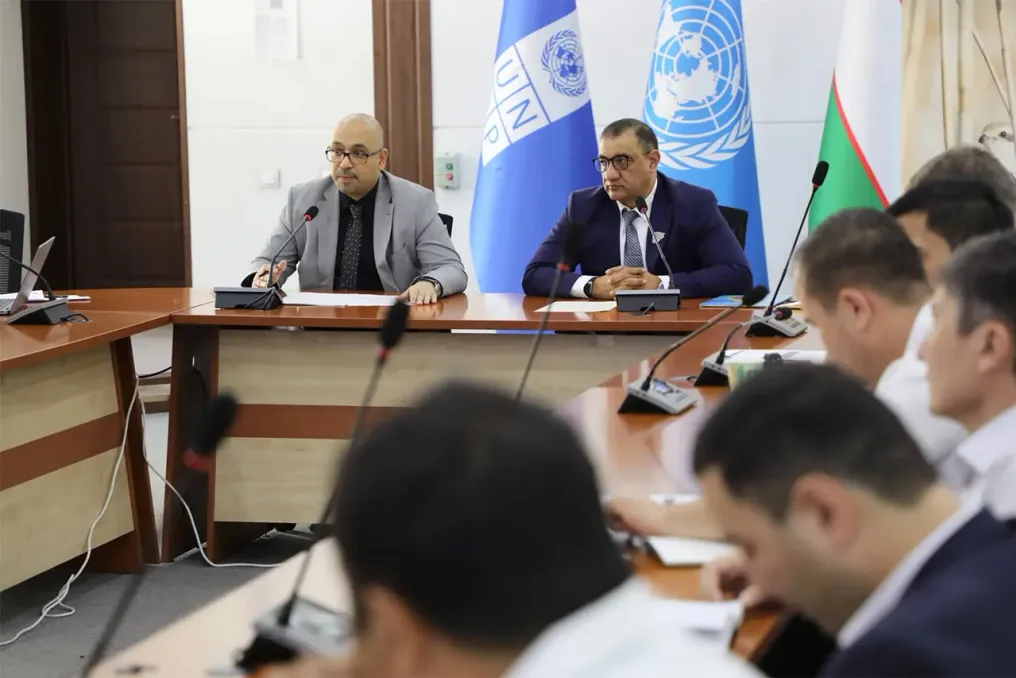
The seventh meeting of the Steering Committee for the Aral Sea Wetlands project was held at the United Nations Development Programme (UNDP) office in Tashkent. The meeting aimed to review the results of the second quarter of 2026 and determine the next steps for preserving the ecosystems of the Aral Sea basin.
This joint initiative is implemented with the participation of UNDP, the Global Environment Facility (GEF), and the National Committee on Ecology and Climate Change of the Republic of Uzbekistan. The project focuses on sustainable management and conservation of lakes, wetlands, and coastal corridors within the Aral Sea basin, as well as the restoration of degraded ecosystems.
Discussion of Results and Activities
Alisher Salomov, Advisor to the Chairman of the National Committee on Ecology and Climate Change, and Anas Fayyad Karman, UNDP's Resident Representative in Uzbekistan, co-chaired the meeting. Participants assessed the project's achievements during the reporting period, focusing on biodiversity conservation, ecosystem restoration, and environmental governance.
During the second quarter of 2026, the project conducted seventeen educational seminars and training sessions for specialists in water and land resource management. The committee also noted a three-day media expedition that took place in July 2026. During this expedition, media representatives visited natural sites and ecosystems in the lower reaches of the Amu Darya River, which led to subsequent coverage of regional environmental issues and the need for nature conservation.
Furthermore, committee members discussed the project's microgrant program, which aims to support local initiatives focused on protecting natural resources. The agenda also included the launch of a new UNDP innovation contest titled 'Innovative Solutions for Restoring Degraded and Saline Lands in the Lower Reaches of the Amu Darya River,' intended to find practical methods for land restoration.
The committee also examined legal and institutional measures to ensure environmental governance, build institutional capacity, comply with environmental legislation, and reviewed budget priorities for the third quarter of 2026.