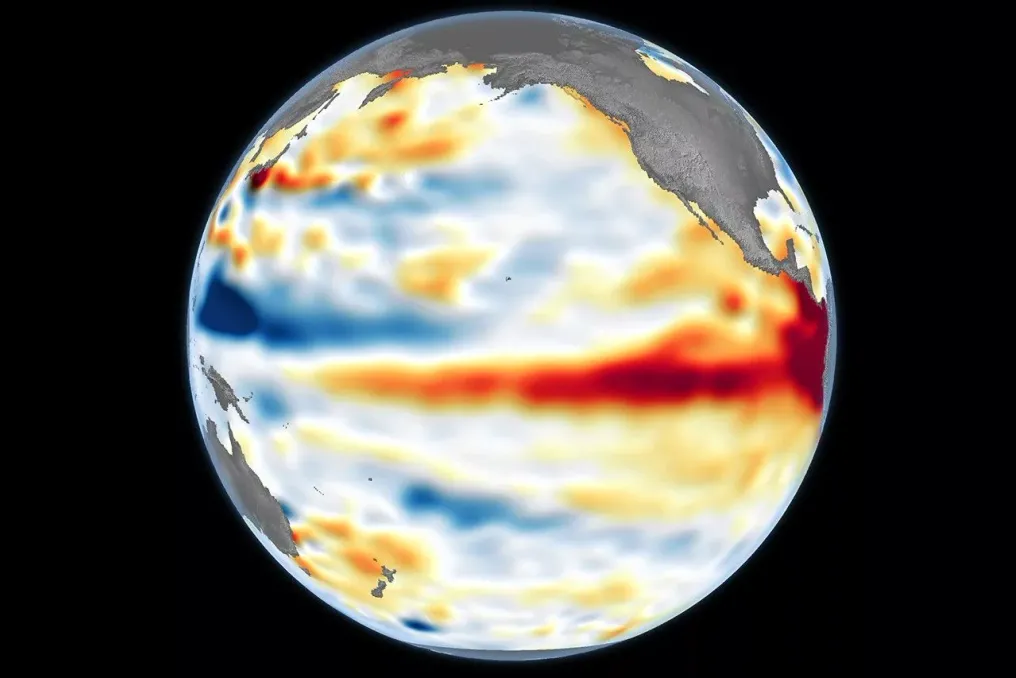
World oceans have recorded the highest average sea surface temperature ever registered, while scientists warn that the intensifying El Niño phenomenon could push temperatures even higher.
According to data from the Copernicus Climate Service of the European Union, the average global sea temperature outside polar regions was 21.1°C (70°F). This figure slightly exceeds the previous record of 21.09°C, which was set over three days in March 2024.
The timing of the new record is a cause for particular concern, as the peak of annual ocean temperatures usually occurs in March or April when summer is ending in the Southern Hemisphere. Therefore, August is an unusual month for global sea temperatures to reach a new maximum.
Seasonal temperatures in the Southern Hemisphere have a strong influence on the global average, as it covers a larger proportion of the planet's ocean surface compared to the Northern Hemisphere.
The latest temperature increase is linked to the strengthening of the natural climate pattern El Niño in the tropical Pacific Ocean. El Niño occurs when abnormally warm water forms in the central and eastern parts of the tropical Pacific Ocean. The additional heat released into the atmosphere can contribute to rising global temperatures and affect weather conditions far beyond the Pacific Ocean.
Scientists predict that the current El Niño event will continue to strengthen until the end of the year, raising concerns about further increases in ocean temperature. As reported by the BBC, scientists believe that current conditions could lead to another ocean temperature record being set during the period when temperatures usually reach their seasonal peak in March or April 2027.
The ocean absorbs more than 90% of the excess heat generated by human greenhouse gas emissions, making it one of the most obvious indicators of long-term global warming.
Rising ocean temperatures have consequences that extend far beyond the marine environment. Warmer seas provide additional energy and moisture for storms, potentially contributing to the occurrence of more intense weather events. Furthermore, they can reduce the cooling effect of sea breezes during heatwaves in some coastal areas.
Ocean warming also contributes to sea-level rise. As seawater heats up, it expands, exacerbating the effects of melting glaciers and ice sheets and increasing the risk of coastal flooding.
Marine ecosystems are also under significant pressure. Prolonged periods of abnormally warm water can cause coral bleaching, disrupt marine food chains, and negatively affect species dependent on specific temperature ranges.
Warming is not limited to the Pacific Ocean. The BBC reported that waters around the UK and Europe are also showing exceptionally high temperatures. Parts of the English Channel have experienced near continuous marine heatwave conditions for over three years, with July temperatures reaching approximately 7°C above average.
Scientists note that the widespread nature of the warming is particularly important because it reflects both the influence of El Niño and the long-term impact of human-induced climate change.
Although the latest record is only slightly higher than the previous one, and global temperature estimates contain some uncertainty, the timing of the new maximum is worrying. As El Niño continues to strengthen, scientists expect world oceans to remain under growing pressure in the coming months.