Current high costs for creating artificial intelligence infrastructure are seriously hindering innovation. Issues with computational power, high equipment expenses, and the lengthy process of collecting proprietary data make modern robotics an extremely expensive endeavor.
This is why Generalist AI raised $200 million to completely change this broken paradigm. They are addressing the critical data shortage that impedes the development of physical AI models.
Under the leadership of CEO Pete Florence, the company is focused not on creating new metallic limbs, but on developing the 'brains.' By focusing exclusively on generalized software, they bypass traditional hardware limitations. This approach is a bold and decisive step.
The current robotics landscape can be compared to the early, chaotic days of GPT-3, similar to how the internet looked before large language models emerged. Models are showing astonishing improvements and rapidly achieving commercial viability.
However, there is a problem: traditional robots often simply wait for explicit commands, which severely limits their ability to learn. Progress requires physical experience and massive scale. By giving robots the ability to interact with the unpredictable real world, Generalist forces these software models to adapt in real time.
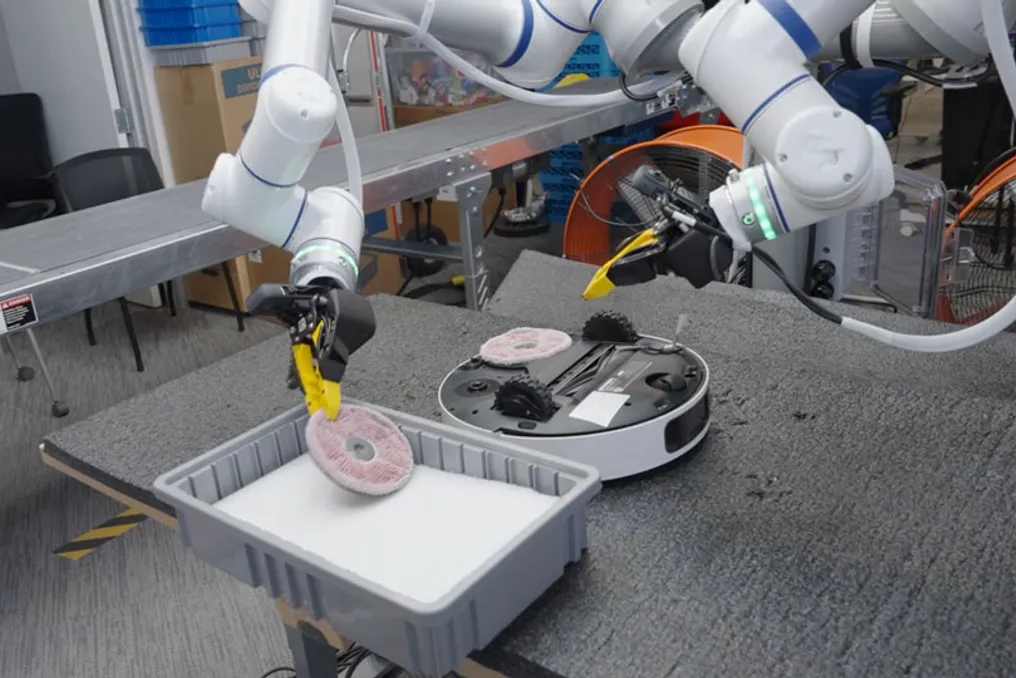
Recent developments from Generalist, such as Gen One, demonstrate impressive emergent capabilities that go beyond following rigid scripts. For instance, a robot trained only to use its right hand to grasp an object can suddenly perform a complex task using its left hand without explicit programming. This is called emergent ambidexterity—a spontaneous and almost human trait.
Furthermore, these models exhibit unprogrammed ingenuity when working with unfamiliar tools. This is not just a minor software update, but a fundamental breakthrough in how machines process and react to new conditions.
The influx of new capital, led by 8VC, just two months after securing a substantial $400 million, signals strong market confidence in Generalist AI. Major players, including Nvidia, Bezos Expeditions, and Spark Capital, are interested in the company. The reason is that whoever cracks the code of general physical intelligence will be able to permanently transform the entire blue-collar workforce.
The company's $2 billion valuation is not arbitrary; it is a carefully calculated bet on a future where adaptive intelligent software becomes the universal operating system for all forms of robots in the global market. The real battle is not for silicon, but for data. Unlike text models, which can easily scan the internet for billions of words in a single day, physical AI requires unique, proprietary interactions, as well as colossal computational power and top-tier specialists for effective processing.
The startup's ultimate goal is crystal clear: Generalist AI aims to accelerate the democratization of physical goods production by lowering the significant barrier to entry for adaptive automation. The birth of true embodied intelligence is underway, and it is happening faster than expected. The race is fully underway, and the winner will not be the company with the best metal parts, but the one with the smartest and most adaptive digital brain.