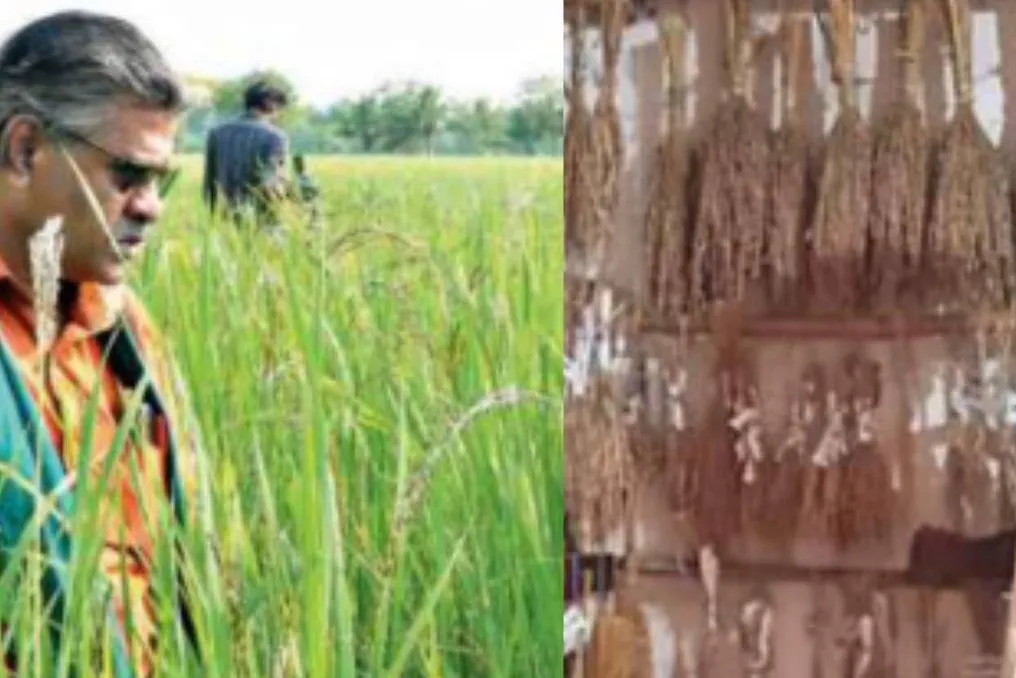
After decades of disappearance from Indian fields and kitchens, ancient rice varieties are experiencing a revival. Dishes such as biryani with Kaima rice instead of Basmati, payesh with Badshahi, or risotto made from Bora from Assam, demonstrate the potential of these forgotten varieties.
When ancient rice varieties disappeared from Indian homes faster than they could be documented, it seemed like mere nostalgia. However, the Green Revolution's push for high-yield monoculture led to the displacement of many old rice types. Nevertheless, several such varieties, once considered lost, are returning thanks to the work of farmers, conservation specialists, non-governmental organizations, restaurateurs, and some support from government bodies.
As climate change transforms agriculture, preserving traditional, climate-resilient varieties has ceased to be an option—it has become a necessity.
Deep in the country, entire families have turned preservation into a multi-generational mission. In the taluk of Beltangadi, the Rao family has preserved 180–190 traditional varieties on an area of 5.5 acres since establishing the B.K. Deva Rao seed bank in 1988. His son, Parameshwar Rao, points to benefits that extend beyond biodiversity. He notes that growing rice is one of the best ways to replenish groundwater and collect rainwater. He adds that strong earthen bunds can retain water for almost a week, and two cropping cycles can significantly improve groundwater levels. Their valuable variety, red rice Kayame, possesses a flavor rarely found in modern commercial varieties.
Origins of this Revival
In 1966, there were over one hundred thousand rice varieties in India, but by the start of the campaign, this number had dropped to approximately 30,000, most of which were stored in university seed banks rather than grown in farmers' fields. The campaign had a significant impact on the southern states. Jaykumar S, Executive Director of Thanal, states that traditional seeds have seen a revival in these states over the last 15–16 years. Today, more than 25 or 30 farmers or groups in various parts of Kerala are engaged in traditional seeds. Thanal's own center in Wayanad now houses about 320–330 rice varieties.
When Government Bodies Intervened
The influence of this movement has spread to other restaurants in the city. Amar Khamar restaurant in Kolkata offers the dish 'Chhuti-r Bhat', an 11-course menu based on ancient rice varieties. Sienna Cafe sources Chine Kamini, Radha Tilok, Kanakchur, and Tulaipanji Atop from Amar Khamar; the bar and grill Yokocho draw inspiration from Kanakchur, Tulaipanji Atop, and Karpurkanti; and Red Bari uses Shatia, Mallifulo, and Khejur Chhari.
Last summer, these ambitions crossed continents as Amar Khamar organized a tour through France and Germany. In Paris, working with sommelier Rajat Parr, the team developed a 10-course tasting menu for 80 guests entirely dedicated to rice. Kanakchur was served fried with hollandaise sauce on brown butter, while Karpurkanti, grown in the Sundarbans, and Chine Kamini appeared as attapana with lentil dal featuring jackfruit seeds; Mohansal from Barddhaman was served boiled, and the feast concluded with signature Jhargram Fine Black Rice phirni.