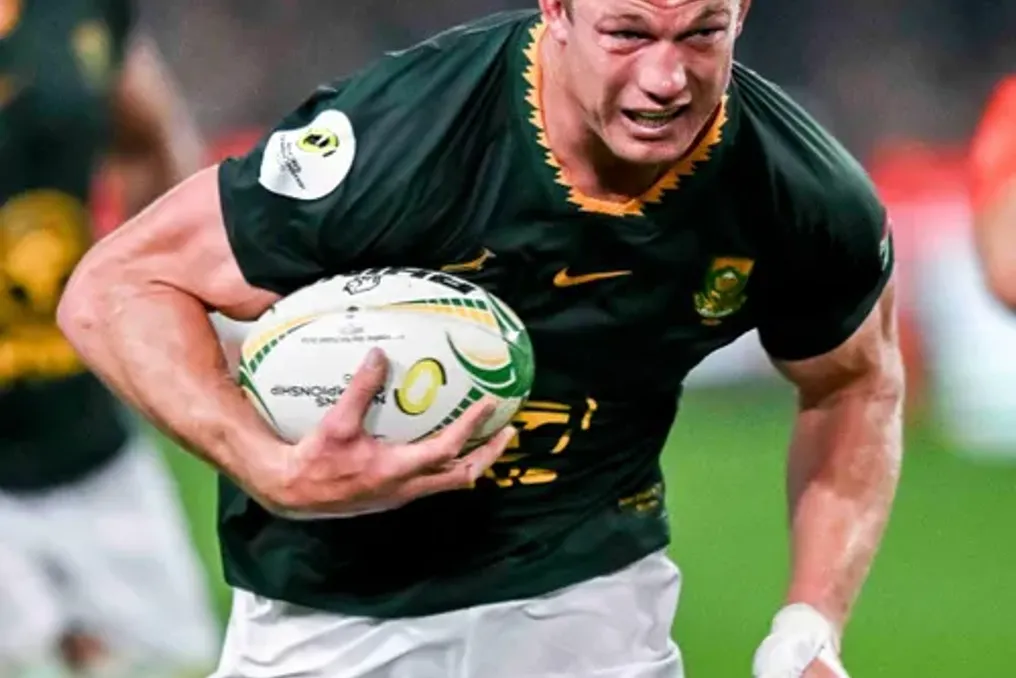
Springboks prepare to reclaim world ranking lead thanks to player experience
Read more
IOL
iol.co.za

Springboks prepare to reclaim world ranking lead thanks to player experience

Springboks veteran Pieter-Steph du Toit will join the club of players with a hundred matches after his one hundred and first test against the All Blacks in Cape Town on Saturday. If experience matters in international rugby, then the Springboks are set to field the most experienced starting lineup in their 105-year history during the second of the greatest rivalry clashes in Cape Town.

If Siya Kolisi is selected for the game, the Boks' starting fifteen will demonstrate an impressive 1012 caps in tests, surpassing any previous Springboks starting lineup since South Africa's first test in 1891. This figure comprises 428 matches in the backline and 584 in the forwards, plus another 204 potential matches among the substitutes.

The overall experience is enhanced by the outstanding performances of Eben Etzebeth with 142 matches, Kolisi with 104, as well as the recent centenaries of Damian de Allende and Pieter-Steph du Toit, who will mark his one hundred and first match on Saturday.

The Greatest Rugby Rivalry

These players do not participate in ceremonial appearances, as all four remain key performers at the highest level. Their leadership and experience in crucial matches are invaluable to the Springboks team, which seeks to respond after the 33-16 defeat last week in Ellis Park. This loss also allowed the All Blacks to overtake the Boks and regain the top spot in the world rankings, intensifying South Africa's determination.

Coach Rassie Erasmus stated on Monday that his team would seek immediate revenge in Cape Town. He noted: 'I don't think the score reflects what happened in Ellis Park. There were moments when I felt we were dominating... but it's true, we couldn't convert those opportunities.'

Erasmus added that much of the problems were caused by themselves, which is causing frustration within the camp. He acknowledged that the All Blacks are a very strong team and currently hold the number one spot in the world, and they know they are the team pursuing them in an attempt to reclaim the top spot. Erasmus also admitted that the highly rated 'Bombardment unit' failed to have the desired impact because the starting fifteen could not win the game when chances arose.

'We didn't get what we wanted from the bench because the players who started couldn't convert... our plans didn't work, and that's on me,' he said. 'We—and I include the coaches—didn't give these guys a platform to really finish things off. They had to chase the game.'

Erasmus agreed that the All Blacks ultimately improvised their tactics better in the match. 'The All Blacks imposed their game plan on us, and they were better than us here. For them, it was a beautiful game; for us, it was a highly competitive game for 60 minutes, and then they beat us. I know we are all sitting here, we have a big deficit of 17 points. But then, when they had two or three chances, as in most years when we played them, they converted them.'
Similar stories

Victor Matfield names current Springboks team the best in history ahead of series against All Blacks
Read more
iol.co.za

Victor Matfield names current Springboks team the best in history ahead of series against All Blacks

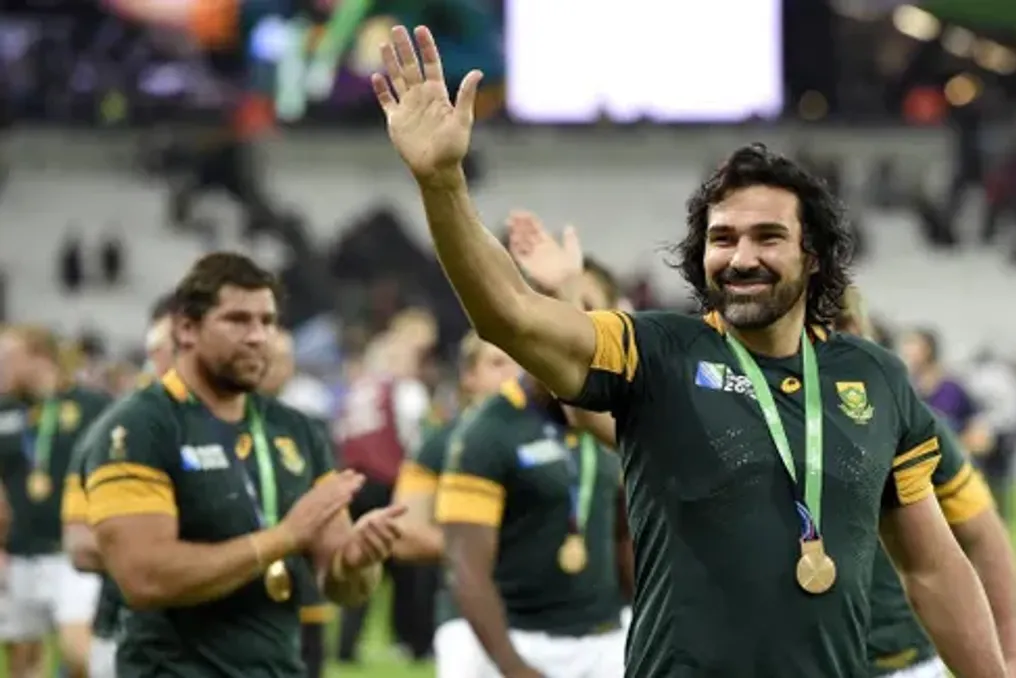
Springboks legend Victor Matfield believes that the current South African team is 'the greatest we have ever had.' His opinion will be tested over four consecutive weekends, starting Saturday, when the green and gold squad faces their main rivals, the New Zealand All Blacks.

The first and third international matches will take place at different stadiums in Johannesburg, the second in Cape Town, and the last in the American city of Baltimore. This clash of giants: South Africa won the last two Rugby World Cups, while New Zealand won the previous two. Between these teams, seven out of ten world tournaments have been secured.

Furthermore, South Africa won the last two editions of the Rugby World Cup, and New Zealand won nine out of eleven earlier ones. In total, 110 matches have taken place between them, dating back to the first meeting in Dunedin on the South Island of New Zealand in 1921: New Zealand won 63, South Africa won 43, and four matches ended in a draw.

Matfield, who helped South Africa win the 2007 World Cup, later formed a well-known partnership in the second row with the tough Bakkies Botha. The 49-year-old former star player, now a television analyst and podcaster, stated: 'The Springboks always find a way to win.'

Commenting on an uninspiring 17–10 victory in one match in Argentina this month, he noted: 'The Springboks didn't play very well; they made many mistakes, but they managed to win.'

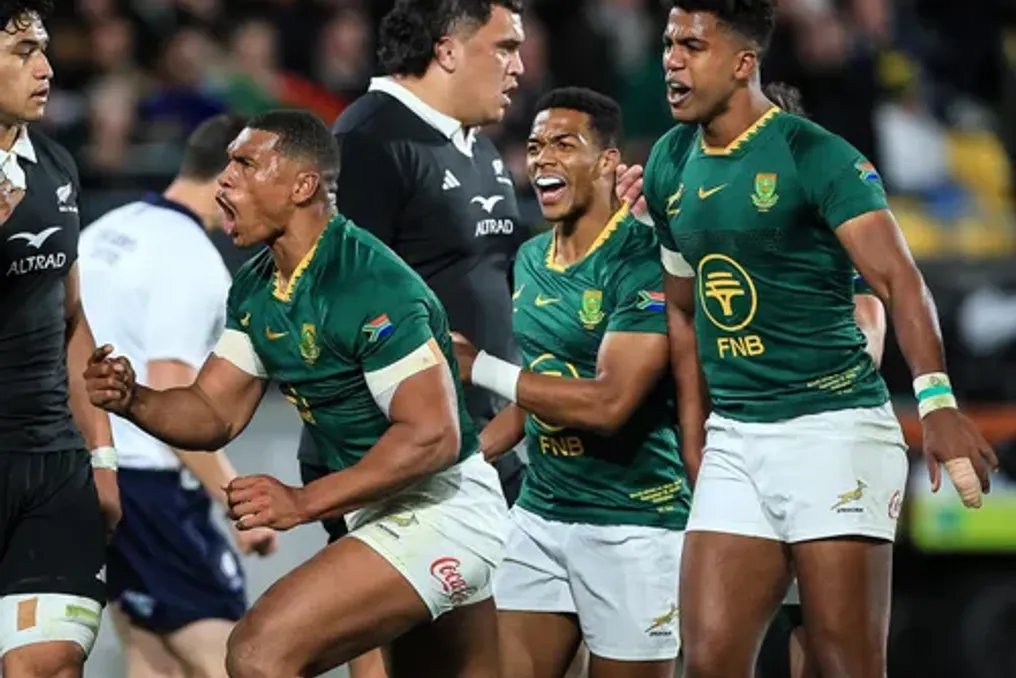
The team facing New Zealand will include only two players from that match: midfielder Saccha Feinberg-Mngomezulu and second-row veteran Eben Etzebeth. Although Etzebeth was an obvious choice, head coach Rassie Erasmus acknowledged the difficulty of choosing between Feinberg-Mngomezulu, Manu Libbok, and Handre Pollard for the playmaker position.

Erasmus noted: 'It is always a difficult decision... Saccha did wonderful things when playing for us. He was a midfielder last year when we beat them.' Libbok is on the bench, and Pollard, a two-time World Cup winner, did not make the squad this time, despite being the most conservative of the trio in play, yet being a prolific goal-scorer.

Acknowledging the nervousness, Erasmus said: 'This is a huge series of matches, and how we start is very important. There is time to come back, but it is always better to win the first one.'

Peter-Steph du Toit, World Rugby Player of the Year award winner and flanker, will lead the Springboks alongside captain Siya Kolisi, who has been given more time to fully recover from a hamstring injury. New Zealand coach Dave Rennie replaced Scott Robertson in March and admits that he and his team are in a phase of intensive training, striving to dominate world rugby again.

Like Erasmus, Rennie admitted the need for deep self-analysis before naming his squad just two hours before the Springboks revealed theirs. He mentioned: 'There were many players in good form, huge competition for spots, and there were several positions that required a lot of discussion. I mean the second row especially.'

The only change in the team that convincingly won the Rugby World Cup against Ireland in Auckland last month was the replacement of Patrick Tuipulotu with Fabian Holland. Organizers called this series the 'Greatest Rivalry' and stated that it was a 'series unlike any other,' with a corresponding trophy presented mid-week. In case of a draw, the trophy, consisting of two magnetic halves, can be split and divided.

Springboks vs. All Blacks rivalry remains the greatest in rugby after 105 years
Read more
iol.co.za

Springboks vs. All Blacks rivalry remains the greatest in rugby after 105 years

After 105 years, the rivalry between the Springboks and the All Blacks continues to be considered the most significant in world rugby. When the 'Greatest Rugby Rivalry' tour between New Zealand and South Africa was first announced, some critics dismissed the title as arrogant. However, it is difficult to surpass the unending drama that has existed between these two teams for over a century.

Although there are long-standing and exciting confrontations, such as England versus France or New Zealand versus Australia, the uniqueness of the All Blacks and Springboks matches lies in the fact that since their first meeting in 1921, both teams have regularly competed for the title of world champion—first unofficially, and then officially.

History of the Rivalry

When the Springboks first visited New Zealand in 1921, the series of three matches ended with one win and one draw. Since then, both teams have consistently been among the world's best, often occupying the No. 1 or No. 2 positions in world rankings. As early as 1928, series in South Africa were positioned as a contest to determine the best team in the world. This was true in subsequent series in 1937, 1949, 1956, 1960, 1965, 1970, 1976, and 1981. Even the Cavaliers sporting tour from New Zealand to South Africa in 1986 pitted the two strongest teams in the world against each other.

After South Africa emerged from international isolation in 1992, the countries played 37 matches since 1921. The Springboks won 20, the All Blacks won 15, with two draws. Then came the era of the World Cup, which began in 1987 and was created to determine the best rugby team on the planet.

The All Blacks won the first World Cup, but the Springboks did not participate due to South Africa's sporting isolation. When the Boks finally entered the tournament in 1995, they won the Webb Ellis Cup in their first appearance. Over the past 10 World Cups since 1987, Australia has won twice, England once, and the remaining titles have been shared by the Springboks (four) and the All Blacks (three).

Recent Dynamics of the Rivalry

There were only one or two periods when the balance of power in this rivalry could be reasonably questioned. Between 2001 and 2006, New Zealand defeated South Africa eight times in a row. Later, in 2016 and 2017, the All Blacks scored 57 points against the Boks twice. However, after Rassie Erasmus started working with the Springboks, the balance of power changed drastically. South Africa won five of the last six encounters, including the epic 2023 World Cup final in Paris. And in the latest match in 2025, the rugby world was stunned by how the Springboks defeated the All Blacks 43–10 on home soil in Wellington.

Interestingly, throughout the entire 105-year history of this confrontation, New Zealand traditionally held an advantage when visiting South Africa. However, the situation is changing this year. For the first time, the Springboks are playing a series against the All Blacks at home as clear favorites, expecting four matches as part of the 'Greatest Rugby Rivalry' tour.

Preparation for the first match at Ellis Park next Saturday, August 22nd, promises to be thrilling. Questions arise: can the tight five of the All Blacks withstand the fierce physical power of the Springboks? Does New Zealand possess sufficient squad depth to remain competitive over four matches, especially considering expected injuries? Can the All Blacks find a way to overcome the suffocating defensive system of the Boks? And can South Africa cope with the high-tempo attack presented by New Zealand's athletic backline?

These questions will soon receive answers. The opening chapter of a new era is set to be written into the folklore of a rivalry that has defined the highest standards of international rugby for over a century. Calling it arrogance is your right. But the history of 105 years proves that the title of 'Greatest Rugby Rivalry' between the Springboks and All Blacks is deserved.

Popular