Satellites observing Earth generate a massive amount of data that cannot be transmitted to the planet's surface. The limitations of the ground communication channel, short passes over receiving stations, and the need to wait hours to upload most of the sensor data create a bottleneck, with the problem lying not in the camera itself, but in the transmission channel.
Processing data directly at the point of collection fundamentally changes the situation. If a satellite is capable of performing analysis on board, a ready answer is received on Earth, not a raw stream of information. Such a result is smaller in volume, faster, and much more useful. Implementing this requires computing equipment capable of functioning in orbit, where conventional electronics degrade due to radiation.
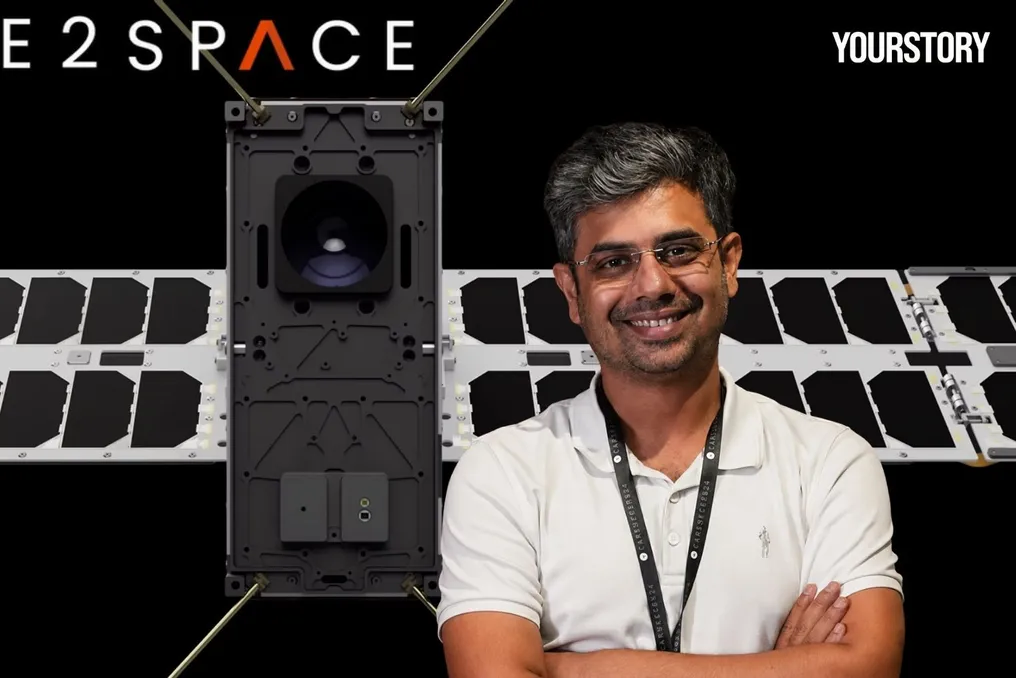
TakeMe2Space is creating this infrastructure. Founded in Hyderabad by Ronak Kumar Samantray, who previously created the software company NowFloats before its acquisition by Reliance Industries in 2019, the company positions itself as a developer of orbital data center infrastructure with a focus on artificial intelligence in low Earth orbit.
The company's commercial product is OrbitLab, described as a 'satellite as a service' platform. The user—whether a student, researcher, or businessperson—uploads an AI model onto the satellite, it runs there, and the results are returned encrypted. The cost of services is calculated based on computation time, which is $2 per minute.
The company demonstrated this capability in practice. In January 2025, it completed a fourteen-day orbital demonstration using the ISRO PSLV orbital experiment module. This platform is a repurposed fourth stage of a rocket used as an orbital testbed. The company claims that the mission showed the ability to upload large AI models from Earth, execute external code on the satellite, and transmit encrypted results.
The radiation problem was solved using materials. A protective coating called RadShield was developed, which, according to the company, withstood exposure to multiple solar flares in orbit and extended the service life of components, allowing the use of standard electronics instead of expensive radiation-hardened parts.
The third product, StarSense, is an AI-based star tracker—a device that allows a spacecraft to determine its pointing direction by analyzing star patterns. This product is supported by the IN-SPACe Technology Implementation Fund, the same program that initially selected Astrobase and SatSure among its recipients.
Unfortunately, the startup's first operational satellite, MOI-1, was destroyed on January 12, 2026, due to a launch failure of PSLV-C62. The mission failure occurred because of an anomaly in the rotation speed of the third stage during the ISRO flight. The startup has planned a replacement, MOI-1a, with a tentative launch in October 2026 from California.
TakeMe2Space raised $5 million in a seed round announced in January 2026, with participation from Chiratae Ventures, Unicorn India Ventures, Artha Venture Fund, and SeaFund. The total funding across three rounds reached approximately $5.64 million. These funds are intended to expand the satellite fleet from one to six, achieve a computational capacity of about 5 kilowatts in orbit, and connect spacecraft via optical communication links.
The company's ambitions extend further. In April, Samantray told a space industry publication that the company is seeking $55 million to build an orbital data center with a capacity of 50 kilowatts, from which a one-gigawatt facility will subsequently be constructed. Production is largely carried out in-house. Samantray noted that everything on the satellites is designed and manufactured internally, with the exception of solar cells and propulsion systems, which forms the basis of his cost calculations.
The company has grown from 17 employees to a target of 60 people and plans to operate in India, the United States, and Australia. In August 2026, it was among the top twenty space startups whose founders met with the Prime Minister on National Space Day.