The quality of a medicinal product directly depends on the structure of its crystals. How a molecule crystallizes determines its solubility, shelf stability, and degree of absorption by the body. If the structure is determined incorrectly, a theoretically effective drug may prove ineffective in practice.
Gravity interferes with this process: during crystal formation, denser material settles, and convective currents mix the liquid, leading to defects. Eliminating gravity allows the solution to remain still, which in principle promotes the growth of more uniform crystals. Pharmaceutical companies have been conducting similar experiments aboard the International Space Station for many years, including research into anti-cancer treatments.
Serendipity Space intends to bring this technology to a commercial level, based in India. The company was founded in 2024 in Bhubaneswar by Antirish Parichha, Jivitesh Debata, and Dr. Monica Ekal. Its goal is to create satellites capable of producing pharmaceutical compounds in orbit and then delivering them back to Earth.
The module performing the production work is called Alchemy. It is an autonomous pharmaceutical manufacturing system designed to function without constant operator presence. This autonomy is the key feature, as the satellite has no operator, and crystallization must start, proceed, and be maintained independently.
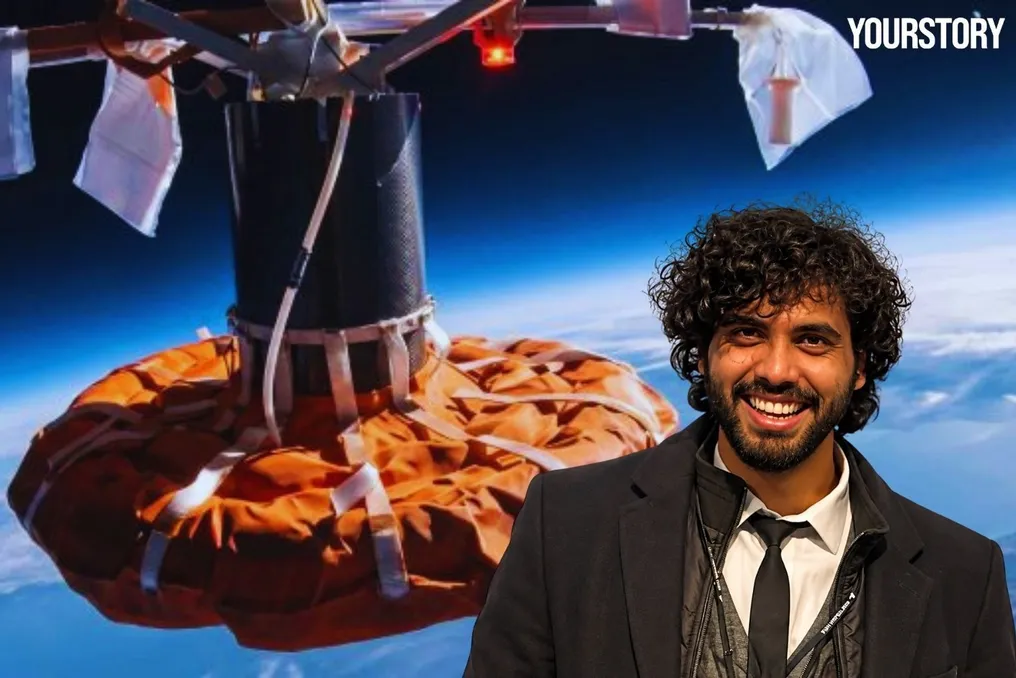
In March 2026, the company conducted a test flight. Collaborating with the Tata Institute of Fundamental Research Balloon Facility in Hyderabad, which has conducted high-altitude launches for decades, they sent a prototype satellite, developed for orbital class, to the edge of space using a stratospheric aerostat.
The mission tested not only the chemical processes. It also subjected the company's heat shield and avionics to testing, allowed crystallization during flight, and ensured the preservation of the obtained crystals during descent, landing, and subsequent retrieval. The payload included therapeutic drugs based on monoclonal antibodies, small molecules, and proteins used in drug discovery.
The recovery of samples is as important as the production process itself. A crystal grown in microgravity conditions but destroyed by heat and force upon atmospheric entry is useless. Therefore, Serendipity emphasizes that maintaining the integrity of the crystals upon return is part of the tested tasks.
The final plan involves using a reusable satellite that will ascend, produce products, descend, and take off again. This design is more complex than a single-use spacecraft, but it is what will ensure economic viability, as a single-use factory cannot be considered full-scale production.
The company raised approximately $591,000 in two funding rounds, supported by Campus Fund, which invests in student and recent graduate-founded startups. By October 2025, it had formed a technical team, and within less than four months, a functional prototype meeting orbital class standards was created.
The founders of the team combine knowledge in physics, engineering, computer science, and space operations. Dr. Ekal previously worked at the German Aerospace Center and NASA, and before the flights, the company had already created functional pharmaceutical modules on the ground.
In August 2026, the company was included among twenty Indian space startups whose founders met with the Prime Minister on National Space Day. However, the company has not yet disclosed information about the pharmaceutical client, the orbital mission, or the commercial product; its target market is pharmaceutical companies willing to pay for orbital production, and the specific name of such a client has not been announced.