Almost all autonomously moving devices rely on satellites located more than 20,000 kilometers away. GPS systems and its analogues were developed in the 1970s for military, and later civilian needs. They provide location determination with an accuracy of five to ten meters, updating data once per second, which is sufficient for a person following a map.
However, for a drone landing on a platform, an error of five to ten meters is insufficient. Furthermore, the signal weakens by the time it reaches Earth, making it easier to suppress or jam. Problems with jamming and spoofing have become commonplace; GPS does not work indoors or in dense urban areas where signals reflect off buildings. Moreover, any country relying on a foreign satellite system depends on a third party's infrastructure.
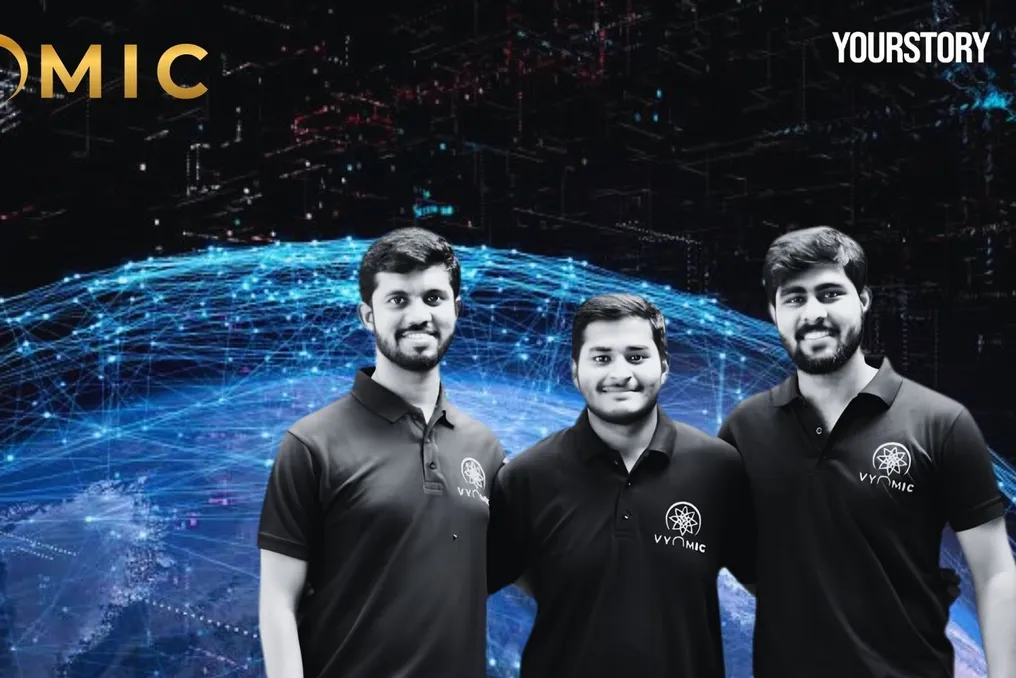
VyomIC is creating an alternative located closer to the surface. The company was founded in Bengaluru in 2023 by Lokesh Kabdal, Vibhor Jain, and Anurag Patil. Their goal is to build a constellation for positioning, navigation, and time synchronization in low Earth orbit.
The choice of orbit is a key design element. A satellite located only a few hundred kilometers above Earth transmits a significantly stronger signal than a satellite at a distance of 20,000 kilometers. A stronger signal is harder to jam and easier to receive indoors. Additionally, it moves quickly across the sky, allowing the receiver to calculate its position faster.
In addition, the company uses atomic clocks, encrypted signals, and artificial intelligence-based processing to ensure centimeter-level accuracy, unlike the metric accuracy of GPS. Real-time kinematic positioning technology has also been developed, which corrects satellite data using a reference station and is intended for vehicles moving in complex environments, not for static surveyors in open terrain.
The founders came to this problem through previous experience. At IIT Madras, they led a student team called Avishkar Hyperloop, which raised $1.25 million and built a 422-meter vacuum test tube. After this, the startup conducted drone swarm deployments for government clients. It was during these flights that they realized in which situations satellite navigation stopped working.
The company's clients are directly defined by this experience: drones, ground unmanned vehicles, mining equipment, urban air mobility, as well as sectors like finance and telecommunications that require precise time, not just position.
Time is an aspect that is often overlooked. Satellite navigation systems are essentially high-precision clocks, and financial exchanges, power grids, and mobile networks depend on this signal to maintain synchronization.
VyomIC raised $1.6 million in a pre-seed funding round announced in September 2025, with participation from Speciale Invest, and BYT Capital also invested. These funds are intended for developing the system itself, not for launching it. India already has its own navigation system, NavIC, developed by ISRO. The company positions itself as complementary, not competitive, asserting that the target applications require accuracy and update rates that surpass the capabilities of any existing system.
In August 2026, the founders were among twenty Indian space startups that met with the Prime Minister on National Space Day, alongside other companies. Nevertheless, the company has not launched anything yet. Creating a satellite constellation is one of the most capital-intensive endeavors in the industry, and $1.6 million covers engineering work, not the spacecraft themselves. No satellite, client, or service is operational, and the company has not published a launch schedule.