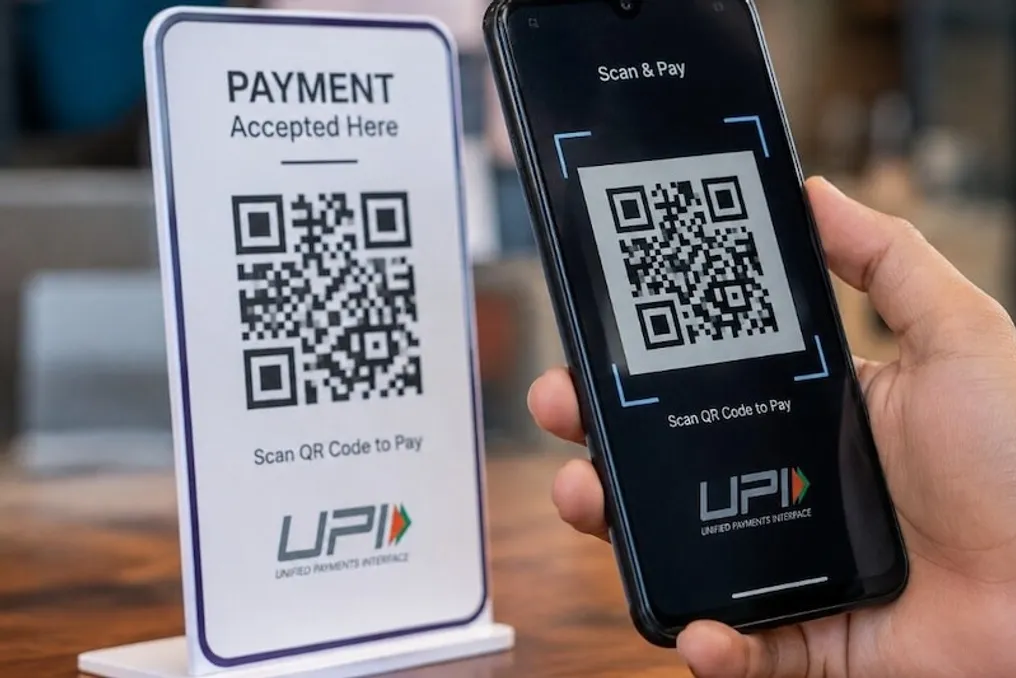
The Unified Payments Interface (UPI) is demonstrating rapid growth in usage not only in India but also abroad. In July 2026, transactions worth 29.87 trillion rupees were processed through UPI. UPI's international presence has now reached 11 countries, with Greece and the Maldives being the newest participants.
The government views UPI as the foundation of India's digital payment ecosystem. According to government data, NPCI has increased UPI approximately 12,000 times over the last decade, transforming it into a key part of the digital public infrastructure. A report by the International Monetary Fund (IMF), published in June 2025, showed that in 2024, UPI accounted for about 49% of the global real-time transaction volume, indicating the system's growing global significance.
The UPI payment system is available for cross-border operations in many nations. It is currently used in Bhutan, Nepal, Singapore, UAE, and France. Additionally, UPI operations function in Sri Lanka, Mauritius, Qatar, Cambodia, Greece, and the Maldives. The government notes that Greece and the Maldives are the latest additions to UPI's international expansion.
Several important updates were introduced to UPI between 2020 and 2022. The UPI AutoPay feature was launched, simplifying recurring payments such as EMI and SIP. The capability for digital payments for users of feature phones via UPI 123PAY was also introduced, utilizing options like IVR and missed calls. UPI Lite was launched during the same period. Later, the ability to link credit cards to UPI became available, and UPI made its international debut in Bhutan.
In 2024, the UPI Circle feature was launched, which enables payment delegation. This feature allows one person to authorize another to make payments from their UPI account within a set limit. In the same year, the Reserve Bank of India (RBI) increased the limit for tax payments via UPI from 100,000 rupees to 500,000 rupees. The UPI 123PAY transaction limit was also raised to 10,000 rupees. Furthermore, the UPI Lite wallet limit was set at 5,000 rupees, and the per-transaction limit at 1,000 rupees.
In 2025, device-based biometric authentication was added to UPI. A face-based authentication feature linked to Aadhaar was also added for setting the UPI PIN. The government emphasizes that these modifications have expanded authentication options for users. The government believes that the international expansion of UPI reflects the growing global recognition of India's digital payment infrastructure. The interoperability-based model is also cited as the reason for this expansion.