Ramayana: Five Significant Moments Demonstrating the Victory of Dharma over Adharma
Read more
Aaj Tak
www.aajtak.in

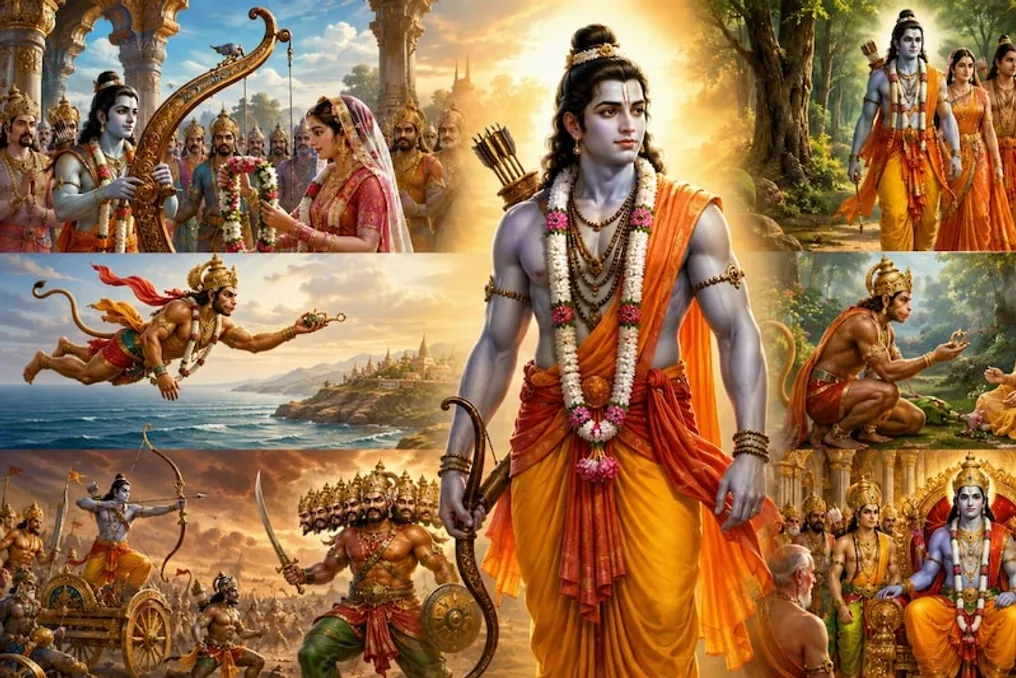
Ramayana: Five Significant Moments Demonstrating the Victory of Dharma over Adharma

When Adharma intensified on Earth, and the terror of demons became so strong that even sages could not peacefully perform yagnas, and many kings began to rule by force rather than adhering to societal norms, Lord Shri Rama appeared during this difficult time.

The prince from Ayodhya, Shri Rama, later received the title Maripada Purushottam. The Ramayana is not just a religious text; it teaches us a way of life. It narrates stories of love, self-sacrifice, asceticism, duty, war, and ultimately, the triumph of truth. Today, we will examine five special and glorious moments from the Ramayana that made Lord Shri Rama not just a king, but a hero of his era.

Breaking the Shiva Dhanusha and the Victory at Sita's Swayamvara

In Mithila, King Janaka organized a swayamvara for his daughter Sita. He set a condition: whoever could lift the massive bow of Lord Shiva and string it would marry Sita. Many kings and princes arrived from all over the country, but none could move the bow. Then, on the advice of Guru Vishwamitra, Shri Rama stepped forward.

Shri Rama first worshipped the Shiva Dhanusha, and then lifted it with great ease. As soon as he tried to string the bow, it broke with a loud sound. The entire hall was stunned. After this, Sita placed the necklace on Shri Rama. This moment was not just a wedding, but symbolized the confluence of love, trust, and Dharma. This incident showed that true strength lies not only in physical might but also in self-control and adherence to principles.

Acceptance of Exile and Unwavering Principles

In Ayodhya, preparations were being made to celebrate Shri Rama's coronation. The entire city was filled with joy. However, circumstances changed. Queen Kaikeyi demanded two boons from King Dasharatha: fourteen years of exile for Rama and the throne for Bharata. Hearing this, Shri Rama did not feel anger or complain to anyone. He accepted his father's promise as his duty and agreed to go into exile.

Mother Sita also insisted on going to the forest with him, and Lakshmana refused to leave his brother. Thus, Rama, Sita, and Lakshmana went to the forest. Shri Rama's exile teaches us that a true person is one who does not abandon their duties and principles even in difficult circumstances. He left the palace, but he did not abandon the path of Dharma.

Hanuman's Journey to Lanka and the Search for Sita

When Ravana abducted Mother Sita and took her to Lanka, Shri Rama set out in search. During this time, Hanuman took responsibility for finding Mother Sita. Hanuman crossed the ocean and reached Lanka. On his journey, he had to face many difficulties, but he overcame all obstacles through his intelligence and strength.

Upon reaching Lanka, Hanuman found Mother Sita in Ashoka Vatika. He gave Sita Shri Rama's ring and informed her that Shri Rama would soon come for her. This gave Sita hope. After this, Hanuman demonstrated his power in Lanka and warned Ravana. Hanuman's journey shows that when devotion, intellect, and courage unite, any great difficulty can be overcome.

Rama and Ravana's War and the Triumph of Dharma

The war between Rama and Ravana was not just a battle between two kings; it was a clash of Dharma and Adharma, Truth and arrogance. Shri Rama built a bridge across the ocean with an army of Vanaras and arrived in Lanka. He also took Vibhishana with him and started the war against Ravana's army.

During the battle, many mighty warriors of Ravana died, including Kumbhakarna and Meghanada. Eventually, Ravana himself came onto the battlefield. A fierce battle ensued between Shri Rama and Ravana, and ultimately, Shri Rama killed Ravana. This was not just the defeat of a demon, but a symbol of the end of arrogance and Adharma. Even after killing Ravana, Shri Rama maintained respect for him. He asked Lakshmana to gain knowledge from Ravana and ordered his funeral rites to be performed. This conveys the message that one can show respect to an enemy while following Dharma.

Establishment of Ramrajya

After defeating Ravana, Shri Rama returned to Ayodhya. The city of Ayodhya was decorated with lights celebrating his return. This tradition of joy is celebrated today as Diwali. After returning to Ayodhya, Shri Rama was crowned, and the era of Ramrajya began. Ramrajya is remembered as an ideal rule where the happiness and needs of the people were given the highest importance. There was closeness between the king and the people, and justice was paramount. Therefore, today, when speaking of ideal governance, the example of Ramrajya is cited.

What lessons do these moments of the Ramayana teach? These glorious moments of the Ramayana are not just old stories; they hide great life lessons. Shri Rama lifting the Shiva Dhanusha teaches us confidence and self-control. Accepting exile teaches the lesson of sacrifice and duty. Hanuman's journey to Lanka is an example of devotion, courage, and selflessness. Ravana's end tells us that arrogance and Adharma, no matter how powerful they may be, eventually yield to Truth.
Similar stories

Five Mysterious Shiva Temples from the Mahabharata Era That Remain Active in Kali Yuga
Read more
www.aajtak.in

Five Mysterious Shiva Temples from the Mahabharata Era That Remain Active in Kali Yuga

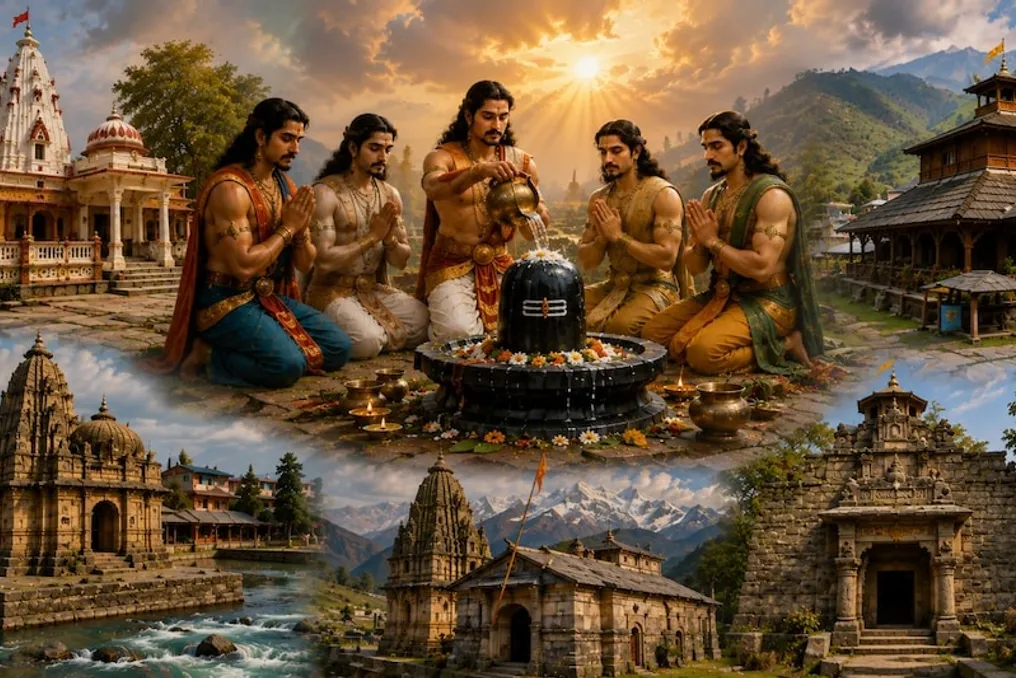
Today is the last Monday of the month of Sawan, which is considered particularly auspicious for worshipping Lord Shiva, taking holy dips, and performing spiritual practices. There is a belief that during this sacred month, Mahadeva fulfills all the wishes of his devotees. The connection between Sawan and the worship of Shiva dates back to the Mahabharata era. During difficult periods of exile and forest wandering, the Pandavas also sought the help of Lord Shiva and performed rigorous austerities, establishing Shivlings everywhere to achieve victory in the war and establish Dharma.

Currently, ancient Shiva temples associated with the Pandavas are located across the country and serve as centers of unwavering faith for pilgrims who travel from afar to bathe Mahadeva during the month of Sawan. Below are some of these major shrines that were established and revered by the Pandavas.

Lodheshwar Mahadeva Mandir, Barabanki, Uttar Pradesh

The Lodheshwar Mahadeva Mandir, located in the Barabanki district of Uttar Pradesh, is considered an ancient Shiva temple connected to the Pandavas. According to legends, during a period of uncertainty, the Pandavas worshipped Lord Shiva right here. It is said that they performed austerities and rituals with the aim of gaining victory in the war and regaining their lost royal share. The shrine houses ancient images of Shiva, and it is also believed that ancient statues related to Mother Parvati are present here. According to local tradition, the Pandavas conducted Rudra Mahayajna here under the guidance of the sage Vedavyasa.

This temple, situated near the Ghaghara River, holds immense significance for devotees. The complex contains an ancient well called 'Pandav Kup'. It is believed that the water in it possesses healing properties and helps cure many ailments, although scientific evidence for these claims is a separate matter. A large number of pilgrims visit here during the month of Sawan to bathe Shiva. During Mahashivaratri, devotees from all over the world also visit the temple for darshan. According to beliefs, any wish expressed here from a pure heart comes true. The modern appearance of the temple is the result of construction work and restorations carried out over time. However, it is also mentioned that ancient red bricks were discovered nearby during excavation work.

Pandeshwarnath Dham, Prayagraj, Uttar Pradesh

Pandeshwarnath Dham, located in Prayagraj, is also recognized as an ancient Shiva temple associated with the Pandavas. According to local beliefs, when the Pandavas arrived in this region during their exile, they established a Shivling here and worshipped Lord Shiva. It is narrated that while traveling through Angadesha and Magadha, the Pandavas installed the Shivling here on the advice of the sage Bharadvaja. This is why the place is linked to the Pandavas.

This temple is also known for its ancient stone structure. It is among the most important religious sites associated with the Pancha Kosi pilgrimage of Prayagraj. In local tradition, it is called Siddhipet. Devotees believe that visiting and worshipping Lord Shiva here leads to the fulfillment of their desires.

Mamleshwar Mahadeva Mandir, Himachal Pradesh

The Mamleshwar Mahadeva Mandir, located in the picturesque valleys of Himachal Pradesh, is also associated with the Mahabharata era and the Pandavas. According to legend, the Pandavas stayed in this region for some time during their exile and established Lord Shiva here then. The shrine houses statues of Lord Shiva and Mother Parvati, and an ancient Shivling is installed. According to local beliefs, Bhima and Hidimba met in this area, and she later became his wife. The temple also has a huge drum associated with Bhima, which locals consider to be Bhima's drum. It is also claimed that the temple stores ancient wheat grains weighing about 200 grams, which, according to belief, were grown by the Pandavas at that time.

There is also a belief in the temple complex regarding a continuous fire or forge (dhuni). Devotees are convinced that this fire has been burning continuously since the Mahabharata era. Although historical confirmation of such long-term burning remains a subject of separate study.

Shri Kalinath Mahakaleshwar Mahadeva Mandir, Himachal Pradesh

Shri Kalinath Mahakaleshwar Mahadeva Mandir, located in the village of Paragpur, Kangra district, Himachal Pradesh, is situated on the banks of the Beas River. This temple is also connected to folk tales about the Pandavas. According to beliefs, after the Pandavas avoided the incident with Lakshagriha, they turned to worshipping Lord Shiva here. The Shivling installed in the temple is considered special. According to local beliefs, it harbors the energies of both Lord Shiva and Mother Mahakali. It is said that this Shivling gradually sinks into the earth. There are numerous religious concepts regarding this as well.

According to another legend, during their exile, the Pandavas brought water from important holy places such as Prayag, Ujjain, Nasik, Haridwar, and Rameshwar. They mixed the water from these five holy places in a pond here. Because of this, the place became known as Panchtirthi. It is believed that bathing in Panchtirthi brings merit, and bathing here on the day of Vaisakha holds special religious significance.

Lakhamandl Mahadeva Mandir, Uttarakhand

Lakhamandl Mahadeva Mandir, located on the banks of the Yamuna River in Uttarakhand, ...

3.
According to local legends, the Shiva temple in Ghaziabad has a connection to Ravana's family
Read more
www.aajtak.in

According to local legends, the Shiva temple in Ghaziabad has a connection to Ravana's family

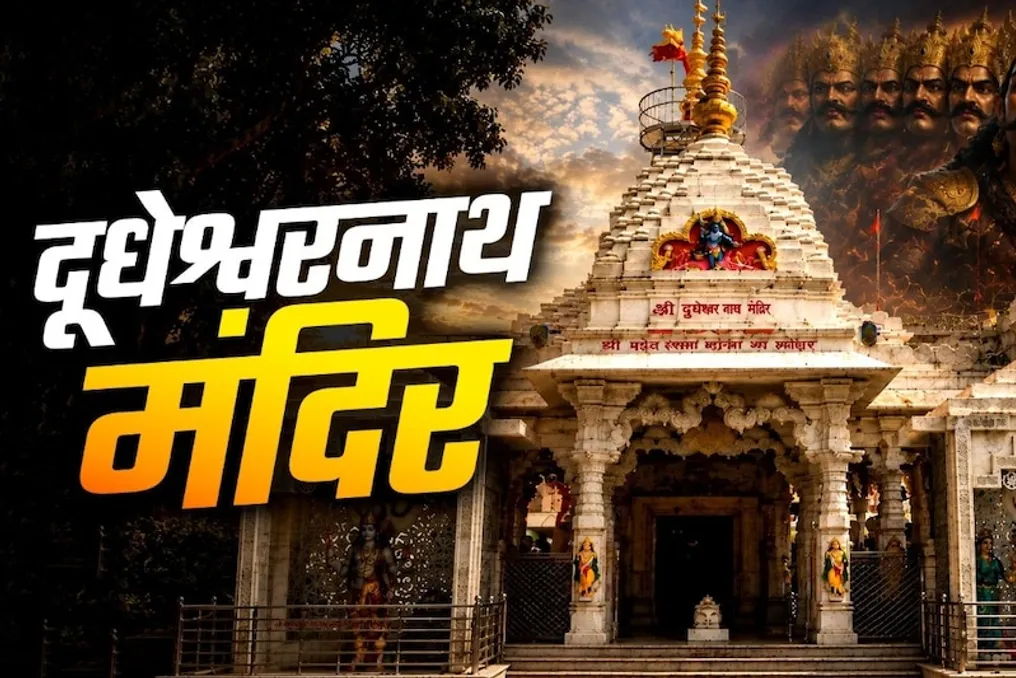
In the Dudheshwarnath temple located in Ghaziabad, a large number of pilgrims visit and perform the jalabhishek ritual during the month of Sawan. A queue of about a kilometer forms in front of the temple. This temple is considered a siddha place with a self-manifested lingam.

There is a belief that Ravana's father regularly came here to worship Lord Shiva, and there was also a tunnel connecting the temple to the nearby village of Bisarh. It is because of this religious faith that a huge number of devotees gather here during the month of Sawan.

The Dudheshwarnath temple is revered as a siddha-kshetra of Shiva. According to legends, Ravana's father, being a devout follower of Lord Shiva, often performed regular worship at this place. It is said that a direct tunnel led from the neighboring village of Bisarh to the temple, through which he would come daily to offer water to Lord Shiva. Because of this, the temple is considered to have a special connection with Ravana and his family.

The self-manifested lingam in the temple attracts the most attention from pilgrims. According to legend, this lingam was not installed by a human but appeared on its own. Therefore, devotees consider this place extremely miraculous and a siddha-sthal. During the month of Sawan, pilgrims travel from afar to visit and perform jalabhishek.

During the sacred month of Sawan, a huge crowd of pilgrims is observed in and outside the Dudheshwarnath temple complex. On particularly busy days, the queue from the main entrance to the temple extends almost a kilometer. Regardless of the intense heat, rain, or humidity, pilgrims wait in line with full enthusiasm and reverence. Despite the weather difficulties, the faith of the pilgrims remains unwavering. Recently, the veneration of this temple has significantly increased, and pilgrims are arriving here from different parts of the country and the world.

There is a widely circulated legend associated with Dudheshwar Mahadev and cows. It is said that cows from the nearby village of Kaila grazed on a hill, and milk began to drip spontaneously from their udders. Surprised by this phenomenon, local residents excavated the hill, after which they discovered the lingam. Since Mahadev was bathed with cow's milk here, he was given the name Dudheshwar or Dugdheshwar Mahadev.

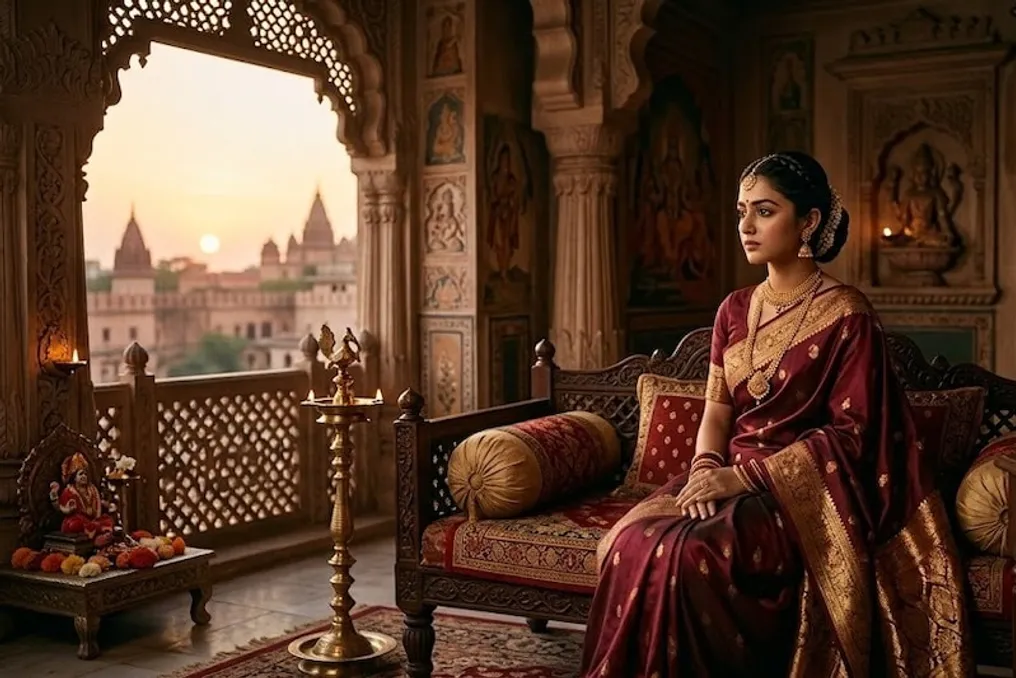
Urmila in Ramayana: A History of Waiting and an Underappreciated Contribution to Mythology
Read more
www.aajtak.in

Urmila in Ramayana: A History of Waiting and an Underappreciated Contribution to Mythology

As a child, I was drawn to mythological series because of the image of divine worlds, magical weapons, dazzling costumes, and magnificent palaces. Our generation grew up listening to, reading, and watching the Ramayana. In school plays, every girl strove to play Sita; no one wanted to be Urmila. The story of Urmila in the Ramayana has been told very little. There are many more topics that could be discussed about her.

The Ramayana contains numerous events during Sita's exile: her husband's companionship, hardships in the forest, closeness to nature, and the subsequent battle with Ravana. Sita is at the center of this story. Lakshmana also demonstrated deep devotion to his brother, staying by her side like a shadow for fourteen years. However, Urmila only experienced waiting.

After marriage, a woman's life was supposed to begin with her husband, but shortly after, there was a fourteen-year absence of her husband. Valmiki's mention of Urmila in the Ramayana is extremely limited. During the wedding ceremonies, Janaka arranges the marriage of his daughter Urmila to Lakshmana.

When it became clear that Rama would have to go into exile, Lakshmana decided to go with her. Sita was supposed to go with him, but in the preparations for this separation in Valmiki's narrative, there are no long dialogues between Lakshmana and Urmila where she could express her thoughts. Perhaps this is the greatest irony of her character: the woman who waited the longest has the quietest voice. Therefore, perhaps later versions of the Ram stories tried to fill this void and give Urmila a chance to see herself from another perspective.

Urmila is often compared to Sita. Sita decided to go into the forest with her husband and shared the hardships of her exile with Rama. But Urmila's path was different. Or rather, circumstances provided her with a path where her self-sacrifice is less evident. Sita had Rama, and Lakshmana's purpose was to serve Rama and Sita, but Urmila faced a life where her husband was not present, and there was no battlefield to witness her sacrifice. We certainly see Sita's sacrifice, but we can also feel Urmila's sacrifice.

It is this difference that makes Urmila's character poignant. All three characters who went into the forest had mutual presence. Urmila remained in Ayodhya. This meant not only that she said goodbye to her husband for fourteen years. It also meant that she alone accepted those early years of her married life when a young wife plans life and future with her husband. For Lakshmana, exile was a chosen duty. For Urmila, the same duty turned into separation.

Under such circumstances, it becomes necessary to mention Urmila's sleep. A famous episode appears in known folk tales and regional traditions of the Ram stories. According to it, when Rama went into exile, Lakshmana decided to stay awake for 14 years to serve and protect Rama and Sita. He feared that if he slept, it would hinder his service. Then the goddess of sleep appeared to Lakshmana. Lakshmana asked her to pass his sleep on to someone else. This folk tale tells that Lakshmana's wife, Urmila, took on Lakshmana's sleep herself. After this, Urmila slept for fourteen years while Lakshmana stayed awake. When Rama, Sita, and Lakshmana returned to Ayodhya, Urmila's sleep ended.

Telugu tradition songs focusing on Urmila's sleep expanded this silent pain. Urmila cannot be viewed only as a symbol of sacrifice. Modern writers try to look at her again as a woman who expresses desires and dissent. The most famous example of this can be found in Kavita Kane's novel 'Sita's Sister'. Kane lifted Urmila from the periphery of the narrative and placed her at the center. In her novel, Urmila is not just a devoted wife; she is a loving woman, a woman with her own desires, and a woman who asks questions about her life. Literary studies also portray Urmila Kane as a woman reclaiming a voice silenced in traditional narratives.

Kavita Kane pushes Urmila far beyond the role of Lakshmana's wife in her work. Women in traditional stories who are often identified in relation to a male character, Urmila Kane demands her own identity, and perhaps this is where Urmila comes closest to the modern woman. Not all sacrifices are made in the forest. Some women fight within the home. Someone's sacrifice is shown with a sword and bow, while someone's sacrifice is hidden in waiting, duties, and solitude. Authors who read Urmila's story from a modern perspective describe this silent sacrifice.

Another aspect of Urmila's personality is her sense of duty. She is Janaka's daughter. In the home where Sita was raised, and where life was viewed not only through the lens of royal palace comfort but also through the prism of questions about duty and reason. This is why in later Ram stories, Urmila was often depicted as a woman who understood Lakshmana's duty. However, the beauty of Urmila's sacrifice lies in the fact that she cannot be seen merely as the ideal wife.

Popular