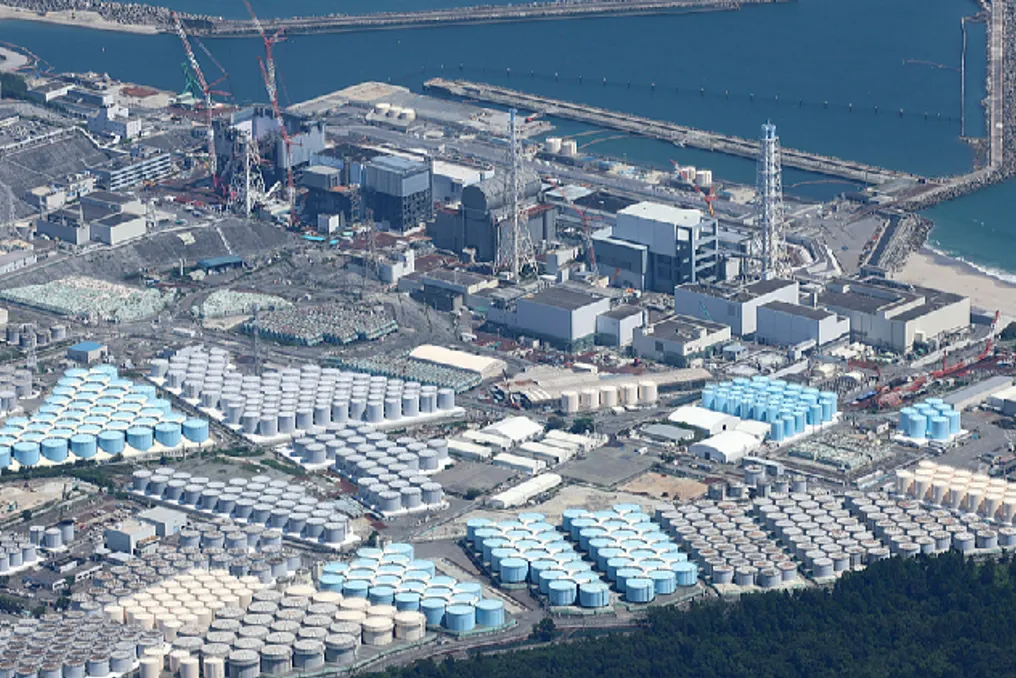
Three years have passed since the discharge of contaminated wastewater from the Fukushima Daiichi nuclear power plant into the Pacific Ocean began, despite strong opposition and concerns both within and outside Japan.
Japan unilaterally started discharging nuclear-contaminated water from the Fukushima Daiichi facility on August 24, 2023. Since then, the country has conducted 22 discharge cycles into the ocean, releasing approximately 173,000 tons of wastewater containing tritium—a radioactive substance that purification equipment cannot remove, according to Tokyo Electric Power Company (TEPCO).
The last cycle, which ran from July 30 to August 17, included the discharge of nearly 8,000 tons of wastewater.
Over the past three years, TEPCO has paid a total compensation of 96.7 billion yen (equivalent to approximately 600 million dollars) regarding about 1,100 claims as of August 5. These claims include demands related to losses suffered by fishermen and businesses that had to temporarily suspend or reduce fishing activities due to the discharge plan.
According to The Japan News from The Yomiuri Shimbun, the majority of compensation claims came from people living outside Fukushima Prefecture, as fishermen from Fukushima itself receive separate compensation for temporary work stoppages.
Despite the compensation payments, objections to this controversial operation persist, along with worries about the development of local fisheries.
Masanobu Sakamoto, head of the Japan Federation of Fisheries Cooperatives (JF Zengyoren), stated in a Sunday announcement that his group's position remains unchanged. He emphasized that they continue to oppose the discharge of wastewater without the consent of fishermen and the public.
Sakamoto noted that some countries and regions continue to restrict the import of Japanese seafood, and prices for products such as sea cucumbers have dropped. He added that 'lost markets have not fully recovered, and there are concerns whether they can recover at all,' pointing to the serious difficulties facing the fishing industry. Furthermore, he stated that government support measures are 'insufficient for fishermen.'
According to The Japan News from The Yomiuri Shimbun, before the discharge of treated water, the average wholesale price for scallops from Iwate Prefecture was around 120,000–140,000 yen per 10 kilograms. However, due to export suspensions, prices remain low, falling to 60,000 yen per 10 kilograms in 2025.
To ensure food safety, fisheries cooperatives in Fukushima Prefecture have set their own limit of 50 becquerels of radioactive cesium per kilogram for shipping seafood, which is stricter than the standard Japanese government limit of 100 becquerels per kilogram, according to the report.
Local fishermen, as reported by The Japan News from The Yomiuri Shimbun, citing the Soma Futaba Fishery Cooperative, remain committed to ensuring the safety of their products based on scientific standards and restoring consumer confidence.