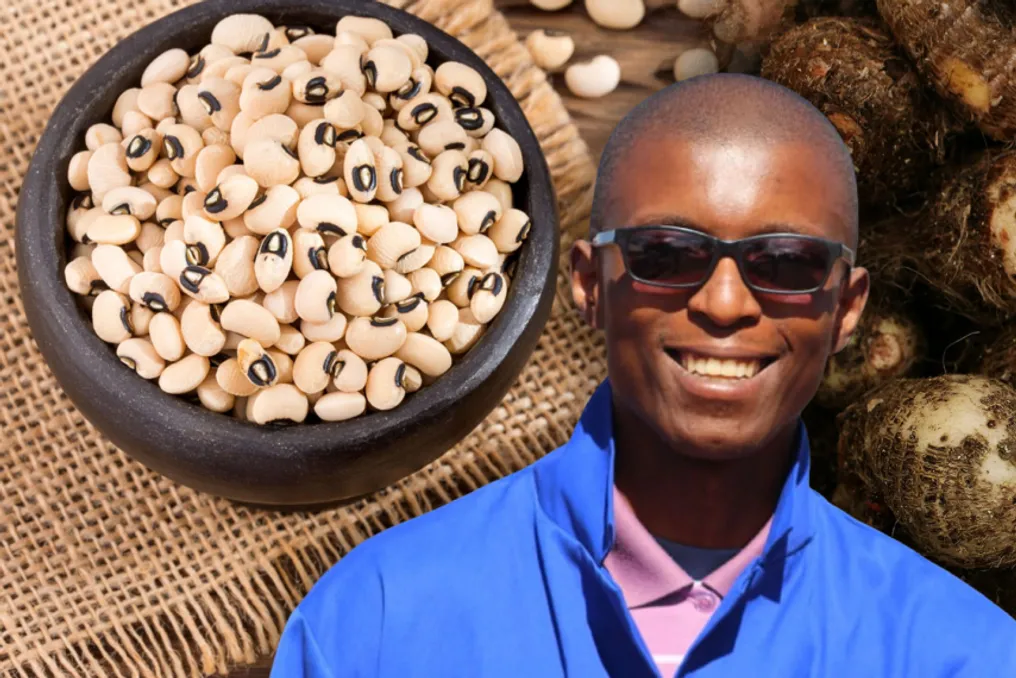
Local African crops, such as pigeon peas, amadumbe, and others, demonstrate potential as agricultural industry transformers. According to scientist Dr. Mathele Lehlogonolo, transitioning to sustainable local varieties helps protect farm yields and household nutrition amid global supply chain instability.
Modern global agriculture is experiencing one of the most complex periods in history, driven by a combination of geopolitical tensions, climate instability, and economic difficulties. The consequences of conflicts in strategic zones, disruptions in fertilizer and fuel supplies, rising food prices, and unpredictable weather are felt worldwide. Farmers face increasing production costs, while consumers see price hikes and uncertainty regarding future food availability.
Recent disruptions in the Middle East, particularly around vital trade routes like the Strait of Hormuz, have highlighted the vulnerability of the global food system. Fertilizers, fuel, and agricultural resources move through these routes, and any disruption immediately leads to increased global production costs. Furthermore, humanitarian organizations warn that millions of people could face hunger as global food systems weaken further.
Climate change exacerbates the situation. The current La Niña phenomenon causes severe drought in some regions and catastrophic flooding in others. South Africa has experienced recurring climate shocks over the last decade, and scientists warn of a possible strong El Niño event in late 2026, which could significantly impact the region's agriculture.
As these crises converge, many countries are reviewing their food systems. Instead of excessive reliance on global supply chains, governments and agricultural stakeholders are focusing on regional resilience, local seed systems, and crops capable of withstanding environmental and economic shocks.
For South Africa, this global uncertainty raises an important question: are we relying too heavily on a narrow range of crops, ignoring sustainable local and underutilized alternatives?
For decades, South African agriculture has primarily focused on large commercial crops such as maize, wheat, soy, and sunflower. While these crops remain important, dependence on a limited number of varieties increases vulnerability to climate change, pests, diseases, and market shocks.
Undervalued and underutilized crops have historically received little investment in research, limited support for knowledge extension, and minimal commercial attention. Nevertheless, many of these crops have evolved in harsh African conditions and possess characteristics that make them highly valuable in today's uncertain agricultural environment. These crops offer three key advantages: climate resilience, nutritional diversification, and reduced dependence on external resources.
While fertilizer prices fluctuate and weather conditions become increasingly unpredictable, these advantages could prove transformative.
Pigeon peas are often called the 'poor man's meat' due to their high protein content. However, this humble crop is increasingly recognized as a climate-resilient crop of the future. Pigeon peas grow well in hot and dry conditions where many traditional crops struggle to survive. They require relatively little water, can fix atmospheric nitrogen, and naturally improve soil fertility.
For smallholder farmers in Limpopo, KwaZulu-Natal, Mpumalanga, and North West, pigeon peas offer an affordable and reliable option for maintaining productivity during droughts. Beyond the farm, pigeon peas contribute significantly to household nutrition. Their grains provide protein, fiber, vitamins, and minerals, which is especially important for vulnerable communities facing rising food prices. As fertilizer costs continue to rise due to global geopolitical tensions, the ability of pigeon peas to naturally improve soil fertility becomes even more valuable.
Amadumbe, also known as taro, has been cultivated in parts of South Africa for generations, particularly in the provinces of KwaZulu-Natal and Mpumalanga. Despite its long history, amadumbe remains largely underutilized in commercial agriculture. This crop possesses remarkable adaptability. It tolerates waterlogged conditions better than many staple crops, making it particularly useful in areas experiencing increased flooding due to climate change. Its tubers are rich in carbohydrates and easily digestible, and its leaves contain valuable vitamins and minerals. As extreme rainfall becomes more frequent in parts of South Africa, amadumbe can offer farmers a practical adaptation strategy. Fields unsuitable for traditional crops in wet years could potentially support amadumbe production. Moreover, growing consumer interest in local produce creates opportunities for value-added products and local market development.
Cassava is one of the world's most drought-resistant food crops. Often called a 'survival crop,' it can continue to produce in conditions that would severely reduce maize yields. This characteristic makes cassava particularly attractive for drier provinces and regions of South Africa prone to prolonged droughts. Unlike many crops requiring immediate harvesting, cassava roots can remain in the ground for extended periods, effectively serving as a living food reserve. This provides households with a valuable buffer during food shortages or market instability. Cassava also requires a relatively low level of fertilizer and can grow well in marginal soils. As global uncertainty in fertilizer supply chains grows, cassava can help reduce farmers' dependence on expensive imported resources while enhancing food security.
Although less known to many South Africans, pigeon peas are gaining global attention for their nutritional value and adaptability. Pigeon peas mature quickly, often within two to three months, allowing farmers to incorporate them into intercropping systems or use them as cover crops. The crop is relatively drought-tolerant and contributes to soil fertility through nitrogen fixation. Nutritionally, pigeon peas are rich in protein, vitamins, antioxidants, and dietary fiber. The growing popularity of this crop in health-focused markets opens opportunities for farmers seeking access to niche and premium markets. In the future, where diversified farming systems are becoming increasingly vital, pigeon peas can play a valuable role in both ensuring food security and generating income.
The value of these crops extends beyond individual farms. Collectively, pigeon peas, amadumbe, cassava, and pigeon peas contribute to agricultural diversification, which is increasingly recognized as one of the most effective strategies for enhancing resilience to climate and market shocks. Diversified farming systems as a whole are better equipped to withstand droughts, floods, pest outbreaks, and economic turmoil because farmers are not dependent on a single crop. These crops also align closely with agroecological principles, promoting biodiversity, improving soil health, reducing reliance on synthetic inputs, supporting sustainable production systems, and strengthening local food systems.
As South Africa seeks paths toward more sustainable and viable agriculture, undervalued and underutilized crops offer practical solutions already adapted to local conditions.
Realizing the potential of these crops requires investment. Farmers need access to quality seeds, improved varieties, knowledge extension services, and markets. Strengthening farmer-managed seed systems, community seed banks, and on-farm conservation initiatives will be crucial. Various initiatives are underway across South Africa aimed at conserving and propagating plant genetic resources for food and agriculture. These efforts help ensure that valuable crop diversity is not lost and that farmers retain access to locally adapted planting material. Co-breeding programs involving researchers and farmers can further enhance the productivity, resilience, and marketability of these crops while preserving their unique genetic traits.
The current global food crisis serves as a warning that status quo approaches may no longer be sufficient. South Africa cannot control geopolitical conflicts, global fertilizer markets, or extreme weather events. However, it can strengthen its resilience by investing in crops that have quietly supported communities for generations. Pigeon peas, amadumbe, cassava, and pigeon peas may not dominate supermarket shelves today, but they possess many of the characteristics necessary for the agriculture of tomorrow: resilience, adaptability, nutritional value, and ecological soundness. In a world facing growing uncertainty, the future of food security may depend not only on adopting new technologies or importing external solutions. It may also depend on rediscovering and investing in crops that have long remained unnoticed. As climate pressure intensifies and global supply chains become more fragile, South Africa's undervalued and underutilized crops may transition from the periphery of agriculture to the center of the nation's food security strategy.