The United States has warned Iran about the application of 'the greatest financial operation ever conducted,' preparing to impose economic sanctions on Monday targeting Iran's trading partners.
A source familiar with the plans told Reuters on Monday that the US Treasury Department plans to expand the scope of secondary sanctions against countries and organizations supporting business ties with Iran. This measure is intended to give countries a final warning to sever cooperation with Iran, as Washington seeks to increase economic pressure on Tehran.
The source also noted that Treasury Secretary Scott Bessent will emphasize that countries continuing to do business with Iran risk being disconnected from the dollar financial system by key companies and structures.
In response, Iran stated its intention to completely halt oil exports from the Persian Gulf if the economic war continues.
US Treasury Secretary Scott Bessent will hold a press conference on Monday at 2:00 PM EDT (18:00 GMT) to reveal even tougher measures against the country, which has been under near-continuous economic sanctions since the 1979 Islamic Revolution.
In his opinion published in the Financial Times on Sunday, Bessent wrote: 'At dawn begins the economic Day D—the greatest financial operation ever conducted against an adversary.'
Without going into detail on specific measures, the US Treasury Secretary indicated that the US will target 'fearful nations' that practice 'appeasement' by engaging with Iran's economy and financial system. Bessent added in the Financial Times: 'They should consider the consequences of such behavior.'
A Defiant Iran
Iran had been preparing for sanctions for several days, issuing a series of sharp statements suggesting a major military response.
Mohsen Rezaei, Secretary of the Supreme National Security Council of Iran, hinted at an economic retaliation on Sunday. In a social media post, Rezaei wrote: 'If the economic war continues, not a single drop of oil will be exported, neither through the Strait of Hormuz nor from anywhere in the Persian Gulf. Iran will regard any country's participation or support of America's economic war against the Iranian people as an act of war.'
Iranian Foreign Minister Abbas Araghchi rejected the threat of new US sanctions on Sunday as a sign of desperation, stating that the expected new measures could not defeat Tehran. Araghchi wrote in a Telegram post: 'The fact that they (US leaders) have moved from military operations to presenting old plans (economic sanctions) shows that they are desperate. We have never been afraid. All their actions—whether blockades or other military steps they have taken—have failed, and this new issue of theirs will also fail.'
Strait of Hormuz Nears a Standstill
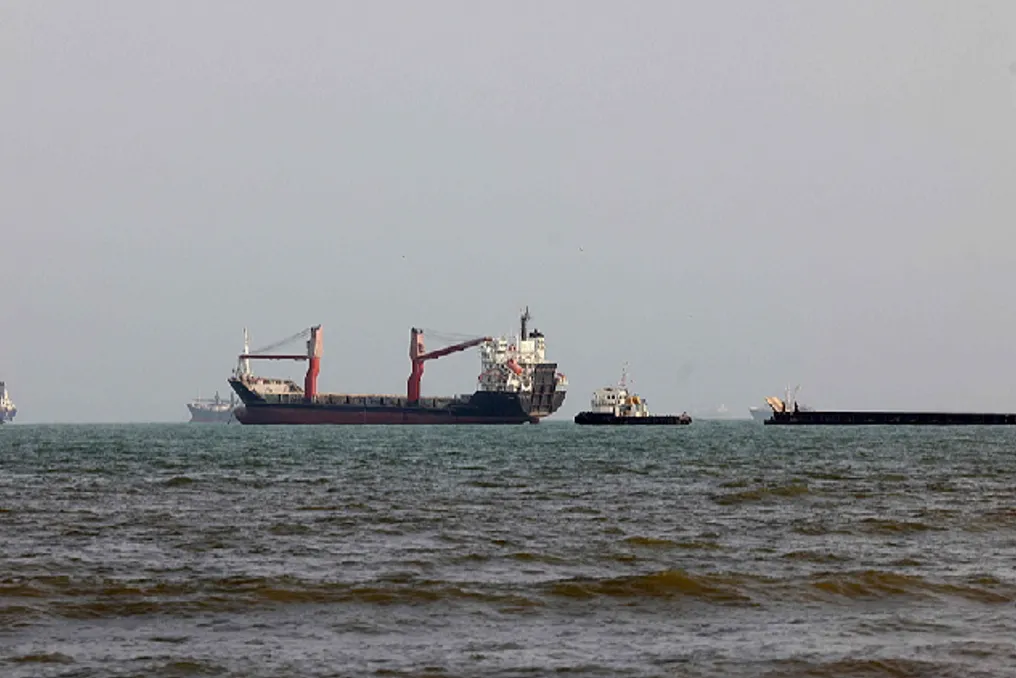
Commercial traffic through the Strait of Hormuz has practically stopped amid escalating tensions.
US Central Command reported that the guided-missile destroyer USS John Finn rerouted 70 commercial vessels, disabled three, and boarded two as part of efforts to enforce a US naval blockade of Iran.
The Iranian Persian Gulf Security Authority (PGSA), the body responsible for maritime traffic in the Strait of Hormuz, announced on Sunday in an X post that vessels violating Iranian transit protocols for the waterway would face restrictions on future passages. PGSA urged 'cargo owners traveling to and from the Persian Gulf' to check the 'Non-compliant Vessels' list on its website before chartering to avoid potential issues.
Meanwhile, Hassan Kashqavi, a representative of the Iranian Parliament's National Security and Foreign Policy Committee, reported on Sunday that the committee approved an article of a draft plan aimed at ensuring security in the strait, according to the semi-official Fars agency, stipulating that the country would charge fees for services provided in the waterway.
According to shipping data, fewer than 20 cargo vessels passed through the strait over the weekend. Preliminary data from shiptracker Kpler showed that four vessels passed through the strait on Sunday, and 13 on Saturday.
Uncertain Diplomatic Future
Since official bilateral meetings between the United States and Iran have been suspended since their last meeting in Switzerland in June, other countries, including Qatar and Pakistan, are attempting to resume diplomatic efforts.
Iran stated that Pakistan's Army Chief, Asim Munir, will visit Tehran on Monday as part of efforts to restore peace and security in the region, but provided little detail. Pakistan is mediating the conflict, and a source in the Pakistani government reported that Munir will address recent events, including the US threat of new sanctions.
The upcoming sanctions also cast doubt on the prospects for diplomacy, as analysts warned that Washington's campaign of pressure could ultimately prove counterproductive.
Li Qishen, a Middle East expert from the China Institute of International Studies, told China Media Group (CMG) that while Iran will face significant economic difficulties, it does not necessarily lead to political submission.
However, Li added that the backlash against sanctions for the US cannot be ignored, noting that the average price of regular gasoline in the country is currently about 50% higher than before the war, and imported inflation pressure is also rising. The increase in household expenses will directly affect ordinary Americans.
In Li's view, the stricter the US sanctions become, the greater the chance that Iranian radicals will gain an advantage, further narrowing the space for diplomacy. Li concluded that this could create a vicious cycle of 'sanctions, countermeasures, and further sanctions,' resulting in neither side being victorious.