DP World will maintain commitment to invest $5 billion in India despite Gulf War
Read more
Business Standard
business-standard.com

DP World will maintain commitment to invest $5 billion in India despite Gulf War

Despite global difficulties caused by the war in the Middle East and the negative impact on the company's core business in the region, DP World, a global giant in ports and terminals, intends to fulfill its commitment to invest $5 billion in India, a senior executive of the company reported.

According to the company's recently published interim results for the first half of 2026, profit decreased by almost 40 percent, amounting to $585 million in the first six months of this year.

Hemant Kumar Ruia, Country Manager, Subcontinent (India) at DP World, told reporters that the company hopes for a swift resolution to the war in the Middle East, which would allow freight rates to decrease and normal trade to resume. He added that they have found alternative directions for diversification so that trade can continue.

Ruia also stated that the company is currently finalizing the areas where these $5 billion will be directed and plans for the implementation of these investments to take five years. Last October, the company signed a number of memorandums of understanding with public and private players in India.

Approximately half a billion dollars will be allocated to the proposed facility in Tuna Tekra, which is a satellite port off the coast of Kandla, Gujarat. In 2024, the company attracted public attention after it was reported that it offered more than five times the royalties assessed by the Deendayal Port Authority when bidding for this project under a public-private partnership format.

Furthermore, the company will seek an extension of the concession period for its container terminal at the Jawaharlal Nehru Port Trust, whose concession expires next year.
Similar stories

India and Algeria Conclude Liquefied Gas Supply Agreement, Reducing Dependence on the Middle East
Read more
www.aajtak.in

India and Algeria Conclude Liquefied Gas Supply Agreement, Reducing Dependence on the Middle East

To address the shortage of liquefied petroleum gas (LPG) and ensure supplies in India, the company Indian Oil plans to enter into a major deal with Sonatrach of Algeria, which could potentially take place in 2027. The implementation of this agreement is capable of reducing tensions around the Strait of Hormuz and increasing the volume of gas supplies to India.

According to a Reuters report, under the proposed partnership, IOCL expects to receive 45,000–55,000 tons of LPG monthly from Sonatrach. Indian Oil Corporation (IOCL), India's largest refining company, is in the final stages of negotiating this deal.

This agreement is part of India's broader efforts to diversify LPG supplies and reduce dependence on Middle Eastern countries, as supply disruptions in the Gulf region have affected energy security and raised concerns about domestic LPG availability.

Reuters reports that under the proposed contract, IOCL will receive a large tanker carrying between 45,000 and 55,000 metric tons of LPG each month. These cargoes will consist of a mixture of propane and butane. IOCL previously had a long-term agreement with Sonatrach, but in subsequent years, it began purchasing gas from Middle Eastern suppliers.

The new agreement marks a resumption of relations between the Indian refiner and Algeria's state energy company, as India seeks to expand its supplier base. According to another source, the price for Algerian LPG is even lower than the contract price of Saudi Aramco. The proposed agreement between IOC and Sonatrach will be conducted on Free-On-Board (FOB) terms, meaning that after loading, the responsibility for transportation and associated costs will fall on the buyer.

The report also highlights the particular significance of this deal for India in light of Middle Eastern tensions. This is because LPG is widely used for cooking in households, and any disruptions can directly impact domestic supply. Furthermore, as part of measures to reduce the load on imported LPG, India encourages consumers to switch to piped natural gas. The proposed agreement with Algeria will provide IOC with an additional maritime source of LPG, as Algeria works to strengthen its energy supply chain.

Modi called on India to become a global leader in advanced defense technologies
Read more
business-standard.com

Modi called on India to become a global leader in advanced defense technologies

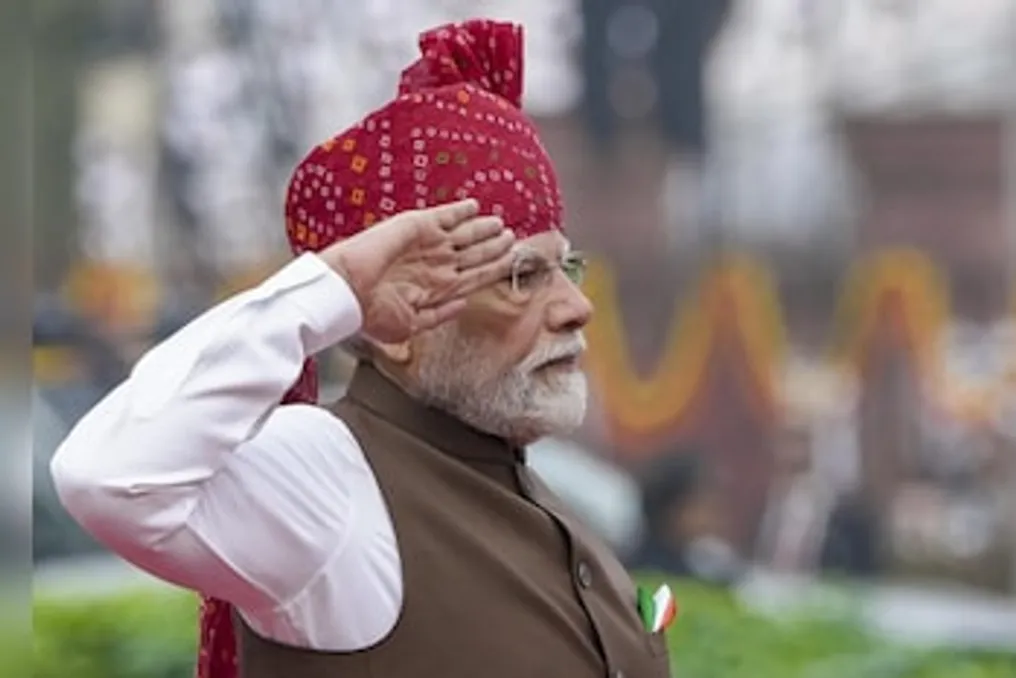
Prime Minister Narendra Modi called on India on Saturday to take the leading position in hypersonic defense technologies, as well as to increase its potential in the field of drones and anti-drone systems, thereby becoming a global supplier of modern military equipment.

Addressing the nation from the Red Fort on the occasion of India's 80th Independence Day, he emphasized that self-reliance in the defense sector is crucial, as nations increasingly focus on their own strategic interests.

Modi stated: 'When the world thinks of itself, India cannot just be a market for the world. We must become global suppliers. We must take the lead in hypersonic defense technologies.'

Defense was included in seven 'streams of power' or Sapta Dhara, which Modi presented as part of his vision for India's development. Under the 'Raksha Shakti' initiative, he highlighted the need to strengthen domestic production in the defense industry and develop next-generation military capabilities.

He particularly noted the importance of achieving defense self-sufficiency, calling for increased investment in drone technology and anti-drone systems.

Furthermore, the Prime Minister discussed the changing nature of warfare globally. He reported that work on the 'Mission Sudarshan Chakra' initiative, which he announced in last year's speech from the Red Fort, is progressing rapidly. This mission aims to create a domestic protective shield capable of safeguarding critical military and civilian infrastructure from enemy aerial threats, similar to Israel's 'Iron Dome' system, and is expected to be completed by 2035.

Modi stressed the importance of defense self-reliance against the backdrop of sharp growth in India's domestic defense production, which has quadrupled over the last 12 years. India's defense production reached 1.78 trillion rupees in FY 2025-26, compared to 46,000 crore rupees in 2014. Defense exports also reached a record 38,424 crore rupees in FY26, and he noted that Indian military equipment and apparatus are now exported to many countries.

Defence Minister Rajnath Singh informed on Friday that over 8.75 trillion rupees was approved for military projects within the efforts to modernize the Indian armed forces over the past year.

The Independence Day ceremony also showcased the growing role of women in the armed forces, as the flag hoisting ceremony was attended by Captain Sonia Singh Chauhan, an officer of the Indian Army. The national flag received a 21-gun salute from the 1721 Field Battery (ceremonial), which used indigenous 105mm light field guns.

Before the ceremony, Prime Minister Modi was received at the Red Fort by Defence Minister Rajnath Singh, Union Minister for Defence Sanjay Seth, and Defence Secretary Rajesh Kumar Singh, and he received a three-service guard of honour consisting of personnel from the Army, Navy, Air Force, and the Delhi Police contingent.

Popular