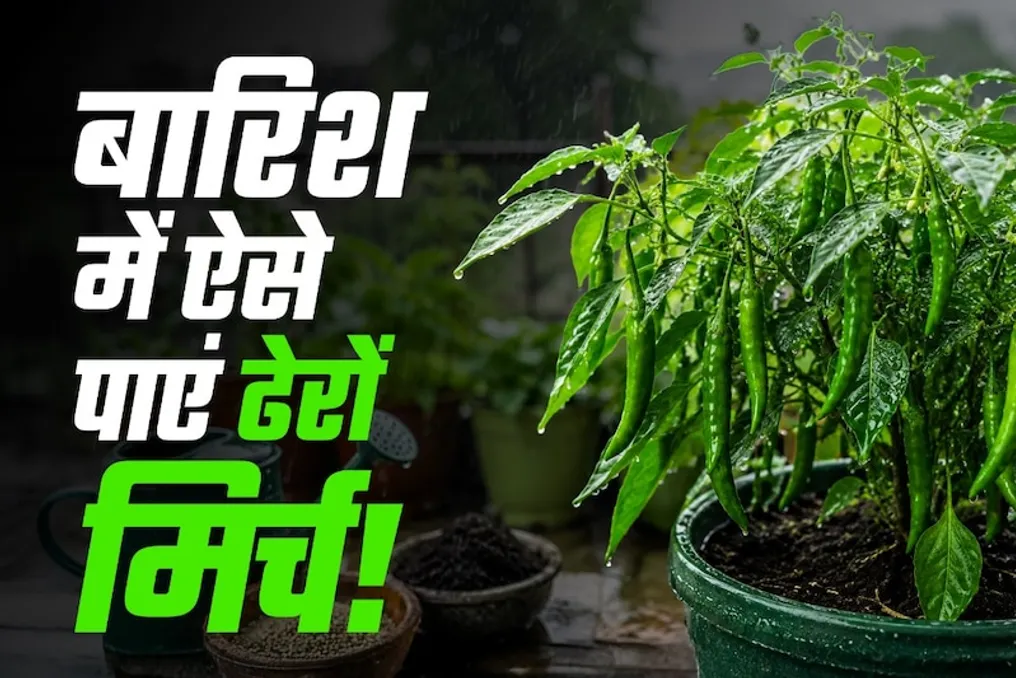
The rainy season is considered a favorable time for growing new plants and ensuring good growth of existing ones, as the soil remains moist and the weather becomes suitable for development. This applies to pepper crops, which grow actively on balconies and rooftops. However, one cannot assume that rainwater alone will ensure a good pepper harvest.
Excessive water can harm the pepper plant because waterlogging in the roots weakens the plant and negatively affects flowering or the formation of young peppers. Therefore, during the monsoon season, it is necessary to adjust the approach to caring for peppers. By following several simple rules, you can obtain a significant harvest of green peppers even from a small pot.
Firstly, watering must be carefully controlled. The most common mistake during the monsoon period is overwatering. If there is constant rain and the soil is already moist, additional watering is not required. You should only water when the top layer of the soil appears dry.
Furthermore, pots must have drainage holes so that excess water can flow out freely. Waterlogging in the pot creates problems for the pepper plant.
The soil should be light and loose so that water does not stagnate. It is necessary to mix components into the soil that promote easy drainage. Well-drained soil helps protect the roots in rainy weather. If the soil is too heavy or sticky, rainwater can remain in it for a long time, increasing the risk of root damage.
Even during the rainy season, peppers need sunlight for good development. Since it is often cloudy during the monsoon period, try to place the plant where it will receive enough sun as soon as the weather clears up. At the same time, it is important not to leave the pot in a place where it is constantly rained upon; it is better to place it in a more sheltered spot from heavy downpours.
Any yellow, dry, or damaged leaves should be removed immediately. This allows the plant to direct its energy to healthy parts and also keeps the plant clean. Regular care during the monsoon period is important because increased humidity increases the risk of fungal diseases and pests.
Nutrition must also be provided. Water and light alone are not enough for abundant fruiting. Organic fertilizers, such as vermicompost or well-rotted manure, can be added to the soil periodically, which improves soil quality and the nutritional base for the plant. It is important to remember that too many fertilizers should not be applied to wet soil during the rains.
After the rains, the top layer of the soil sometimes compacts. Lightly loosening the soil helps air reach the roots, but care must be taken not to damage the root system.
Once the peppers start to flower, it is critically important to provide them with proper nutrition, light, and optimal humidity levels. You must constantly monitor the condition of the plant and harvest ripe peppers in a timely manner. Regular pruning stimulates the appearance of new fruits.