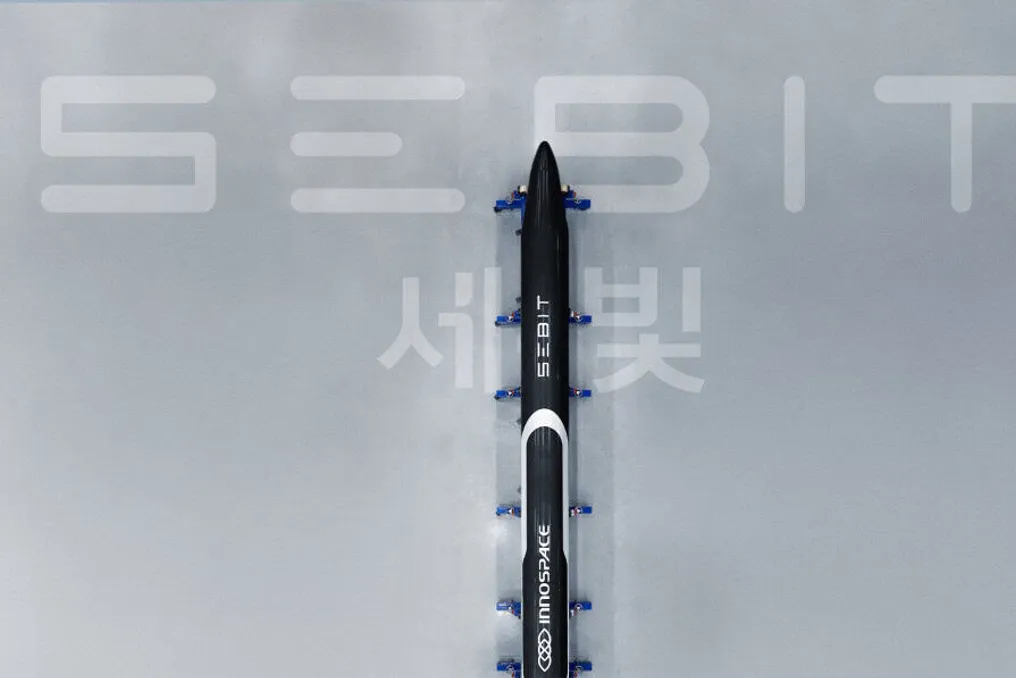
According to Olhar Digital, a South Korean rocket launched from the Alcântara Launch Center (CLA) in the state of Maranhão—known as the Alcântara Base—on the 19th. The mission, which was suborbital and utilized the SEBIT vehicle from InnoSpace, did not achieve the expected result.
Without live broadcast or press presence, just over 30 seconds after liftoff, the rocket lost trajectory and activated its self-destruct system, exploding in mid-air.
Despite the technical failure of the vehicle, experts assert that this incident does not damage the reputation of the Maranhão center. On the contrary, the operation demonstrates that the Alcântara infrastructure is ready to provide commercial services and host missions from private companies worldwide.
During an analysis presented on the Olhar Espacial program last Friday (the 21st), science popularizer specializing in astronautics, Pedro Pallotta, explained that the rocket's in-air self-destruction was the correct decision in case of loss of control. In space flights, the safety system activates immediately when a vehicle deviates from its planned route to eliminate any risk to ground assets.
Pallotta emphasized that the fault should be attributed to the manufacturer, not the Maranhão center. Its role in this business model is to provide physical space and ground operational support. He stated: 'Is this bad for the Alcântara Base? No, not at all. Because they rent their facilities to conduct these missions. Thus, the more launches there are, the better for Brazil.'
Meanwhile, the South Korean company will need to conduct a thorough review of its engineering processes. According to Pallotta, such failures undermine market confidence and require immediate quality control adjustments before subsequent attempts.
The involvement of international partners like InnoSpace, which already has a subsidiary InnoSpace Brasil in São José dos Campos (SP), is part of the strategy of Empresa de Projetos Aeroespaciais do Brasil S.A. (ALADA). This state-owned company, authorized in early 2025, was created specifically to conduct commercial agreements and stimulate the country's high-tech industry.
The exact causes of the flight failure are still under investigation. In an interview with Olhar Digital, ALADA President Sérgio Roberto de Almeida noted that the factors leading to the incident are under close scrutiny. He added: 'What happened is subject to a thorough investigation by competent authorities.'
The executive director also reminded that failures during testing are part of the routine of any consolidating aerospace company. 'Since this was a test flight, the collected data will be analyzed by technical teams and will serve as a basis for improving subsequent stages. Problems are part of the process of developing and verifying space technologies. Companies that are today global leaders in the sector also went through various cycles of testing, adjustments, and training before achieving greater success in their operations.'
Almeida highlighted the significant geographical advantages of the Maranhão center in the international market. 'The Alcântara Launch Center is located approximately 2°18′ south of the equator, which is an extremely favorable geographical position for certain types of space launches. Proximity to the equator allows the use of Earth's rotational speed, contributing to increased launch efficiency, especially for low inclination orbits.'
The SEBIT rocket was designed for suborbital flights reaching altitudes up to 100 kilometers but not entering Earth orbit. This type of vehicle is mainly used for component testing, conducting scientific research, and validating technologies before larger missions.
Sector expectations are focused on InnoSpace's next steps, as it plans to test the HANBIT-Nano orbital vehicle. According to Pallotta, in the coming stages, the manufacturer must demonstrate gradual progress. 'I really hope there have been improvements, and they can execute a launch that at least progresses. Something that can reach space, even if not into orbit. But even reaching space would be a big step forward.'
Regular missions in Alcântara would attract the attention of investors in the aerospace sector. As Pallotta noted, this visibility is critical for strengthening Brazilian infrastructure: 'Brazil needs this, at least to dispel the stigma around the Alcântara Base that it cannot put any rocket into orbit, even if it is not the base's fault. I think this is good advertising for the base so that other companies eventually want to launch here.'