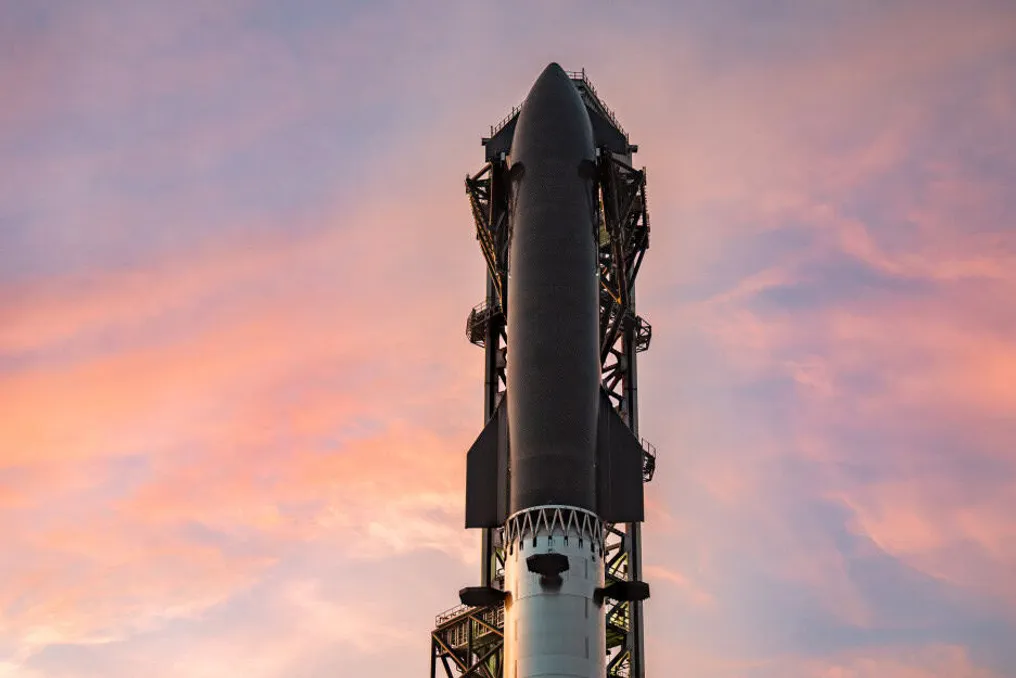
SpaceX plans to gradually phase out its operations with the Falcon 9, its primary rocket, once Starship, its new line of space vehicles, begins conducting routine flights. This decision will also affect the Falcon Heavy, the three-engine version, depending on the company's ability to make Starship reliable enough to handle most missions.
The Falcon 9 had its first launch in 2010 and quickly established itself as one of the most crucial rockets in the history of space exploration. To date, this vehicle has completed nearly 700 launches and pioneered being the first orbital rocket to land and reuse its first stage.
Currently, the Russian Soyuz rocket holds the record for the highest number of cumulative missions, operating since 1957; however, the Falcon 9 is expected to surpass this milestone next year.
Speculation about the end of the Falcon 9's trajectory was confirmed by SpaceX founder and CEO Elon Musk in a post made on the X platform on August 22. According to Musk, the gradual discontinuation of the Falcon, covering both the Falcon 9 and Falcon Heavy, is inevitable.
He explained that when Starship is operating reliably several times a week, it will make sense to reallocate production resources to the new rocket and increase its launch frequency for multiple daily events.
Starship Features and Capabilities
The exact date for the start of reducing Falcon 9 activities will be tied to the progress of Starship development. Unlike its predecessor, the new vehicle was designed to be fully reusable; both the Super Heavy booster and the Starship upper stage were designed to return to Earth and be used again.
While the initial stages of the Falcon 9 and Falcon Heavy are reusable, their upper stages are expendable.
Starship also presents significant advantages over the Falcon 9 in terms of size and payload capacity. The V3 version of Starship has a height of 124.4 meters, contrasting with the Falcon 9's approximately 70 meters. Its transport capacity is substantially greater, capable of placing over 100 tons into low Earth orbit (LEO). The Falcon 9 can carry approximately 25 tons, and the Falcon Heavy reaches about 63 tons.
This greater capacity is particularly relevant to SpaceX's own strategy with its Starlink satellite constellation. A large part of the Falcon 9 launches in recent years has been directed towards expanding Starlink. Since 2023, over 300 launches related to SpaceX's satellite internet network have taken place, which already has more than 11,000 satellites.
However, future generations of Starlink satellites are larger and were specifically designed to fit in the Starship's cargo bay, not the Falcon 9's. As soon as Starship begins making reliable launches—or perhaps even before that—SpaceX plans to start replacing current Starlink satellites with newer models.
This transition could result in a notable increase in Starship launch frequency. The Falcon 9 itself has undergone a similar transformation: in 2019, when SpaceX began assembling the Starlink constellation, the rocket performed only 11 launches that year. In 2025, 165 missions were recorded, 122 of which were dedicated to Starlink.
Future Missions and Operational Continuity
NASA has contracted SpaceX to develop a version of Starship intended to function as a lunar landing module for the Artemis missions. A Starship V3 is scheduled to participate in the Artemis 3 mission next year. This mission is expected to test docking procedures in low Earth orbit with the Orion spacecraft, provided by NASA.
Furthermore, Starship is planned to carry astronauts to the lunar surface during Artemis 4, scheduled for 2028. This timeline coincides with the projection presented by SpaceX to NASA for the end of commercial Falcon 9 launches in 2028.
Despite this transition plan, there is one specific activity for which Starship has not yet been contracted or designed: docking operations with the International Space Station (ISS). NASA intends to continue acquiring flight services from the Dragon cargo and Crew Dragon spacecraft, launched by Falcon 9, to deliver supplies and crew to the ISS, at least until 2030.
Shifting these activities to Starship would be complex. Beyond financial and contractual implications, the sheer size of the new vehicle introduces engineering risks that must be evaluated within the station's safety margins.
The schedule for the retirement of the Falcon 9 depends directly on the success of Starship. To date, the new vehicle has executed 13 suborbital test flights. One additional launch is scheduled for next month and could mark Starship's first attempt to reach orbit.
This will only be one of the various milestones the rocket needs to overcome before reaching Musk's established condition of performing reliable flights multiple times a week. This frequency level has already been achieved by the Falcon 9; however, creating the necessary infrastructure to operate Starship represents a much vaster undertaking than the little over a dozen successful tests conducted by the new vehicle so far.