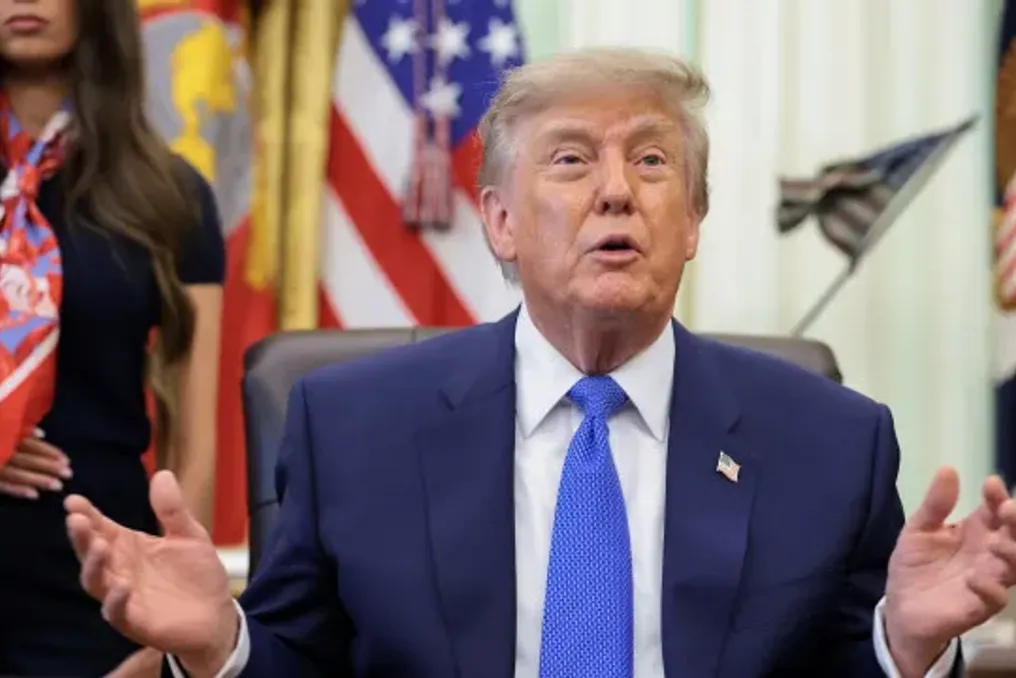
Trump stated that Canada has exploited the United States over the years, as he claimed on his Truth Social platform, following the failure of trade talks between Washington and Ottawa.
He specified that starting January 1, 2027, tariffs applied to all types of automobiles, trucks, auto parts, and steel will be raised to 50%. Trump emphasized that if these products are manufactured in the US, they will not be subject to such tariffs.
Currently, Canadian steel entering the United States already faces taxes that can reach 50%. Trump also criticized Ottawa for imposing 'ridiculous tariffs,' alleging that these hindered the lives of American farmers and contributed to a trade deficit of $60 billion (equivalent to €51 billion).
The American leader described the situation as 'unsustainable and finished,' adding that Canada ranks among the worst nations in the world for doing business.
This new threat arose after the collapse of negotiations held on Friday, just hours before the deadline set by Trump for an agreement. As a result, the United States implemented 50% tariffs on approximately $20 billion (€17 billion) worth of Canadian goods, while Ottawa announced retaliatory measures effective September 8.
The planned US tariffs will cover about 5% of Canada's annual exports to the United States.
Canadian Prime Minister Mark Carney accused Washington of presenting unacceptable last-minute demands regarding automotive tariffs, Canada's ability to establish future trade pacts, and the country's cultural protections. Carney declared that 'they asked for too much and offered too little,' accusing Washington of using 'economic integration as a weapon.'
The Canadian head of government informed that Ottawa was willing to suspend remaining retaliatory tariffs on steel, aluminum, and automobiles, provided Washington significantly reduced its own rates, but considered that the American demands exceeded reasonable limits.
On the other hand, US trade representative Jamieson Greer attributed the failure of the negotiations to Canada, stating that Washington had proposed tariff reductions in sectors considered crucial for Ottawa.
A survey conducted by the Angus Reid Institute showed that 76% of Canadians support Carney's decision to abandon negotiations rather than accept American conditions, contrasting with only 13% who advocated yielding to the necessary concessions to close a deal. This support for the prime minister's stance is majority across all Canadian provinces, including Alberta, where it reaches 67%.