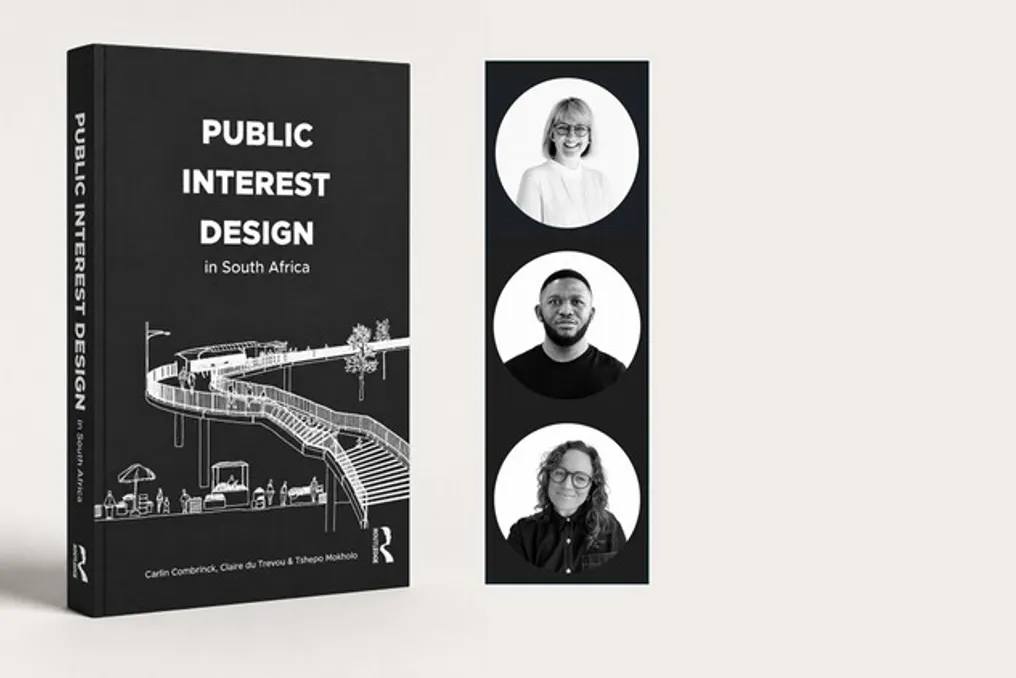
This book is a collection of outstanding examples of architectural projects and practices implemented in South Africa since 1994. These works reflect the transition to the concept of public interest design. Despite profound political changes in the country, the population of South Africa continues to feel the negative consequences of spatial segregation left over from the past.
The contribution of architects in solving these problems often goes unnoticed and is considered a marginal practice even within the traditional profession. The work analyzes Kim's Conceptual Taxonomy (2018) in conjunction with themes of Spatial Agency (Awan et al., 2011) applied to the South African context, using selected local architectural examples.
The featured projects include Warwick Markets in Ekurhuleni, the Violence Prevention through Urban Reconstruction program in Cape Town, as well as the works of Karin Smuts from CS Studios, alongside several small but significant interventions across the country. This selection demonstrates a conscious and necessary shift away from a culture of private interest, strengthening, and segregation towards a model of intensive collaboration, democratic engagement, and adaptive design thinking.
As this book serves as a microcosm of global issues of integration and democracy, it will be of great interest not only to scholars and students studying architecture, urban planning, and development in South Africa but also to an international audience.
Book Contents
The book's structure includes the following sections: Introduction, Basic Design Practice, Social Construction, Research and Participatory Action Practice, Collective Capacity, Architect as Facilitator, Design for Cause Protection, Design as Political Activism, Open Source Design, Understanding the Pro-Bono Situation in South Africa, Praxis, Pedagogy, and Conclusion, concluding with the chapter 'The End of Our Journey.'