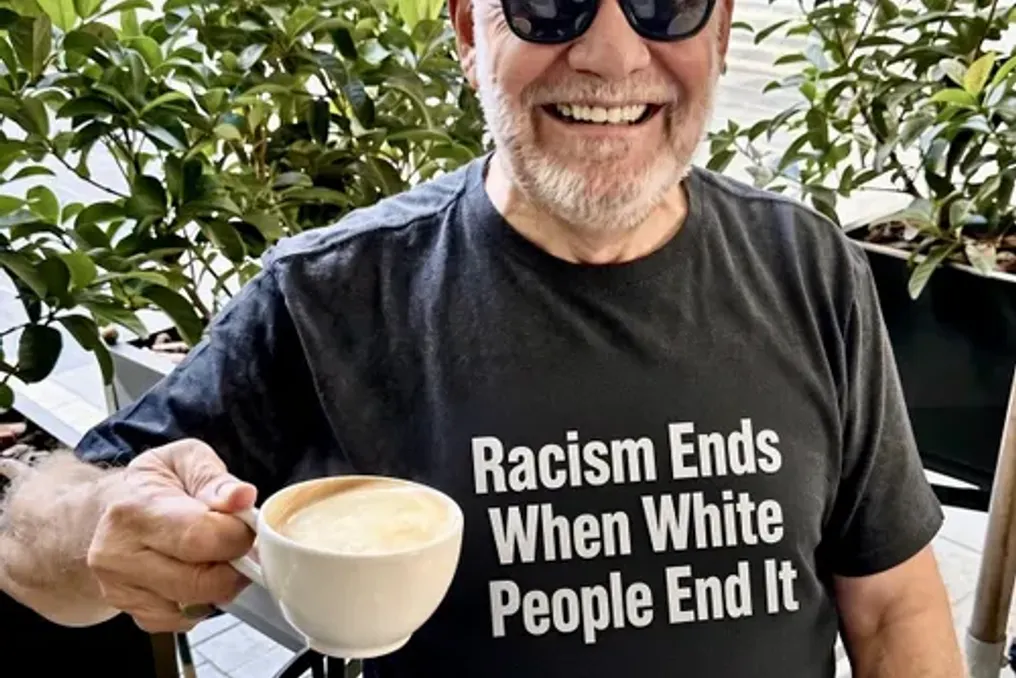
As South Africa reflects on its racial past, Ambassador Carl Nihaus calls on the white population to take responsibility for dismantling racism, strongly urging white South Africans to take decisive action and support the ongoing fight for equality.
Racism will not disappear simply because Black people have fought it for so long, organized, resisted, sacrificed, and died over centuries. Racism will only end when those who created, supported, and continue to benefit from it decide to stop it. This decision rests with the white population. As long as white people do not confront the racism living among them, the struggle of Black people will remain necessary but incomplete.
Nihaus emphasizes that his words are not intended to diminish the courage, strength, commitment, and sacrifices of Black people who have fought against white racism and colonial domination for centuries. Their struggle has been heroic, tireless, and indispensable.
Black resistance, starting from the earliest land alienation wars, through organized liberation movements, the Black Consciousness Movement, township uprisings, and the continuing fight against residual racial power, has been the decisive force advancing the country. This history is undeniable; it is fundamental.
However, Nihaus' argument is different: the decision to end white racism belongs to white people. Black people bore a heavier burden of resistance for generations. They organized, bled, buried their dead, and continued the fight when the cost was highest. Nevertheless, racism will only finally cease when the creators, beneficiaries, and perpetuators of this phenomenon decide to stop it.
Black South Africans confronted white domination from the first colonial invasions. They fought in land alienation wars, against the system of color bar, the formal structure of apartheid, and long years of the struggle for liberation. After 1994, they continued to resist the unfinished business of racial power in economics, land issues, education, and daily social life.
The Black Consciousness Movement, led by Steve Biko and his comrades, understood this reality with absolute clarity. Biko's call, 'Black person, you are your own savior,' was not an expression of despair, but a diagnosis and mobilization. Black people could not wait for the goodwill or guidance of whites to achieve their freedom.
In his book 'I Write What I Like,' Biko insisted that the condition of the Black person 'is not a mistake of the whites, but a deliberate act, and no moral sermon will convince a white person to 'fix' the situation.' He argued that the system 'gives nothing without demands.' Therefore, the message became relevant: 'Black person, you are your own savior.' The Black Consciousness Movement demanded psychological liberation, the rejection of feelings of inferiority, and the building of an independent Black organizational force. Biko warned against the illusion that white liberals or even white radicals could lead the oppressed struggle. He stated: 'The biggest mistake the Black world ever made was assuming that anyone who opposed apartheid was an ally.'
As a white South African, he accepts this analysis. Racism is inherently and in its continued reproduction a problem of whites. The ultimate responsibility for its cessation lies with those of us who are white. We must fight those whites who still exhibit racism. We must give them absolutely no room to maneuver!
This fight begins with organizations that openly organize white discontent and white exclusivity. AfriForum and Solidarity are at the center of this project. They use the language of civil rights and minority protection, yet their practice is to defend racial privilege and cultivate racial fear. They internationalize the narrative of white victimhood, which lacks any basis in the real lives of the majority. They seek external intervention to protect material and cultural advantages accumulated during the apartheid period. They view democratic transformation as an existential threat, not as a long-overdue correction. These organizations must be criticized without restraint and without apology.
The same principle applies to the use of language and education to create white enclaves. The attempt to create and maintain exclusive private universities in Afrikaans, such as Akademia, is not abstract cultural preservation. It is the deliberate reproduction of racial privilege under a new name.
When Afrikaans is used as a barrier, rather than as one of many languages in a multilingual society, it becomes a tool of exclusion. Projects aiming to recreate racially exclusive academic spaces contradict the non-racial and egalitarian obligations of our constitutional order and the emancipatory struggle itself. They must be rejected. This is why the author wrote so fiercely against Akademia in editorial articles and spoke out against it in interviews. This deviation is a manifestation of white racist privilege.
White supremacy, white racism, white exclusivity, and white enclaves are living forces that still shape land ownership, corporate boards, media narratives, and social networks. This is vile white racist garbage that continues to exist in South Africa. White people who refuse to look away must fight it.
A central element of this confrontation is the rejection of white liberalism, precisely because of its deep and persistent complicity in perpetuating white racism. Biko's critique remains crucial and requires further study. In the essay 'Black Souls in White Skin?', he spoke out against this 'strange group of nonconformists' calling themselves liberals, leftists, or progressives. These are people who claim they are not responsible for white racism, insist that they feel oppressed 'as acutely' as Black people, and therefore demand a shared role in the fight. Biko ruthlessly rejected this self-deception: these are people who claim to have 'Black souls wrapped in white skin.'
He completely rejected this assertion. A system that forces one group to enjoy privileges and live off the sweat of another makes complete identification with the oppressed impossible. The white liberal continues to hold the natural passport into the exclusive pool of white privileges. Deep down, there remains a quiet knowledge that the existing order is generally comfortable. Biko noted that the white community, despite all political differences, remained fundamentally homogeneous in its enjoyment of undeserved privileges. Liberals, in his view, always knew what was best for Black people and told them. They preferred to lead, advise, and interpret, rather than confront racism within their own communities with equal fervor.
White liberals have long set the terms of opposition. This is what so-called white liberals in the Democratic Alliance, including Helen Zille and her peers, do. They define what constitutes reasonable change. They prefer integration on their terms—integration in which Black people must prove their worth according to white values before being accepted. Biko insisted: 'The liberal must fight for himself and for himself.' If they are true liberals, they must realize that they too are oppressed by the system of white superiority and must fight for their own freedom, rather than claiming to fight on behalf of an ambiguous 'them.'
This analysis has not lost its force. Today, the complicity of white liberals rarely takes the form of crude racial slurs. It manifests in the constant defense of 'non-racism,' which views any decisive attack on racial economic power as a form of racism. It manifests in elevating 'dignity' and 'superiority' in such a way that historical advantage remains inviolable. It manifests in a soft stance towards organizations that organize white discontent, while radical Black demands for land, economic transformation, and linguistic justice meet harsher condemnation. It manifests in the preference for class analysis, which carefully sidelines race, even when data on land ownership, corporate control, and intergenerational wealth still strongly correlate with the racial lines created by colonialism and apartheid.
White liberalism often presents itself as the rational middle ground between the hard racism of AfriForum and Solidarity on one side, and the radical demands of the Economic Freedom Fighters and the broader Black majority on the other. In practice, this middle ground often functions as a buffer protecting the core of white privilege. When language policy is used to maintain exclusive Afrikaans spaces, the liberal response is too often procedural, not principled. When transformation is presented as a threat to standards, the liberal lexicon of individual rights and colorblindness provides cover. This is why the author rejects white liberalism. It is not a solution to the problem of white racism. It is one of the mechanisms through which white racism adapts and survives.
The author does not claim purity. No white South African can. He declares an obligation to fight. As a white man, he is not free from the history that produced him, but he is free to choose a side. He chooses the side of those who were dispossessed. He resolves to use any available platform to expose and attack the residual structures of racial power that still shield whites from discomfort. This means naming AfriForum and Solidarity for what they are. It means rejecting any attempt to turn language into a fortress of privilege. It means abandoning the sentimental politics of white liberalism, which asks Black people to exercise patience while white people slowly discover their own 'humanity.'
Biko reminded that whites must first be forced to realize that they are merely human beings, not superior beings. This realization does not come through abstract sermons. It comes through organized pressure, political confrontation, and the constant refusal to allow white racism to hide behind claims of culture, minority rights, economic efficiency, or liberal decency. The most powerful weapon for the continuation of racism is the silence and complicity of other whites—including the mild and respected ones.
Racism will not be eliminated by Black people explaining the pain it causes. It will end when enough white people decide that the cost of maintaining it is higher than the cost of dismantling it. This decision requires white people to fight each other. It requires us to view every manifestation of white supremacy, every defense of exclusive privilege, every attempt to recreate racial enclaves, and every liberal evasion that protects the status quo as direct political hostility. There can be no polite distance.
The Economic Freedom Fighters (EFF) is a Black party that is not racist. It bears a debt, a responsibility, and a generational mission to empower Black South Africans first—and especially South African Africans. Every white person in the EFF must uphold, fulfill, and support this mission without reservation. The main task of the EFF is the full empowerment and complete economic freedom of Black South Africans. In this process, space and oxygen for white racists to continue their vile deeds must be completely cut off. There should be no place for them.
But ultimately, the EFF's fight against white racists is not the EFF's primary task. It is the fight of whites who oppose racism and want to end it. The EFF's fight against white racists is based on the understanding that it serves the full empowerment and complete economic freedom of Black South Africans. Whites who join the EFF do so on these terms. We are not joining to redefine the party's center of gravity. We are joining to support the generational mission of Black economic freedom in our lives and, as white people, to take responsibility.
3. {