
Chinese Strategy Behind Humanoid Robot World Games and Technological Challenges
Read more
Olhar Digital
olhardigital.com.br

Chinese Strategy Behind Humanoid Robot World Games and Technological Challenges

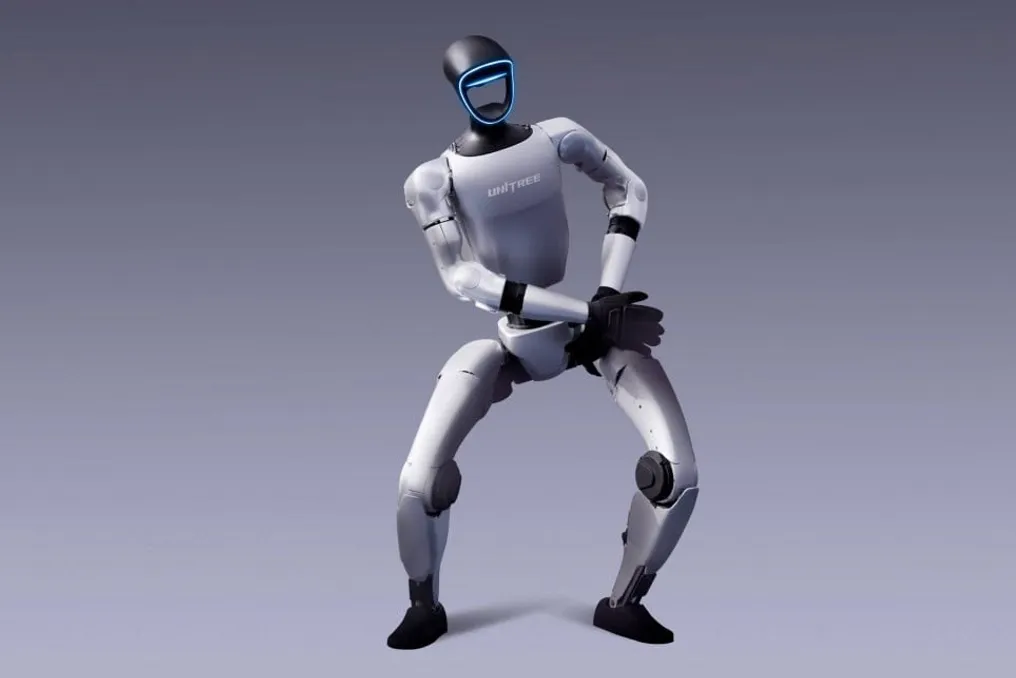
The World Humanoid Robot Games began in China on Saturday (22) and will continue until Wednesday (26). This event represents the pinnacle of the sector, where China has invested significantly over the last decade.

Technology and robotics companies use this event to showcase their products. However, for the 2026 edition, they face two crucial challenges: demonstrating that their robots can perform delicate movements with precision and proving their utility and productivity in a real environment.

Over the past ten years, China has transformed robotics competitions into strategic platforms for businesses. Between 2014 and 2015, Xi Jinping, then president of the Asian country, designated robotics as a central element of Chinese manufacturing.

Since then, the focus of these robotics gatherings has shifted from mere academic exhibitions to the execution of practical tasks in work contexts. This change reflects the industry pressure for prototypes to demonstrate the ability to generate real and consistent productivity.

Digital Vision

Anderson Moreira, Professor of Control and Automation Engineering and coordinator of the robotics team at Mauá Institute of Technology, was interviewed by Olhar Digital about the World Humanoid Robot Games and the progress of robotics in China over the last decade.

According to Anderson, China has converted robotics competitions, which were previously limited to university events, into commercial showcases supported by government subsidies and extensive media coverage. He questioned how this boosts the sector and affects the global competitiveness of humanoid robotics.

Anderson explained that these competitions have stopped being just technological demonstrations and have started functioning as vast public engineering laboratories. By having dozens of manufacturers performing the same activities under standardized conditions, the limits of each solution become evident, such as autonomy, energy consumption, stability, precision, manipulation capability, and fault resilience. This generates an accelerated cycle of testing, problem identification, component redesign, and new testing.

In the 2026 World Humanoid Robot Games, for example, in addition to sports events, there will be industrial assembly challenges, material handling, cable connection, electric vehicle recharging, and fine manipulation, with over 40% of the events requiring fully autonomous operation.

However, China's greatest advantage lies in integrating these competitions with a vast industrial ecosystem. In 2024, China installed about 295,000 industrial robots, representing 54% of all new global installations. Additionally, for the first time, Chinese manufacturers were responsible for the majority of industrial robot sales within the country itself.

This scale fosters suppliers of motors, sensors, batteries, controllers, and power systems that can also supply humanoid manufacturers. Anderson Moreira emphasized that a competition demonstrates technological capability, but not industrial maturity.

There is also a clear industrial policy. China's Ministry of Industry and Information Technology has set a goal to put humanoids into mass production and create an internationally competitive ecosystem by 2027. In 2025, Reuters reported over US$20 billion allocated to the sector through various government programs, including regional funds, incentives, and public procurement. The same analysis indicated that the Chinese supply chain can already provide up to 90% of the components needed for a humanoid, and that only in 2024 did 31 Chinese companies present 36 distinct models.

This pressures global competitiveness by simultaneously reducing development time, component cost, and the gap between prototype and production. While the United States, Europe, Japan, and Korea may maintain leadership in certain technologies, they are now competing against a Chinese ecosystem capable of testing multiple architectures in parallel and rapidly industrializing the most effective ones.

However, it is important to note that a competition only demonstrates technological capability, not industrial maturity. A robot completing a test once is drastically different from executing the same task thousands of times, over months, with safety, low failure rates, and lower cost than human alternatives or traditional automation. The true future battle in humanoid robotics will be converting demonstration performance into reliable productivity.

Technical Challenges for Practical Applications

Although robots have made great strides in mobility in running tests, robotic hand engineering for fine gestures and precision constitutes one of the biggest obstacles in the industry. Anderson Moreira detailed the main technical barriers preventing these machines from leaving demonstration stages and operating efficiently in factories or homes.

The hand is considered one of the most complex systems to replicate in a humanoid, as it concentrates highly sophisticated mechanics, actuation, sensing, and control in a reduced space. Depending on the biomechanical model, the human hand has about 20 or more degrees of freedom, many of which must operate concomitantly.

In advanced robotic hands, this implies fitting multiple motors, transmissions, or tendons, sensors, and electronics into dimensions close to a human hand, while maintaining strength, speed, precision, low weight, and mechanical resistance. Recent research confirms this dilemma: increasing joints and actuators increases dexterity but also intensifies mechanical and control complexity.

The second major challenge is tactile perception. To handle a fragile object, connect a cable, or pick up a bottle, vision alone is not enough. The robot needs to know where contact occurred, in what direction the force is being applied, and whether the object is slipping. Humans make these adjustments instinctively; in robots, this requires tactile sensors distributed across the hand and algorithms that translate large volumes of data into real-time digital commands.

A study published in Nature Machine Intelligence, for example, covered 70% of the palm surface of an experimental hand with high-resolution sensing and demonstrated significant improvement in robustness when control utilized tactile information. The fact that this is still a scientific highlight illustrates how far we are from achieving this capability in an accessible, robust, and industrialized manner.

There is a third hurdle: contact control. Walking involves challenging but predictable dynamics. The hand, however, faces almost infinite scenarios: the object can be rigid or malleable, dry or slippery, slightly misaligned, or change orientation during manipulation. Applying too much force can break the item; applying too little can cause it to fall. This demands the continuous integration of vision, touch, finger position, and force control. Recent studies on anthropomorphic hands indicate that systems based solely on vision struggle with intense contact tasks because they cannot adequately regulate these forces.

The fourth bottleneck lies in the robot's intelligence itself. Artificial Intelligence models can learn specific tasks with thousands of examples, but it is difficult to ensure that the skill persists when the object, lighting, friction, or position changes. Unlike Large Language Models (LLMs), which are trained with vast amounts of text and images from the internet, the data for training robots must come from physical interactions, requiring a system to execute, record, and repeat real tasks. For this reason, China has created dedicated data collection centers where hundreds of operators train robots for long daily hours.

Finally, there are less conspicuous but commercially decisive requirements: durability, energy autonomy, ease of maintenance, safety, and cost. In a factory, it is not enough for the robot to connect a cable in a demonstration; it must repeat this throughout a full shift, detect failures, and recover autonomously. To work near people, there are rigorous safety and certification standards, such as the review of the international standard ISO 10218 in 2025, which deals with the safety requirements of industrial robots in production systems.

For this reason, it is believed that adoption will first grow in more structured industrial tasks—such as logistics, inspection, line replenishment, and material handling—and only later advance to very fine manipulations and domestic environments. The pending leap is not just making a robot perform a difficult task, but making it perform thousands of diverse tasks, with varied objects, safely and repeatably.

}, {
Similar stories

Beijing Exhibition Reveals Diversity of Chinese Robotics Industry, Focused on Humanoids and Industrial Applications
Read more
olhardigital.com.br

Beijing Exhibition Reveals Diversity of Chinese Robotics Industry, Focused on Humanoids and Industrial Applications

At the World Robot Conference 2026, held in Beijing, China, robots demonstrated various functionalities, ranging from fighting and acrobatic dancing to baggage transport, facility inspection, surgical assistance, and household chores. The event took place between August 19th and 23rd and gathered over 300 companies, exhibiting more than 2,000 items and presenting over 150 new releases.

The vast range of exhibited machines illustrates the scale of the Chinese robotics industry. According to the International Federation of Robotics (IFR), China accounted for 54% of global industrial robot installations in 2024, totaling 295,045 units. Furthermore, the country held the world's largest stock of operational industrial robots that year, amounting to 2.027 million.

China's leadership is also notable in the humanoid sector. According to the consultancy Smart Analytics Global, approximately 19,100 humanoid robots were shipped globally in the first half of 2026, with Chinese manufacturers responsible for over 97% of this volume. During the same period, the companies AgiBot and Unitree concentrated about 75% of international shipments.

LimX Luna

Humanoids attracted significant attention during the conference. Unitree, for instance, presented machines in Beijing capable of participating in boxing, dancing, and table tennis demonstrations, integrating movements that require balance, coordination, and varied body control. This performance is not new for the company; in 2025, Unitree humanoid models competed in boxing, showcasing attacks, defenses, and recovery after falls.

The LimX Luna model, from LimX Dynamics, focuses more on performances. Standing at 1.60 meters tall and having 27 degrees of freedom, it executes jumps and splits, combining these physical skills with voice interaction, gestures, and movement imitation. The platform allows for the coordination of over 200 robots for simultaneous performances, featuring distinct choreographies or synchronized movements. The company has also created a tool that integrates dance, movement, voice, and vision to create shows without the need for individual programming of each action.

Kengo, from Galaxea, stands at 1.40 meters and has a bipedal structure. Developed for high-dynamic movements, the robot can replicate actions of greater complexity. In addition to demonstrations, Galaxea aims to apply Kengo in industrial, commercial, entertainment, and companionship contexts. An external source mentioned that robots are evolving from basic tools to form the real-world workforce.

Another humanoid highlight is the MagicBot X1, from Magic Atom. This model features 31 degrees of freedom and was designed to walk, handle objects, interact, and operate in various environments. Intended uses include inspection, manufacturing, logistics, security, reception, and entertainment. The X1 was also seen in demonstrations exceeding simple walking, such as playing table tennis, dunking in basketball, and performing fencing moves.

The fair demonstrated that Chinese robotics is not limited to humanoids capable of mimicking human actions. There are also robots created for specific functions, where factors such as size, safety, or mobility are more relevant than aesthetics.

RealBOT S2

The RealBOT S2, from RealMan, was specifically designed for small-space logistical and industrial environments. It has the capability to lower its body to about 30 centimeters from the ground, allowing it to pick up items on the floor and access low areas. The design also prioritizes locomotion in narrow corridors and between close structures.

In another example, the Kirin, from Kepler Robotics, is a large quadruped intended for cargo transport and outdoor activities. This robot can support a load of nearly one ton, operate for up to eight hours under weight, and navigate inclined terrain, overcoming ramps up to 45 degrees.

Concerns about hazardous environments are highlighted by machines built for inspection. One of the quadrupeds presented at the conference features an explosion-proof design and is made to operate in oil and gas facilities, petrochemical plants, and other locations where a spark or inadequate equipment poses a danger.

Firefighting machines were also shown. One of these models is designed to advance in buildings, warehouses, confined spaces, and debris areas, carrying equipment to locations with high temperatures, toxic substances, or risk of collapse. Additionally, there are more niche applications, such as robots for checking electrical installations, maintaining structures, and moving loads. The logic here differs from initial humanoids: each machine is adapted to the working conditions, rather than trying to replicate the human body.

Specialization extends to healthcare. The ROPA6, from Beijing Changmugu Medical Technology, was developed for various areas of orthopedic surgery, covering hip, knee, unicameral procedures, spine, trauma, and sports medicine. The system received Class III medical device registration in China in 2026. The company also presents it as an integrated platform for multiple orthopedic procedures, rather than isolated equipment for each type of surgery.

In the educational field, UBTECH introduced the TutorC, a robot designed to function as a school assistant. This machine can participate in explanations, presentations, Q&A sessions, and interactive activities with students, in addition to assisting with standardized tasks. The proposal ensures that the teacher maintains control over the activities, being able to interrupt, modify the content, or take over operation while the system executes actions predefined by the class instructor.

In the domestic sphere, variety is also growing. The Vbot, from Vita Dynamics, was created to understand commands and the environment, performing tasks such as picking up and putting away objects, tidying surfaces, and operating appliances. The company also foresees its use in daily care, interaction with the elderly and children, and remote assistance.

Another example is the Simbot, from Beijing Shenpu Intelligent Technology. Unlike having legs, this robot uses a wheel-based base attached to articulated arms. Its purpose is to manage household tasks involving picking up, transporting, depositing, and manipulating objects. The Simbot has 23 degrees of freedom in its body and seven in each arm, along with vision, tactile, force, and language capabilities, aiming to adapt the machine to different residential activities.

The diversity of domestic projects suggests that there is no single concept of a residential robot; there are machines focused on manipulation, others on interaction, companionship systems, and equipment for assisting in specific tasks.

A less visible aspect of the fair includes equipment that does not have the shape of a complete robot, such as robotic hands, sensors, 3D cameras, LiDARs, motors, encoders, articulation modules, actuators, chips, and software. The Linker Hand O30, for example, is a robotic hand with 20 active and independent degrees of freedom. Such components are crucial for tasks requiring finger precision, force control, and varied object manipulation.

There are also perception-dedicated technologies, such as depth cameras, tactile sensors, and measurement systems, which help robots recognize objects and understand their surroundings. These technologies are what allow a command or visual information to be converted into a physical action. Embodied Artificial Intelligence (Embodied AI) is another important front, seeking to link AI models to the physical capabilities of machines. The exhibition gathers platforms for data collection, simulation, training, and movement development, alongside systems that combine vision, language, and control.

The quantity of technologies gathered in Beijing demonstrates that the industry transcends the dancing or fighting humanoid. There is a complete chain behind these machines, involving companies that work on components, software, perception systems, movement, and specific applications. In this landscape, China holds an extremely strong position, being the world's largest market for industrial robots and responsible for the largest share of global humanoid shipments registered in the first half of 2026. The World Robot Conference serves as a showcase for this breadth, displaying robots to attract attention, but also machines designed for factories, hospitals, airports, schools, homes, and hazardous environments.

Popular