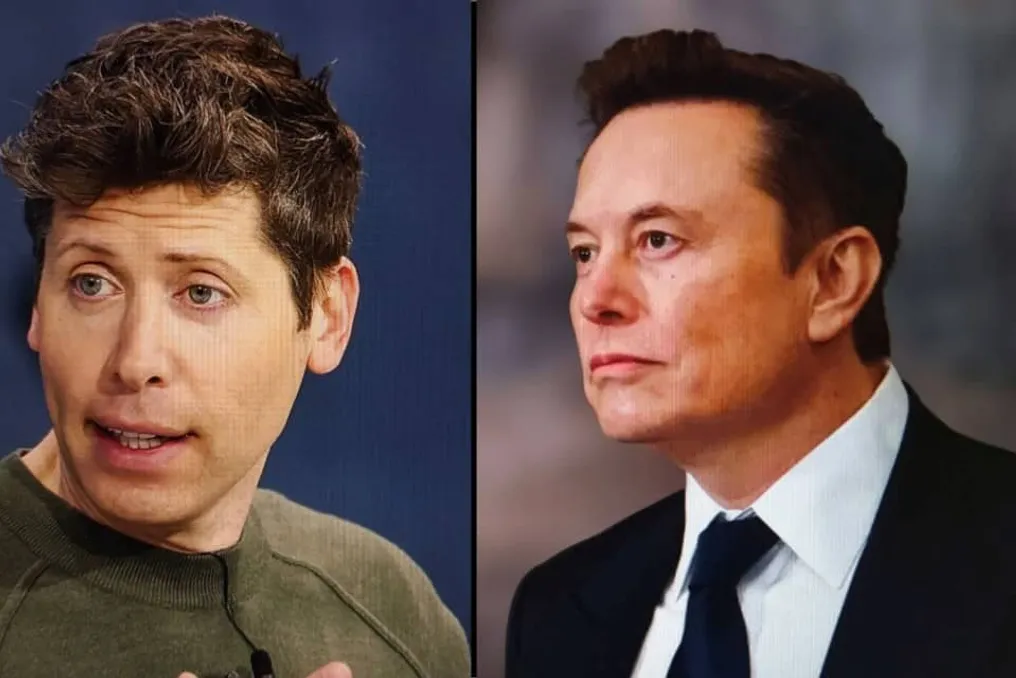
Elon Musk published a brief statement on July 22 on X regarding the current state of artificial intelligence: 'We are in a singularity.' Three days later, Sam Altman, CEO of OpenAI, made a similar assertion while appearing on the Relentless podcast: 'We are, like, in a singularity.' He continued: 'It's a moment.'
These statements have reignited a discussion that has existed for decades but has taken on new characteristics due to recent progress in AI systems. However, before judging the correctness of Musk and Altman, it is necessary to answer a more fundamental question: what does achieving a singularity mean?
There is no single agreed-upon definition for this term. Depending on the interpretation, it can mean broad machine superiority over human intelligence, an accelerated cycle of AI self-improvement, or even a point of no return in the relationship between society and technology.
This distinction makes it difficult to determine whether the singularity has begun. Debates revolve around what the current capabilities of AI systems are and what criteria are needed to recognize a change in the very dynamics of technological development.
Origins of the 'intelligence explosion' concept
One of the roots of the idea of a possible intelligence explosion is the work of British mathematician I. J. Good. In 1965, he described a 'superintelligent machine' capable of surpassing human intellectual activity. Since designing machines is one such activity, such a machine could create even better systems, launching a potentially accelerated process of improvement. Good termed this scenario the 'intelligence explosion.'
The concept of singularity took a more direct form decades later, thanks to mathematician and science fiction writer Vernor Vinge. In his 1993 text titled The Coming Technological Singularity, Vinge linked this phenomenon to the emergence of intelligences surpassing human capacity and to a transformation so rapid that the subsequent period would be difficult to predict based on previous models.
In this sense, singularity does not just mean that machines have become smarter. The idea is that at a certain point, the speed and nature of technological changes may render previously used methods of forecasting the future insufficient.
Based on these ideas, various interpretations began to coexist. One links singularity to a machine that becomes intelligent enough to participate in its own development process and produce increasingly capable systems. In this scenario, the decisive element will not simply be AI superiority over humans in one task, but the change in the speed and dynamics of its evolution.
Futurist Ray Kurzweil popularized another formulation related to the acceleration of technological progress and the growth of non-biological intelligence. Kurzweil predicts the singularity for 2045 and connects this concept to a profound transformation in the relationship between humans and machines.
Philosopher David Chalmers also analyzed the hypothesis of the intelligence explosion, according to which a machine smarter than humans could create an even smarter generation, which in turn would spawn the next. Thus, the discussion on this topic encompasses various hypothetical scenarios, rather than a consensus description of an already observed event.
Criticism and diversity of views
The idea of singularity itself is disputed by researchers in the field. Yann LeCun, one of the pioneers of deep learning and a Turing Award laureate, stated that he believes machines will eventually be able to compete with humans in intelligence but does not believe in the singularity. In his opinion, AI development may appear exponential, but it does not necessarily continue in the same vein: progress may encounter limitations and follow a growth curve that slows down before the breakthrough predicted by singularity proponents.
These different formulations help explain why the word does not describe the same phenomenon for all researchers. For Prisila Machado Vieira Lima, a professor at UFRJ in artificial intelligence and computer engineering, the first question to ask is: 'What singularity are we talking about?'
This is where two concepts often associated with singularity emerge: Artificial General Intelligence (AGI) and superintelligence. AGI is used to describe AI capable of performing a wide range of cognitive tasks, not limited to competence in specific problems. Superintelligence refers to a hypothetical scenario in which a machine surpasses human intellectual abilities much more broadly.
Some formulations view AGI as a possible stage preceding superintelligence and singularity. The logic is that AI will first achieve general capabilities, then begin improving its own systems, and finally be able to trigger an intelligence explosion. However, this sequence is not accepted by all interpretations of the concept.
Differences in understanding self-improvement
For Arthur Agreish, a specialist in technology and innovation, one of the problems is conflating exceptional performance in specific activities with general intelligence. He stated in an interview with Olhar Digital: 'It is very powerful in a rather limited spectrum.'
The fact that a machine is better than a human in one activity does not automatically mean it is better than a human in overall intelligence. According to Agreish, the discussion of singularity must consider the breadth of capabilities, not just individual results.
Claudio Miceli, a professor at UFRJ, makes a similar distinction when discussing self-improvement. According to him, there are already algorithms capable of developing and improving as they receive new data, but this does not mean they have achieved AGI. He noted: 'Programs can already evolve, we have algorithms that evolve, improve, and perfect themselves as data arrives. But this does not necessarily make it general artificial intelligence.'
The difference becomes even more important when discussing recursive self-improvement. AI can help researchers write code, test models, analyze results, or find ways to improve systems. It is another matter when the machine itself conducts an increasingly autonomous cycle of increasing intelligence.
Agreish links this second scenario to the turning point of singularity: AI that begins to self-sustain and depends less and less on humans for its own development. Today, he says, its evolution still depends on researchers, data, models, companies, investments, training, and infrastructure.
Sam Altman himself makes a similar distinction in his blog post The Gentle Singularity, published in 2025. In this text, the OpenAI CEO argues that using AI systems to accelerate research and aid in creating even better systems differs from the autonomous updating of the AI's own code. At the same time, he calls the current process an initial version of recursive self-improvement.
This distinction helps separate two things that might seem similar: using AI to accelerate the development of new AI and having AI capable of independently managing its own improvement process.
Conclusion on achieving singularity
This is where Musk's and Altman's statements collide with conceptual complexity. If singularity means artificial intelligence that broadly surpasses human capabilities and begins to autonomously accelerate its own development, then, according to Arthur Agreish and Claudio Miceli, there is currently no sufficient evidence that this stage has been reached.
Miceli states directly: 'If we understand singularity as AI superiority over human intelligence, we have not yet reached that point.' For him, current systems have not yet reached that level of intelligence.
Agreish also considers it premature to claim that we are in a singularity if this concept is understood as a profound change in the very dynamics of AI development. In his opinion, current AI still has significant limitations compared to the breadth of human capabilities, and its evolution still depends on researchers, data, models, companies, investments, training, and infrastructure.
Prisila Lima, on the other hand, offers a broader definition. She believes that singularity can be informally understood as a point of no return. In this sense, society may have already passed through some kind of singularity. This interpretation does not depend on whether machine intelligence has surpassed human intelligence.
This view also helps contextualize Altman's phrasing. In The Gentle Singularity, the OpenAI CEO described the transformation as gradual, stating that singularity happens 'little by little.' However, in the Relentless podcast, he generalized the moment with another phrase: 'It's a moment.'
Taken together, Altman's statements present singularity as an ongoing process, not as a specific date when a machine would suddenly become superintelligent. In his 2025 text, he describes gradual evolution; in the podcast, although he says singularity has arrived now, he also asserts that no isolated moment is a turning point.
For Prisila Lima, this possibility of various breaking points also means that there may not be a single singularity. 'I think in the coming years we will witness several singularities,' she stated, mentioning possibilities related to abilities such as consciousness, empathy, and common sense.
Perhaps this is the biggest difficulty of the concept. If there is no single, agreed-upon definition, then there is also no universal metric that can indicate that the singularity has begun.
One might measure performance in specific tasks, reasoning ability, execution speed, autonomy, or technology adoption. But none of these indicators alone define that a machine has reached the stage described by all definitions of singularity.
Claudio Miceli draws attention precisely to this problem. He stated: 'There is no series of metrics that we could use to determine this question of what singularity is in terms of adoption, in terms of intelligence, in terms of capability.'
There is also an earlier question: what exactly does intelligence mean? AI can solve mathematical problems, write code, generate texts, or perform tasks that previously required humans, but these individual abilities do not necessarily establish that the system possesses general intelligence.
Miceli questions how possible it is to define artificial intelligence as general based on specific tasks. If a machine is extremely competent in some areas and limited in others, the answer depends on what is considered necessary to characterize general intelligence.
He also raises an even deeper difficulty: potential general artificial intelligence may function differently from human intelligence. Instead of replicating our abilities, it may develop a form of intelligence different from what we know. In such a scenario, humans themselves may find it difficult to recognize this phenomenon.
This possibility helps explain why it is insufficient to define a single test for singularity. If the phenomenon represents a change in the very nature or dynamics of intelligence, then the criteria used to measure it may also require changes.
The difficulty lies not only in figuring out when the singularity began. First and foremost, it is necessary to establish what phenomenon we call singularity, and what abilities or changes would be sufficient to characterize it.