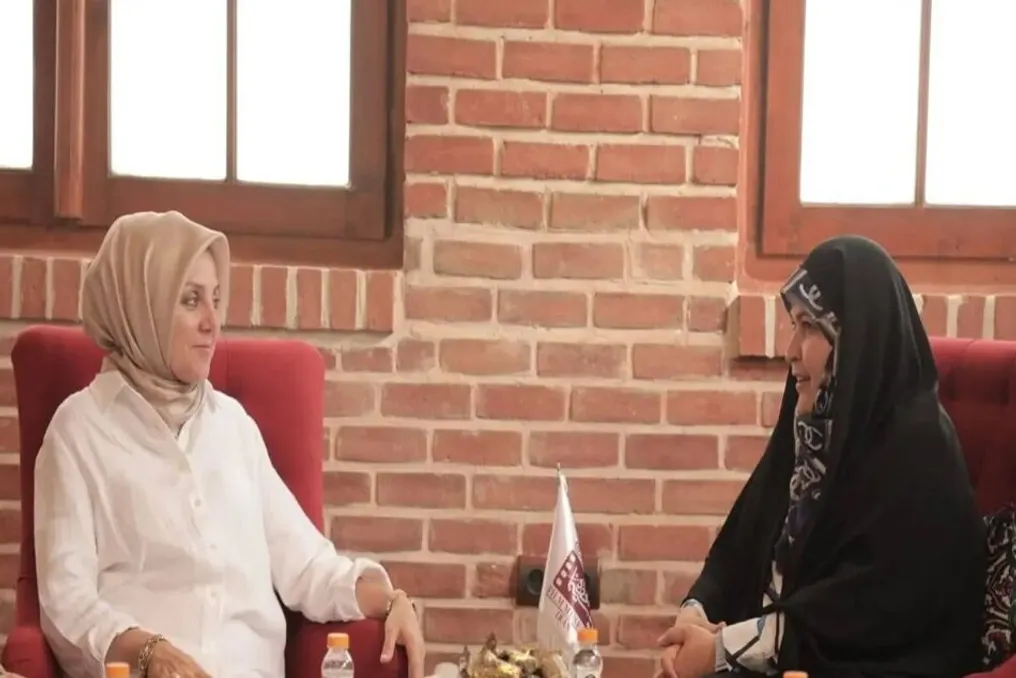
A delegation from the Turkish Radio and Television Supreme Council (RTUK) visited the Iranian Film Museum in Tehran on Saturday to develop cultural and cinematic interaction between the Islamic Republic of Iran and Turkey.
During the visit, the Turkish delegation met with Fatemeh Mohammadi Sijjani, the Museum's director general, to discuss potential areas of cooperation in film production, research, education, and joint projects. The Turkish group included Feyza Gizligider, Head of RTUK's Strategy Development Department, and Fatma Güleç, Deputy of this department.
The delegation toured various museum exhibits, examining a collection of historical artifacts, documents, equipment, and items significant to the history of Iranian cinema. They were also presented with materials on the origins of cinema in Iran and the evolution of film technologies in the country.
Feyza Gizligider expressed admiration for the history of Iranian cinema, noting that the appearance of film cameras in Iran just five years after their invention is a particularly interesting point. Highlighting the existing opportunities and activities of both countries, she emphasized the importance of expanding academic and cultural ties.
Although Turkey also has a film museum, Gizligider characterized the Iranian Film Museum as a comprehensive and significant collection. She expressed hope for establishing educational contacts between the Iranian Film Museum and Turkish universities.
For her part, Mohammadi detailed the museum's diverse opportunities, clarifying that its activities extend beyond merely preserving and displaying film equipment. The museum also houses cinematographic literature from around the world and various film scripts.
Emphasizing the presence of a research institute and established links with Iranian film universities, Mohammadi stated readiness to create similar partnerships with Turkish film universities.
During another phase of the meeting, the Turkish side stressed the need for 'media literacy' training for filmmakers, noting that such specialized preparation has a deeper impact than general education courses. It was also proposed to organize film analysis sessions involving students from both countries.
It was suggested that Turkish students visit Iran to participate in such sessions, while Iranian students, in turn, would undergo similar programs in Turkey. This direct dialogue and exchange of cinematic views are expected to lead to effective and sustainable scientific and cultural interaction.
Furthermore, the idea of creating a 'Kiarostami School' was put forward as a potential pillar of educational and cultural cooperation. Gizligider recalled the scope of the Council for Content Monitoring in Cinema and Media in Turkey, noting the cultural sensitivity and shared values between the two states in this regard.
Mohammadi mentioned successful cultural cooperation among members of the Shanghai Cooperation Organisation (SCO), including the idea of creating a joint film. She suggested considering a similar initiative among members of the Organisation for Economic Co-operation (OECD). She posited that a joint cinematic project involving OECD countries could promote filmmaker collaboration and demonstrate the cultural and artistic potential of these nations, serving as an effective cultural tool for presenting the OECD organization and strengthening ties.
In conclusion, both sides confirmed their readiness and potential for expanding cultural, cinematic, research, and educational cooperation, expressing hope that further interaction will pave the way for joint projects and the exchange of experience between the cinematic and academic centers of Iran and Turkey.