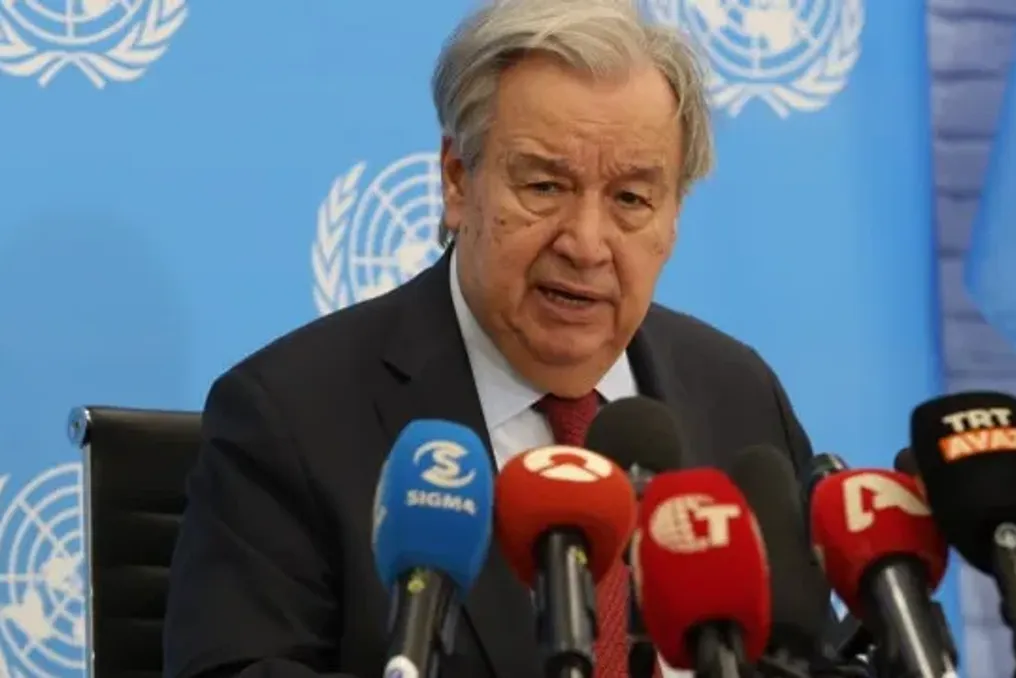
Guterres stated today in New York that the United Nations can act as a neutral mediator to reduce immediate risks, ensure more orderly and predictable transit, and assist in rebuilding the trust necessary for diplomacy and de-escalation. He noted that this mechanism can be operationalized quickly.
The former Prime Minister of Portugal emphasized that international support for this initiative was encouraging, especially from vulnerable countries that understand the consequences of disruptions in vital sea lanes. He called on all involved parties to participate seriously and constructively in the process, addressing them at the UN headquarters in New York.
In March of this year, about a month after the war between the United States and Israel against Iran began, which led to the blockade of the strategic Strait of Hormuz, the UN Secretary-General announced the creation of a working group. This group, headed by Portuguese Jorge Moreira da Silva, Director of the UN Office for Project Services (UNOPS), was intended to facilitate the trade of fertilizers, including the movement of related raw materials.
However, due to obstacles created by various parties, this mechanism never came into force. Guterres clarified that this system does not replace the full restoration of navigation rights and freedoms, nor the political decisions required to end conflicts, but it represents a practical first step.
He added that this demonstrates the possibility of reducing risks, protecting civilian populations, and ensuring the circulation of essential goods even in times of conflict. The alternative is the continuation of violations, increased distrust, and greater difficulties for people far beyond the directly affected regions.
In an attempt to give new momentum to the work of this group, Guterres explained that this is a practical mechanism with set deadlines. Initially, it focuses on fertilizers and related raw materials, but there is potential to expand its scope to other products.
He particularly stressed that the mechanism will not permit passage through the Strait of Hormuz nor will it change the rights or obligations of any member state under international law; sovereign decisions remain entirely with the participating member states.
The UN leader reminded that the cessation of maritime traffic in the Strait of Hormuz, blocked by Iran following US attacks, as well as in the Red Sea, threatened by Houthi rebels of Yemen, restricts the transport of energy, fertilizers, and other vital goods.
Guterres also reported that oil prices remain 33% higher since the start of the conflict, and global transport costs have risen by 84% compared to a year ago. He concluded that the result is obvious: higher prices, increased hunger, reduced harvests, and greater difficulties, especially for the world's most vulnerable populations, speaking before the UN Security Council.