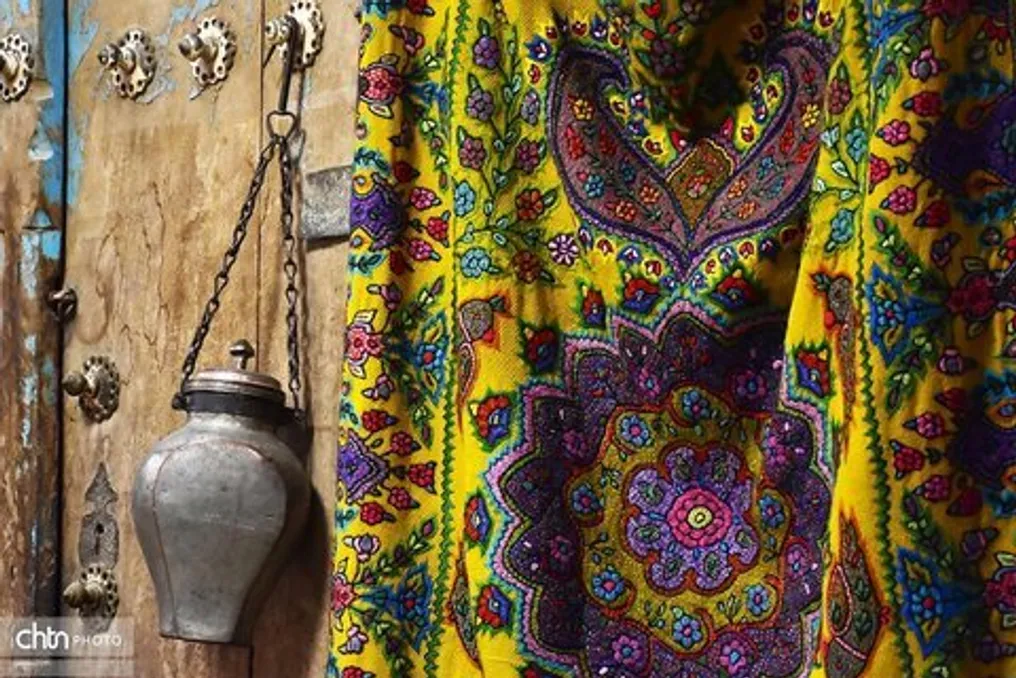
An official from the province stated that the traditional embroidered craft of Patach from Kermans province in Iran can transform into a recognizable global brand provided that commercialization, branding, and market development are strengthened.
The head of the Kermans crafts department, Golamreza Farroki, emphasized that Patach is not just a piece of handmade work, but a deeply rooted art closely connected to the history and culture of Kermans, reflecting an important part of the province's cultural and artistic heritage.
He added that this craft has been passed down through generations within families and local communities, and this continuity plays a key role in preserving its authenticity and ensuring cultural reproduction.
Patach is a form of hand embroidery art that relies heavily on the skills and creative abilities of Kermans women. Farroki noted that supporting this craft can contribute to increasing family incomes, strengthening the local economy, and expanding home-based employment.
He stressed the need to pay more attention to the commercialization of Patach while maintaining its quality and authenticity. According to him, implementing market-oriented designs, professional packaging, standardization, marketing, and creating sales channels can increase the added value of Patach products and improve the living conditions of artisans.
Furthermore, Farroki considers professional and targeted branding vital for promoting Patach both nationally and internationally. He pointed out that a unique visual identity, clear narrative, reliable trademark, and appropriate marketing strategy will help make the craft more visible in target markets and facilitate its entry into international arenas.
Golamreza Farroki stated that Patach from Kermans has the potential to become a well-known brand, adding that artisans, economic operators, private companies, and specialized crafts organizations can join forces to create an integrated production, distribution, and export chain.
However, Farroki warned that the expansion of the Patach market should not come at the expense of its authenticity. The goal should be to find a balance between preserving the uniqueness of the craft and the demands of the modern market by maintaining traditional features while developing diverse and functional products that meet the needs of contemporary consumers.
He also called for more active promotion of Patach through specialized exhibitions, cultural events, and target markets, as well as through e-commerce and new media. Strengthening ties between artisans and economic operators, along with improving presentation and packaging, can further raise awareness of the craft both domestically and internationally.
Patach Douzi, characterized by the abundant coverage of textiles with colorful stitches, is one of the most famous traditional crafts and souvenirs of Kermans. Due to the vulnerability of textiles to wear, few ancient examples of Patach have survived. Nevertheless, records and travelers' documents dating back to the Safavid era indicate that this craft was practiced in Kermans at that time. One of the oldest surviving examples, dated around 1869, was used as a shroud cover for Shah Nematollah Vali, a Persian Sufi master and poet who lived in the 14th and 15th centuries.
Farroki described Patach as a 'living heritage' that connects the past of Kermans with the present and future, noting that competent branding and commercialization can help transform the traditional art from a valuable local craft into a product with a recognizable international identity.