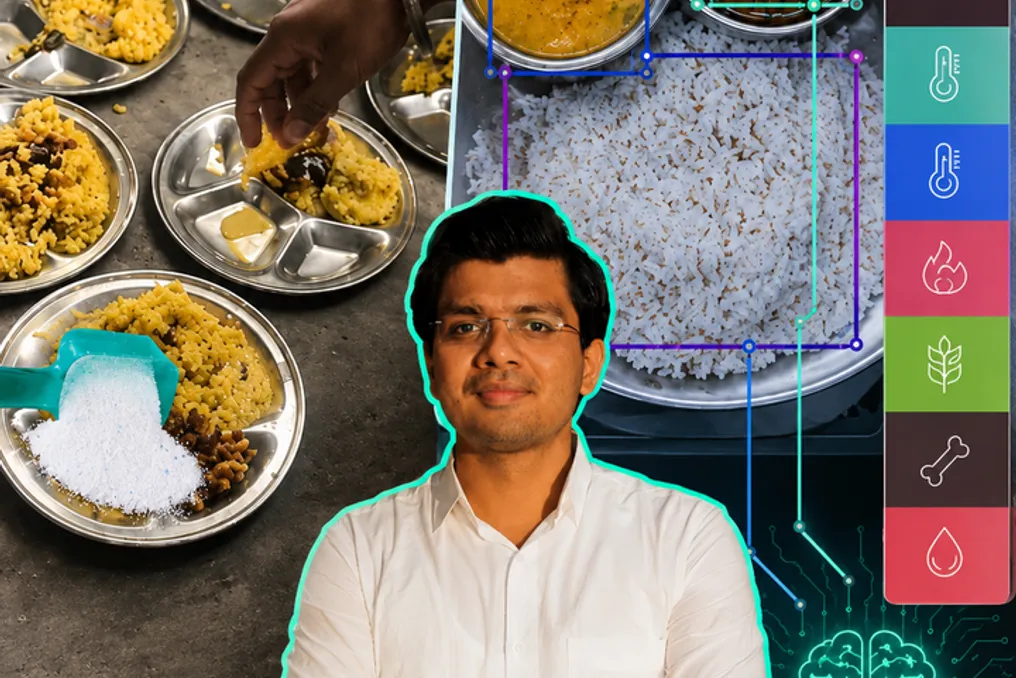
In a state school in Nalanda, Bihar, rumors suggested that a cook mistakenly substituted detergent for salt in the lunch menu, leading to the illness of 36 girls. Meanwhile, in Maharashtra, an IAS officer implemented artificial intelligence to monitor children's nutrition in schools.
At Tod's Ashram School in Gadchiroli, IAS officer Shubham Gupta raised the question: if children are given food, why do they remain underweight? He, together with the organizations Feeding India and Udyog Yantra, introduced an AI-based nutrition monitoring system.
Daily, students brought their plates for analysis. The machine utilized 2100 images and data points to verify the quality, quantity, and temperature of the food. The system also detected that the planned menu was not always adhered to.
There were instances where children were served only four dishes instead of the planned five, which hindered them from receiving complete nutrition. Checks also revealed issues with food quality, such as overripe fruits, watery dal, low-quality eggs, and other deficiencies.
Thanks to continuous AI monitoring, the quality of the provided food began to improve. After eight months, a re-check of the children's nutritional status showed that the number of underweight girls decreased from 61 to just 20.
This raises the question of how realistic it is to implement such AI systems in all government schools, and whether strict food safety checks, menu control, and regular monitoring of children's health should be made mandatory in every school.